


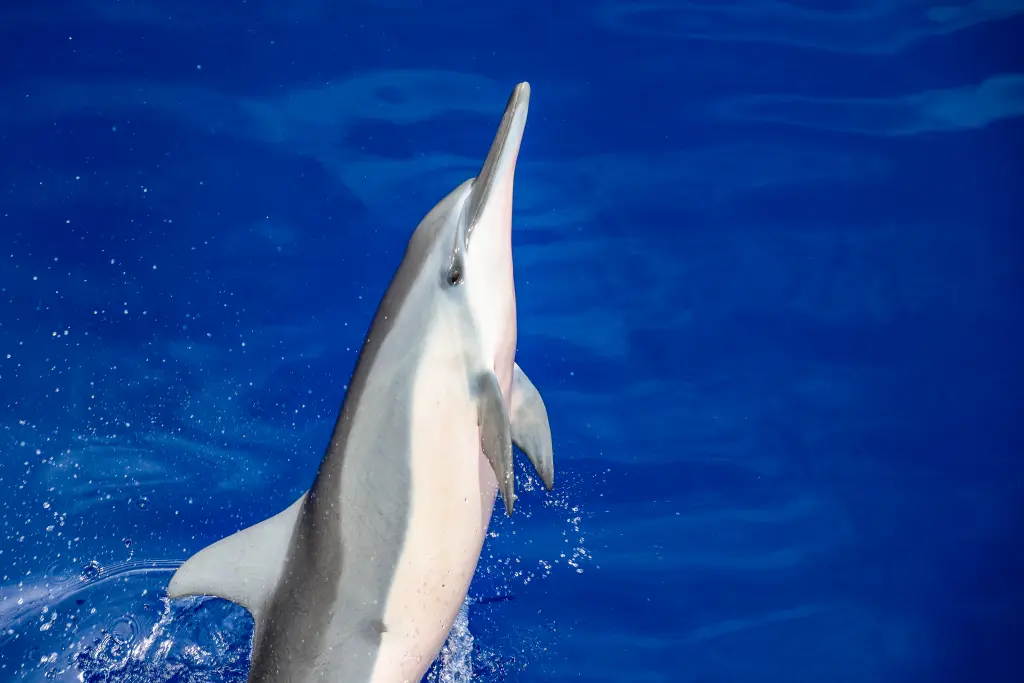
When a spinner dolphin glides past the bow of the boat off the Waianae Coast, its eyes are doing something your own cannot. They are scanning two separate fields of view simultaneously, one on each side of the head, building a picture of the environment that no human visual system can fully replicate. Understanding how dolphin vision actually works changes the way you watch these animals on the water.
Eyes on the sides: monocular and binocular vision
A dolphin’s eyes are positioned on either side of the head rather than facing forward like human eyes. This placement gives them what scientists call monocular vision on each side, where each eye sees a separate, wide-angle field of view independently of the other. The total field of view a dolphin can see at any one moment is far wider than a human’s, covering most of the space around and above them without needing to turn the head.
There is a small zone directly in front of the dolphin’s rostrum where the two visual fields overlap, creating binocular vision with depth perception. This forward zone is what dolphins use when they are focusing on something specific directly ahead, particularly when approaching prey or navigating a tight space.
Above the surface, the positioning of the eyes also allows dolphins to see clearly into the air and water at the same time. A dolphin surfacing to breathe can monitor what is happening above the waterline and below it simultaneously, which matters when a pod is resting in shallow coastal bays and needs to track both the sky and the water around them.

Adapting to light: above and below the surface
Dolphin eyes contain a specialized structure called a tapetum lucidum, a reflective layer behind the retina that bounces light back through the photoreceptors a second time. This amplifies the available light and significantly improves vision in low-light conditions. It is the same structure found in cats and other animals known for their ability to see in the dark, and it is what allows spinner dolphins to function effectively during their nighttime hunting runs in deep, dark water.
During the day, dolphins can constrict their pupils to reduce incoming light and protect the retina when near the surface in bright Hawaiian sunlight. The pupil shape in dolphins is unusual: when fully constricted, it forms two small pinpoints rather than a single circular opening, which helps maintain a wider depth of field even in bright conditions.
Spinner dolphins hunt through the night in deep offshore water, relying on vision where light permits and echolocation where it does not. By morning, when they return to the shallow coastal bays of the Waianae Coast to rest, their visual system shifts from low-light hunting mode to the brighter, more complex visual environment of the surface.
Color vision: limited but functional
Dolphins are believed to have limited color vision compared to humans. Research suggests they may be dichromats, meaning they have two types of color receptors rather than the three humans possess. In practical terms, this means they likely see a narrower spectrum of color, with reduced ability to distinguish between certain hues.
In the ocean environment, this is not a significant disadvantage. Most of the visual information that matters for hunting, navigation, and social interaction comes from contrast, movement, and shape rather than color. The patterns of light and shadow in Hawaiian coastal water, the silhouette of prey against a lighter background above, and the distinctive shape of a companion’s dorsal fin are all cues that work well within a dolphin’s visual range regardless of color limitation.
When vision reaches its limit: the role of echolocation
Even with a well-adapted visual system, there are conditions in which vision alone is not enough. At depth, at night, in turbid water, or when tracking fast-moving prey hidden behind obstacles, the eyes cannot provide the information the dolphin needs. This is where echolocation takes over.
Spinner dolphins emit rapid bursts of high-frequency clicks through the melon, the rounded fatty organ in the forehead, focusing them into a forward-pointing beam of sound. The returning echoes are received through acoustic fat channels in the lower jaw and processed by the brain into a detailed three-dimensional picture of whatever the dolphin pinged. This acoustic image includes information about size, shape, density, distance, and movement that vision could not provide.
Vision and echolocation are not separate systems that operate in isolation. They work together continuously, each filling in what the other cannot cover. In Hawaii’s coastal waters, where conditions can change rapidly with tide, current, and weather, this dual sensory system gives spinner dolphins one of the most comprehensive pictures of their environment of any animal on earth.

Vision in social life
Dolphin vision is not only for finding food and avoiding predators. It plays a central role in the social life of the pod.
Spinner dolphins communicate through a layered system of sound and body language, and much of the body language component depends on vision to be received. The orientation of the body, the position of the flippers, the angle of approach, and subtle changes in posture during social interaction all of these carry information that other pod members read visually in real time.
Recognizing individuals within a large pod also relies partly on vision. The shape and markings of a dorsal fin, the color pattern along the flank, the distinctive way a particular animal moves through the water, these are visual cues that allow dolphins to identify specific companions and maintain the social relationships that hold a pod together over years and decades.
Dolphin social bonds are among the most enduring in the animal kingdom, and vision is one of the tools that makes maintaining them across a large, moving group possible.
What you see from the boat
On a morning tour off the Waianae Coast, the visual behavior of the pod is one of the things worth watching closely. When a dolphin surfaces and briefly lifts its head above the waterline, it is likely spyhopping, taking a visual fix on something above the surface. When two dolphins approach each other head-on with a slight lateral tilt of the head, they may be making direct eye contact in the forward binocular zone. When a calf swims pressed tight to its mother’s flank, part of what holds them together is continuous visual contact.
Even during the rest period, when dolphins are practicing their half-brain sleep, one eye stays open and continues monitoring the environment. The closed eye belongs to the resting hemisphere. The open eye is still on watch.
These are not random behaviors. They are a visual system that has been refined across tens of millions of years of ocean life, operating quietly and continuously every second the dolphin is alive.
Join us on the Waianae Coast and watch it working from the water.
Want to explore more about how Hawaii’s spinner dolphins sense and navigate their world?
👉Return to the Spinner Dolphin Anatomy and Biology guide →
Tours depart from Waianae Boat Harbor, West Oahu, where Hawaii’s spinner dolphins gather every morning.