


The Moment the Sun Goes Down, Everything Changes
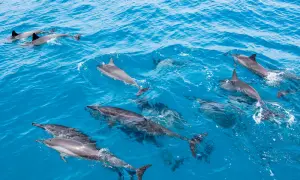
During daylight hours, Hawaiian spinner dolphins rest close to shore in the calm, shallow bays along Oahu’s Waianae coast. They move slowly, stay near the surface, and stick together in tight groups. To someone watching from a boat, they look peaceful and unhurried. That picture is only half the story.
As evening arrives and the sky darkens, something shifts. The pods begin to move. They leave the shallow bays where they spent the day and head offshore, away from the coast, into progressively deeper and darker water. By the time full night falls, spinner dolphins are far from shore and hundreds of meters below the surface. The resting is over. The work has begun.
This daily pattern is one of the most consistent behaviors in the animal kingdom. Spinner dolphins in Hawaii are nighttime hunters. Every morning tour, every calm pod drifting in Waianae Bay at sunrise, represents animals that have already put in a full night of work before you ever arrive at the harbor.
Going Down: The Deep Water World They Hunt In
To understand what spinner dolphins do at night, you have to understand where they go. The ocean is not a flat, uniform place. Below about 200 meters, sunlight disappears completely. The water turns cold and black. This deep zone is called the mesopelagic zone, and it is where spinner dolphins spend much of their night.
What draws them there is one of the ocean’s most remarkable daily events, known as the deep scattering layer. Every single night, billions of small fish, squid, and crustaceans migrate upward from the deep ocean toward the surface to feed on plankton in the warmer, food-rich water above. At dawn, they sink back down. This massive vertical migration creates a concentrated band of prey that moves up and down with the sun, and spinner dolphins have built their entire feeding schedule around it.
When the deep scattering layer rises toward the surface after dark, spinner dolphins are waiting. They dive repeatedly into the darkness, using sound rather than sight to find and track their prey. The dives are fast, deep, and relentless, and they go on for most of the night.
What They Are Hunting
The prey spinner dolphins target on these nighttime dives is not the large colorful fish reef-watchers might picture. Out in deep water after dark, the menu is made up of much smaller creatures that most ocean visitors have never heard of. The most common items are small squid, shrimp-like crustaceans, and a type of deep-sea fish called lanternfish. Lanternfish are among the most abundant vertebrates on Earth by sheer number, and they are a primary food source for spinner dolphins, seabirds, tuna, and countless other marine predators.
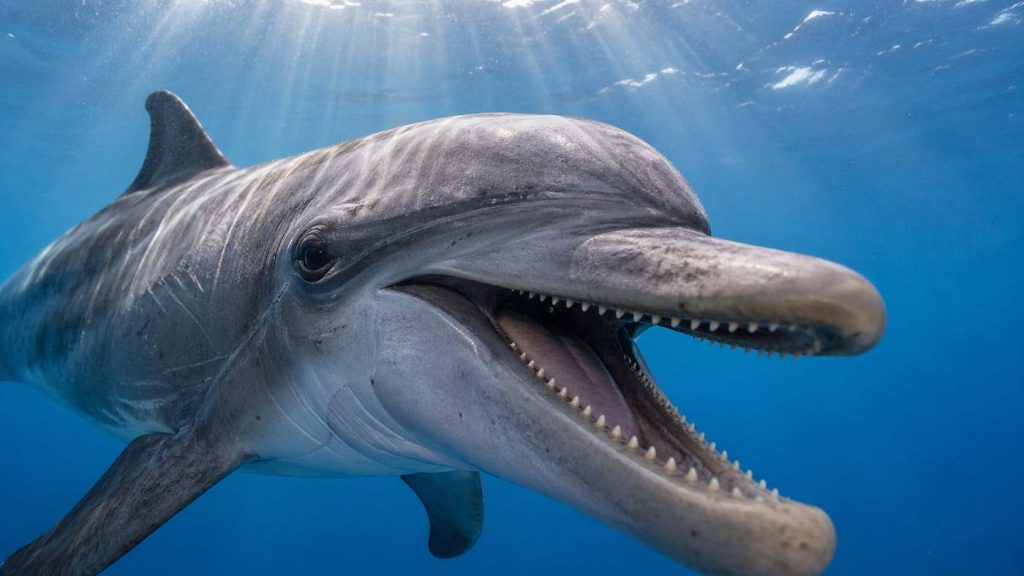
Spinner dolphins catch this prey using two key tools. The first is echolocation, the built-in biological sonar that lets them send out rapid clicking sounds and interpret the echoes that bounce back from objects in the water. In total darkness, 300 meters below the surface, echolocation is the difference between finding a meal and missing one entirely. The second tool is coordination. Spinner dolphins hunt as a group, herding schools of fish and squid into tight clusters before moving in to feed. The spinning leaps they are famous for may actually play a role in this coordination, helping animals signal to each other during the hunt.
By the time the night is done, a healthy spinner dolphin will have made dozens of dives and consumed a significant portion of its body weight in prey. It takes that kind of effort to keep a dolphin the size of a spinner going for another day.
The Return: Why They Come Back to Shore
As the night winds down and the deep scattering layer begins its morning descent back into the depths, the dolphins start moving toward shore. They return to the same shallow bays they left the evening before, and the transition from nighttime hunter to daytime rester is one of the most reliable patterns in Hawaiian marine life.
The reason dolphins return to shallow coastal water each day is not simply habit. Shallow bays along the Waianae coast offer specific advantages that open ocean water does not. The water is warmer, calmer, and easier to navigate. Tiger sharks, the primary predator of adult spinner dolphins in Hawaii, tend to prefer deeper water and are less likely to approach in the shallows. The bay environment lets dolphins rest with a reduced need to stay on high alert, which matters when they are physically depleted from a night of deep diving.
The kind of rest spinner dolphins get is also worth understanding. Dolphins cannot fully lose consciousness the way humans do, because they must continue breathing voluntarily at the surface. Instead, they practice a form of half-sleep that scientists call unihemispheric sleep. One half of the brain rests while the other half stays active enough to keep the dolphin breathing, watching for danger, and staying with the group. You may notice dolphins on the tour swimming very slowly in circles, surfacing rhythmically, and barely reacting to the boat. That is exactly what unihemispheric sleep looks like from the outside.

What This Means for Responsible Dolphin Watching
Understanding the nighttime hunt changes how you look at the dolphins when you see them. These are not lazy animals drifting through easy days in paradise. They are athletes in recovery. The calm, slow-moving behavior in the morning bay is the hard-earned rest of a working predator that has spent the night making dive after dive in cold, dark water hundreds of meters below the surface.
This is one of the reasons NOAA has established guidelines requiring boats and swimmers to stay at a respectful distance from resting spinner dolphins. Interrupting that rest period does real harm. A dolphin that cannot fully recover during its daytime rest window will enter the next night’s hunt already exhausted. Over time, repeated disruption can affect the health of individual animals and the stability of the pod.
Dolphins and You has operated with NOAA-compliant practices since 1989, following guidelines that protect the dolphins’ rest without eliminating the experience for guests. Tours depart from Waianae Boat Harbor at 8:00 AM and 12:00 PM, with hotel transportation included from Waikiki and Ko Olina. The three-hour tour includes wild dolphin encounters, snorkeling, kayaking, stand-up paddleboarding, a 12-foot water slide, a sandwich lunch, and a live Hawaiian hula performance aboard the boat. Adult tickets are $151 and children ages 2 to 11 are $117. The Dolphins and You crew holds a 4.9-star rating from more than 2,900 Google reviews, built over 35 years of responsible ocean tours. Here is what comes with every tour:
- Wild spinner dolphin encounter in their natural habitat
- Snorkeling, kayaking, and stand-up paddleboarding
- 12-foot water slide off the back of the boat
- Sandwich lunch with chips and drink included
- All snorkeling gear provided
- Live Hawaiian hula performance aboard
- Hotel transportation from Waikiki and Ko Olina
- Complimentary Hawaiian tribal dolphin tattoo sticker
Watching spinner dolphins from the water with a guide who understands their biology and respects their schedule is a very different experience from watching them from a beach or a rental kayak. When you know what those animals did between sunset and sunrise, the morning encounter takes on a completely new meaning.
The Hunt Beneath the Calm
Hawaiian spinner dolphins are two animals in one. In the morning light near shore, they are the graceful, unhurried creatures that visitors fall in love with. Underwater, after dark, in water so deep no sunlight reaches it, they are precise and relentless hunters working together in the cold black to stay alive. That contrast is part of what makes them so extraordinary. The next time you see a spinner dolphin gliding slowly near the surface at sunrise, you will know exactly what it took to get there. To see how the nighttime hunt fits into the full 24-hour routine of Hawaii’s spinner dolphins, read our complete daily routine guide →
Want to explore more about how Hawaii’s spinner dolphins behave and hunt?
👉Return to the Dolphin Behavior and Intelligence guide →
Tours depart from Waianae Boat Harbor, West Oahu, where spinner dolphins gather every morning after a full night at sea.