





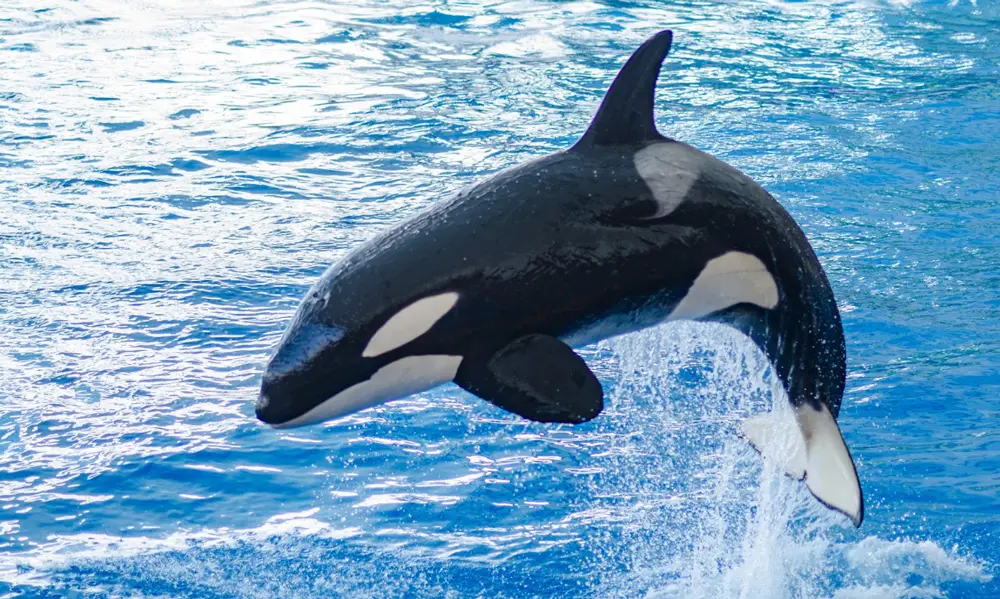
The name killer whale is one of the most misleading common names in the animal kingdom. These animals are not whales. They are dolphins, and specifically the largest dolphins on Earth. Understanding why requires a look at how marine mammals are actually classified and why common names so often diverge from scientific reality.
The killer whale, known scientifically as Orcinus orca, belongs to the family Delphinidae. This is the oceanic dolphin family, which includes spinner dolphins, bottlenose dolphins, pilot whales, false killer whales, and dozens of other species. Every member of Delphinidae is, by definition, a dolphin, regardless of what their common name suggests.
Orcas are the largest member of the dolphin family, reaching up to 32 feet in length and weighing up to 12,000 pounds. By comparison, Hawaiian spinner dolphins typically reach five to seven feet in length and weigh between 130 and 170 pounds. The size difference is dramatic, but the family relationship is real.
The name killer whale has an interesting origin. Early whalers and sailors observed orcas hunting large baleen whales and referred to them as “whale killers.” Over time, the word order reversed, and the name became “killer whale,” which stuck despite being scientifically inaccurate.
This kind of naming confusion is common across the dolphin family. False killer whales are also members of the dolphin family, as are pilot whales and melon-headed whales. None of them are true whales. True whales belong to different families entirely, such as Balaenidae (right whales) and Balaenopteridae (rorquals, including humpback whales).
The distinction matters because it changes how we understand these animals. Orcas are not giant whales that happen to be aggressive. They are highly intelligent, socially complex dolphins that happen to be very large.
Despite belonging to the same family as spinner dolphins, orcas are dramatically different in almost every measurable way.
Dolphins as a group are among the most cognitively sophisticated animals on Earth, and orcas sit at the end of that spectrum. They live in stable, multigenerational family groups led by elder females, develop regional dialects that are passed down culturally, and use coordinated hunting strategies that vary by population and prey type. Populations that hunt fish use different techniques from populations that hunt marine mammals, and these techniques are taught rather than instinctive.
Their size gives them a position in the ocean that no other dolphin occupies. Orcas are apex predators with no natural predators of their own, and they hunt prey ranging from fish and squid to sharks, rays, and other cetaceans, including large baleen whales.
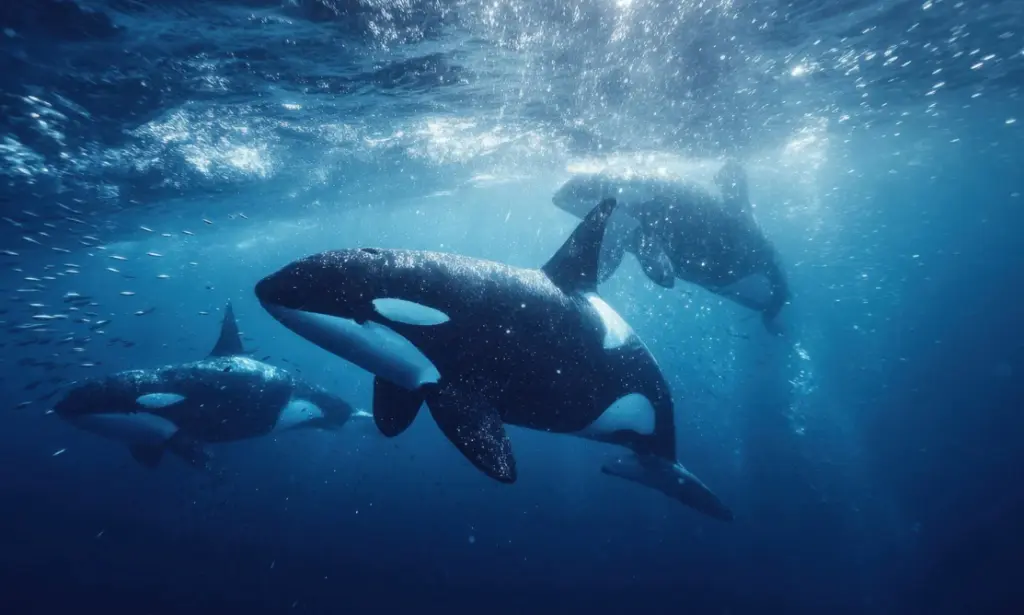
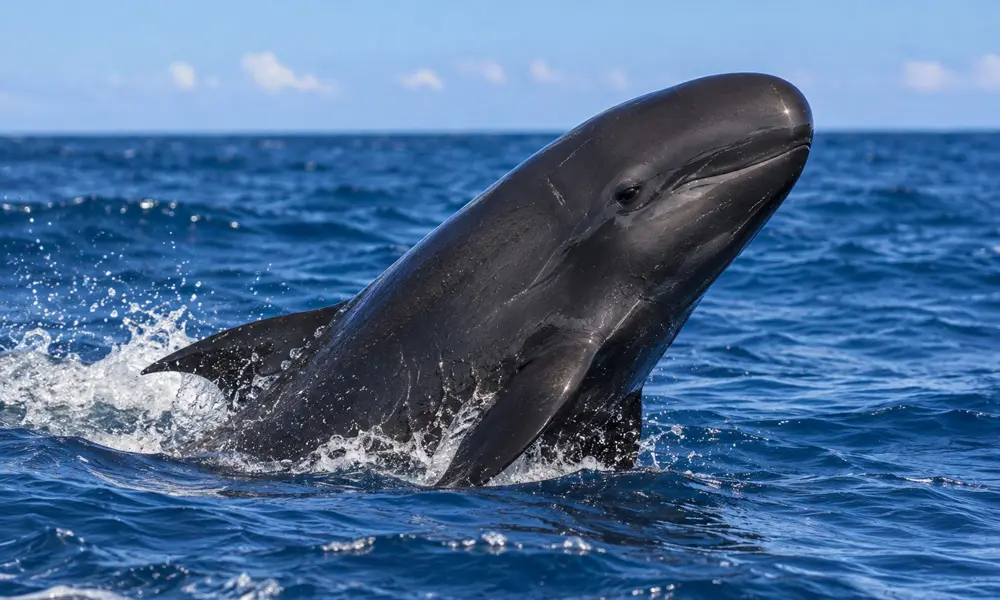
One source of confusion worth addressing directly is the difference between orcas and false killer whales. Both are members of the dolphin family, both have “killer” or “whale” in their common names, and both are dark-colored and large relative to most dolphins.
The differences are significant. Orcas are dramatically larger, reaching up to 32 feet, while false killer whales reach up to 20 feet. Orcas have the distinctive black and white coloration that makes them immediately recognizable, while false killer whales are uniformly dark gray to black. Their dorsal fin shapes differ, and their geographic distributions and prey preferences are distinct.
Hawaii has a resident population of false killer whales that is listed as endangered under the Endangered Species Act. Orca sightings in Hawaiian waters are far less common and typically involve transient individuals rather than resident populations.
Orca sightings in Hawaii are rare but documented. Unlike humpback whales, which migrate to Hawaiian waters on a predictable seasonal schedule, or spinner dolphins, which are year-round residents of the nearshore bays, orcas appear infrequently and unpredictably in Hawaiian offshore waters.
Hawaii’s waters are home to several dolphin and whale species year-round, with additional species appearing seasonally or occasionally. Orcas fall into the occasional category, making any sighting a genuinely rare event.
Yes. On November 2nd, the crew and guests of a Dolphins and You tour had a once-in-a-lifetime encounter with orcas near Yokohama Bay off Oahu’s west coast. The sighting was unexpected and remarkable, one of those moments that reminds everyone on the boat that the ocean holds more than any itinerary can plan for.
The reliable wildlife on a Dolphins and You tour is the spinner dolphin pods that gather off the Waianae Coast, along with Hawaiian green sea turtles during the snorkel stop. Orcas, false killer whales, and other offshore species are the unexpected bonus that the ocean occasionally provides.
Join us on the water and see what shows up.
Want to learn more about the dolphin species found in Hawaiian waters?
Dolphins and You · Oahu, Hawaii
Spinner dolphins are the reliable highlight of every tour off the Waianae Coast. Orcas, false killer whales, and other offshore species are the unexpected bonus. Join Dolphins and You and see what the ocean decides to show you.
4.9 ★
Google & TripAdvisor
35 yrs
in business
Wild
100% wild dolphins
Tours depart from Waianae Boat Harbor, West Oahu, where Hawaii's spinner dolphins gather every day.
