





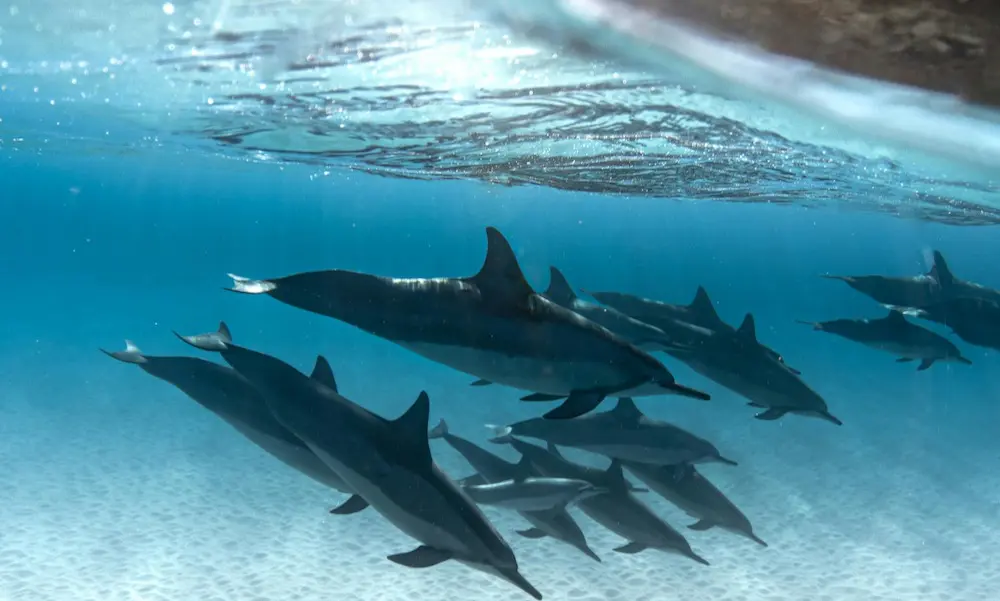
Dolphins are among the most beloved animals in the ocean, and swimming with them in the wild is one of the most requested experiences by visitors to Hawaii. The question is whether it’s actually allowed, and whether it’s safe.
The short answer to both questions is nuanced. Here’s what you need to know before you go.
In Hawaii, specific marine wildlife is protected under federal law administered by the National Oceanic and Atmospheric Administration (NOAA). These regulations cover Hawaiian spinner dolphins, Hawaiian green sea turtles, Hawaiian monk seals, and humpback whales.
For spinner dolphins, the rules are clear.
As of December 2021, NOAA implemented a statewide rule prohibiting anyone from swimming with, approaching, or remaining within 50 yards of Hawaiian spinner dolphins in waters within 2 nautical miles of the shoreline. This applies to swimmers, snorkelers, kayakers, and vessels alike.
The fine for violating this regulation ranges from $100 to $4,500, depending on the severity of the infraction. In more serious cases, fines can escalate significantly higher.
These regulations were introduced in response to documented declines in the spinner dolphin population around Hawaii’s main islands. As dolphin tourism grew, so did the number of unregulated encounters, many of which disrupted the dolphins’ daytime rest periods.
Spinner dolphins hunt at night and rely on undisturbed rest during the day to maintain their health. Repeated disturbances during resting hours were linked to measurable stress and long-term behavioral changes in local pods.
The rule exists to give the dolphins space. Following it is both a legal requirement and a matter of basic respect for the animals.
Responsible dolphin tourism means more than staying 50 yards away.
👉See how Dolphins and You approach sustainability and wildlife protection on every tour →

Setting the law aside for a moment, it’s worth understanding why the regulations make biological sense.
Dolphins are naturally curious animals. They often approach boats and swimmers on their own terms, and those encounters can be extraordinary. But wild dolphins are not domesticated, and their behavior can be unpredictable in ways that carry genuine risk.
Dolphins are physically powerful. A full-grown spinner dolphin weighs between 130 and 170 pounds and can swim at speeds of up to 20 miles per hour. Even playful contact from an animal this size can result in injury, particularly if the dolphin feels threatened or startled.
Wild dolphins can become defensive. Mothers with calves are particularly sensitive to perceived intrusions. Getting between a mother and her calf, even accidentally, can trigger a defensive response.
The shark risk is real, but often misunderstood. A common belief is that swimming near dolphins reduces shark encounters because dolphins deter sharks. While dolphins and sharks do avoid each other in many situations, the presence of a dolphin pod does not eliminate shark risk for a swimmer. Sharks are drawn by food sources and movement, not by dolphins themselves. Staying aware of your surroundings in open water remains important regardless of what else is in the water.
Reef-safe sunscreen matters. If you are entering Hawaiian waters in any capacity, standard chemical sunscreens containing oxybenzone and octinoxate are banned under Hawaii state law. Choose a reef-safe sunscreen before your tour to protect both the reef and the marine life in it.

The 50-yard rule applies to spinner dolphins specifically. Other protected species have their own viewing distance requirements:
Violating these rules puts both the animals and the visitor at legal risk. Responsible operators brief guests on all of these guidelines before departure.
Dolphins and You was among the first dolphin tour operators on the west side of Oahu, with over 35 years of experience on the Waianae Coast. When the 2021 NOAA regulations came into effect, the company transitioned fully to a responsible dolphin watching format, observing spinner dolphins from a respectful distance from the boat rather than entering the water with them.
The result is a different kind of experience, and in many ways a richer one.
Guests watch wild spinner dolphins in their natural habitat, often seeing entire pods surfacing, spinning, and socializing just off the bow. After the dolphin watching portion of the tour, the boat moves to a separate location for snorkeling with Hawaiian green sea turtles and reef fish, kayaking, stand-up paddleboarding, and a 20-foot ocean water slide. A complimentary lunch and Hawaiian cultural activities round out the morning.

Yes, without any question.
Watching a pod of wild spinner dolphins from the boat, seeing them spin, surface, and move together as a group in open water, is a genuinely extraordinary experience. The distance required by law is not so great that it diminishes what you are seeing. In many cases, the dolphins approach the boat on their own, coming within a few feet of the hull out of curiosity.
What the regulations have done is shift the experience from interaction-based to observation-based. That shift, combined with the educational context that responsible operators provide, often results in guests leaving with a deeper understanding of and appreciation for the animals than they would have from a swim-with experience.
The dolphins are wild. They live in a complex social world, with long-term relationships, regional dialects, and cognitive abilities that continue to surprise researchers. Understanding how intelligent they are changes the way you watch them. And that, ultimately, is a better experience than simply being in the water next to them.
Planning the rest of your Oahu trip?
👉Explore our complete Oahu travel guide for more to do on the island →
👉Read our complete Oahu Dolphin Tour Safety Guide, covering everything from equipment and crew to ocean conditions and what to expect on the water.
Dolphins and You · Oahu, Hawaii
Dolphins and You has operated on the Waianae Coast since 1988. Our tours follow all NOAA wildlife guidelines, observe spinner dolphins from a respectful distance, and give you a morning on the water you won't forget.
4.9 ★
Google & TripAdvisor
35 yrs
in business
NOAA
fully compliant
Tours depart from the Waianae Coast, West Oahu, where Hawaii's spinner dolphins gather every morning.