





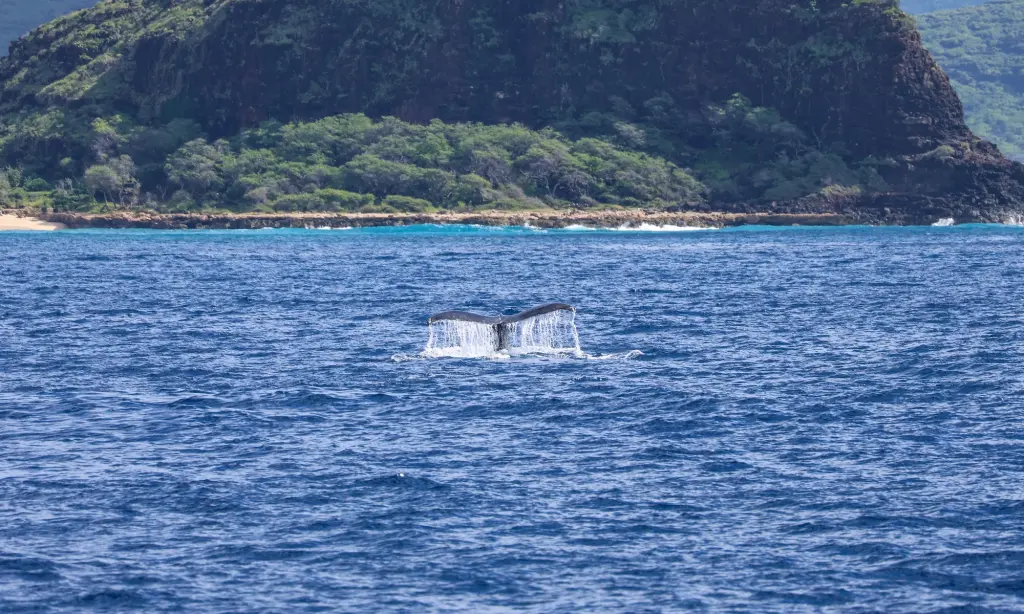
Humpback whales are magnificent creatures known for their size and for breaching the surface of the ocean. But something people don’t know is that humpback whales migrate to Hawaii during the winter season. Here, we will go into depth about humpback whales, their behaviors and diet, and why they tend to migrate to Hawaii during the winter season.
Humpback whales are very large sea creatures, weighing around 40 tons and reaching up to 60 feet in length. They get their name from the hump that is located on their back. Lifespans can range from around 80 to 90 years, averaging just a little above human lifespans. They tend to live scattered across the main world oceans and tend to migrate a lot depending on the season. Despite their huge size, they are filter-feeders, making their diet consist of small crustaceans and small fish.
Humpback whales were once on the endangered species list, as commercial whaling has reduced their population immensely. Because of this, in 1973, NOAA Fisheries started to work on identifying and applying protections for humpback whales. With the efforts put in place to protect them, the population has increased significantly. There are up to 80,000 humpback whales in the wild, compared to a low of around 12,000.
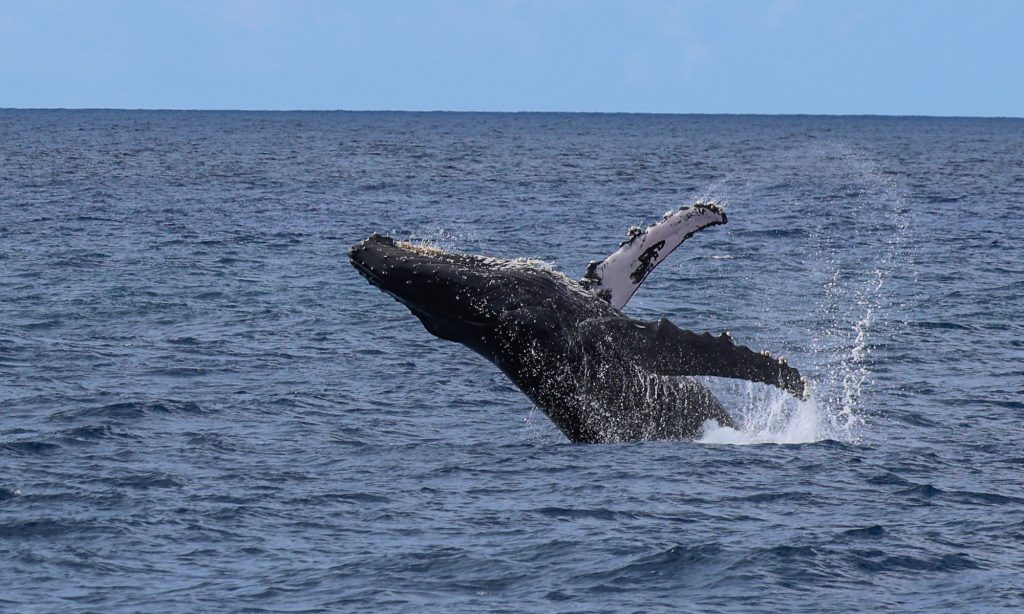
They are known to sing loud and complex songs. It is observed that only male humpback whales sing, and it is believed they do this to give their presence, attracting females and letting other males know they are in the area. They are also commonly observed breaching the ocean’s surface. It is believed by scientist is that it is a form of communication, as when they are animals that weigh around 40 tons, when they slam onto the surface of the ocean, it creates a loud sound that can be heard from miles away.
They also have many other observed behaviors they exhibit from time to time. This can include pectoral fin slamming, spouting, bottom feeding, bubble-net feeding, rounding out, low and high-fluke diving, and spyhopping. Pectoral fin slamming involves the whale to take their long pectoral fin out of the water and violently slamming it back into the ocean, resulting in a huge splash. It is believed that this is another form of communication between each other. The reason whales spout is that when they come to the surface of the water, they blow out any air in their lungs, creating the spout we know, and breathe in a ton of new air. This is the equivalent of humans breathing normally, but they only need to do it once every half an hour. Bubble-net feeding is a feeding behavior that is primarily used by humpback whales.
Bubble-net feeding is done by exhaling air, which creates a “bubble-net”. This is where nearby fish and krill gather, allowing the whale to eat anything that is then captured. Rounding out, and low and high-fluke diving are more of swimming behaviors, where the whale will expose their tail or back to the surface while swimming. Spyhopping involves the whale positioning its body completely vertically and poking its head out so that its eyes are able to see above the surface. It is believed they do this just in order to be able to see activity near the ocean surface.
Every winter, humpback whales migrate from Alaska to Hawaii. This journey tends to take around 3,200 miles, making it one of the longest migrations of any animal. This can take around 6 to 8 weeks, with constant 24/7 swimming, hardly any breaks in between, and swimming at around 3 to 4 miles per hour.
Humpback whales tend to migrate to Hawaii, which has the perfect conditions to nurse their newborn calves. The waters of Hawaii carry the perfect conditions. The water is warmer, shallow waters, creating an easier and safer environment to take care of their young ones. There are also not many large predators in these areas, such as killer whales, making it a desirable place for the whales. On top of this, it gives an area for the newborns to bond with their mothers and gain the strengths that they will need in order to survive in the wild.
While food isn’t one of the main reasons they come to Hawaii, they also use the time here to feed their newborns. The mother whales store a highly nutritious and fatty milk. This milk gives the substance and nutrition needed to the calves, allowing them to grow quickly. They do this by storing up blubber that will last throughout the winter season, so they don’t have to depend on feeding in the waters of Hawaii. Around late spring, the temperature starts to rise, and as this occurs, food becomes more scarce, making them have to return to Alaska, where the food, such as plankton and small fish, starts to thrive, providing enough sustenance for both the parent and newborn whales.
Want to learn more about the marine life you might encounter in Hawaiian waters?
👉 Explore our Marine Life in Oahu guide →
Experiencing humpback whales breaching in Hawaii is a spectacle, sought out to be experienced by many. If you are interested, we offer a seasonal tour called Whales and You. Here, we go out off the coast of Waikiki and observe the humpback whales breach the surface of the ocean. You can also enjoy our on-board hydrophone, which allows us to hear the singing of the whales!
