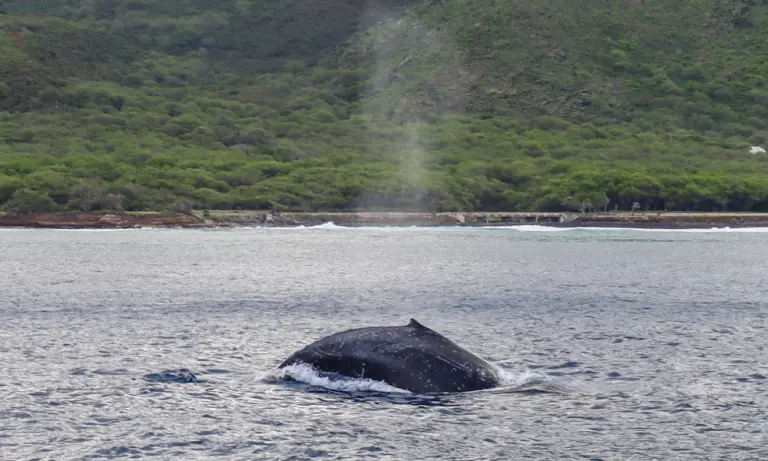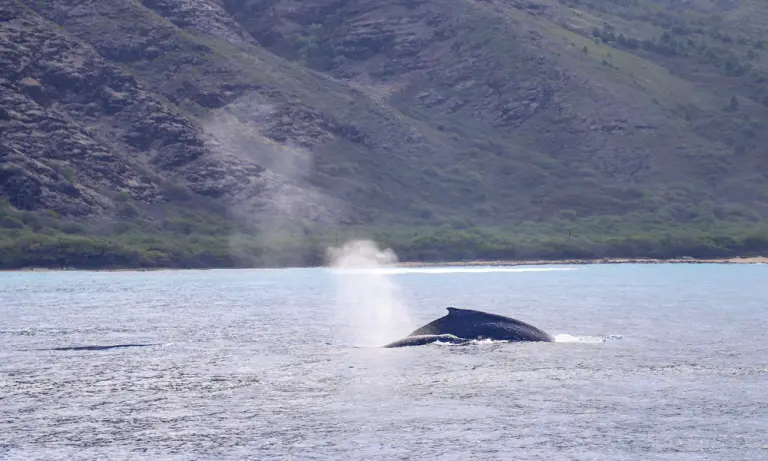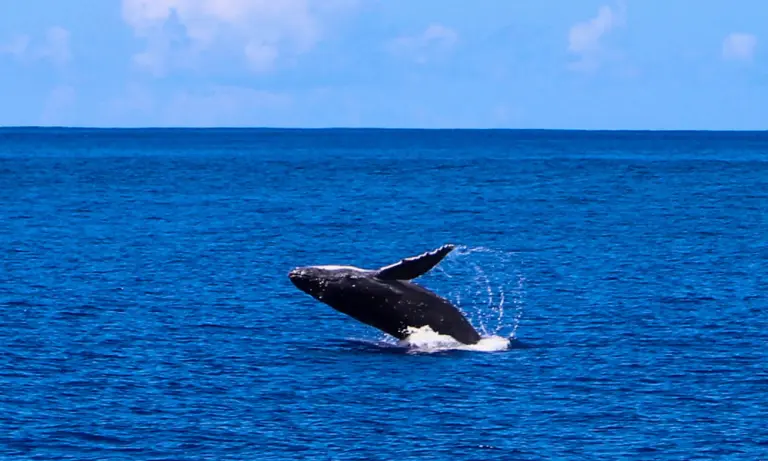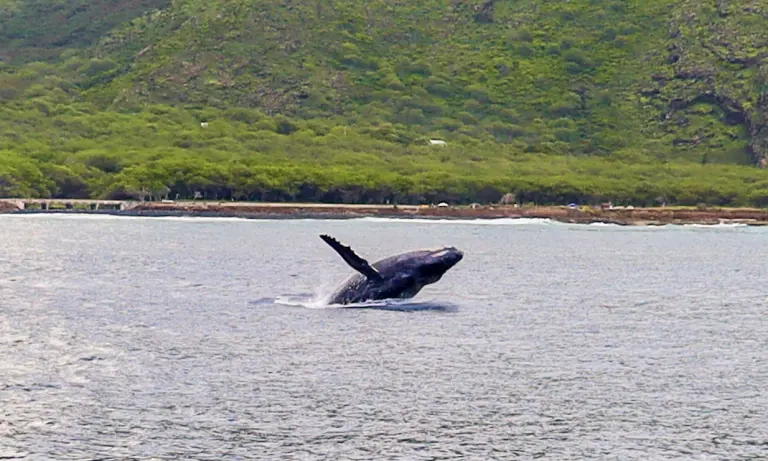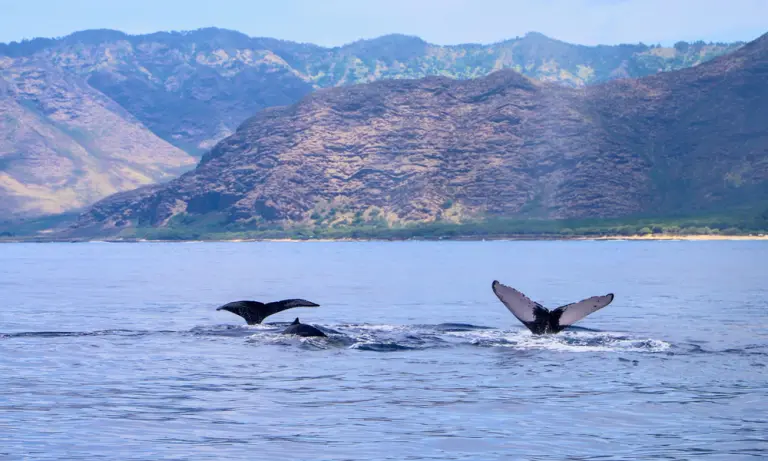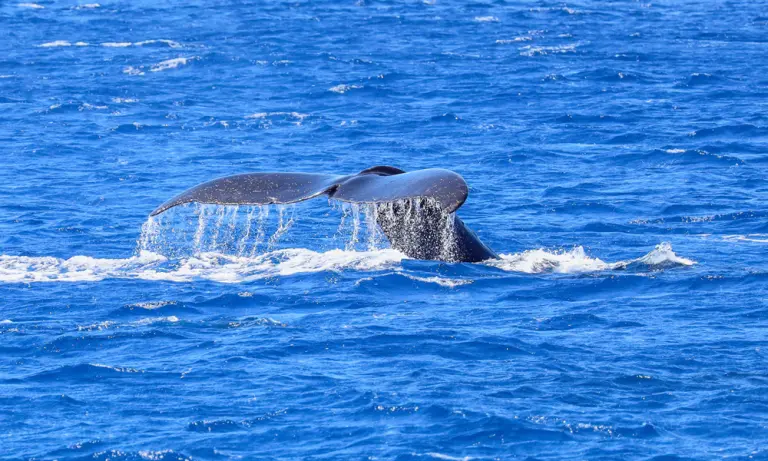





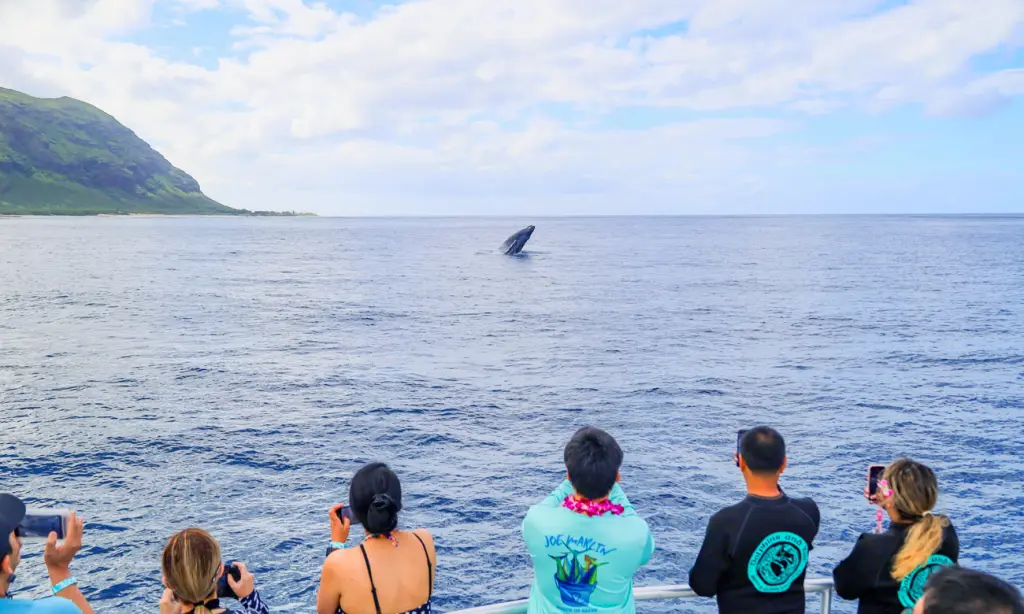
Hawaii is one of the best places in the world to see humpback whales, and the timing is straightforward. These animals migrate from their summer feeding grounds in Alaska to the warm Hawaiian waters every winter, and Oahu’s west coast puts you in the middle of their territory during the peak of the season.
Here is everything you need to know about when to go, where to look, and how to make the most of whale season in Hawaii.
Humpback whales begin arriving in Hawaiian waters as early as late November. Numbers build through December and January, with the peak of the migration typically falling between mid-January and mid-March. By late April, most animals have begun the return journey to Alaska, though some individuals linger into May.
The whales come to Hawaii to breed, give birth, and nurse their calves. Hawaiian waters offer the warm, calm conditions that newborn calves need to build strength before the long migration north. This is why the animals congregate in relatively shallow, nearshore waters during their stay, which also makes them visible from boats and, on calm days, from shore.
Here is everything you need to know about when to go, where to look, and how to make the most of whale season in Hawaii.
If you are planning a trip specifically to see humpback whales, the window from mid-January through mid-March offers the highest concentration of animals and the greatest likelihood of sightings.
During this period:
Outside of this peak window, sightings are still possible. December and April are shoulder months where conditions are quieter but whales are present. November and May are long shots but not impossible for early arrivals and late departures.
Oahu’s west coast, the Waianae Coast, is the most reliable area for whale sightings off Oahu. The channels between Oahu and the neighboring islands of Molokai and Lanai are traditional humpback habitat, and the animals move through these waters regularly during the winter months.
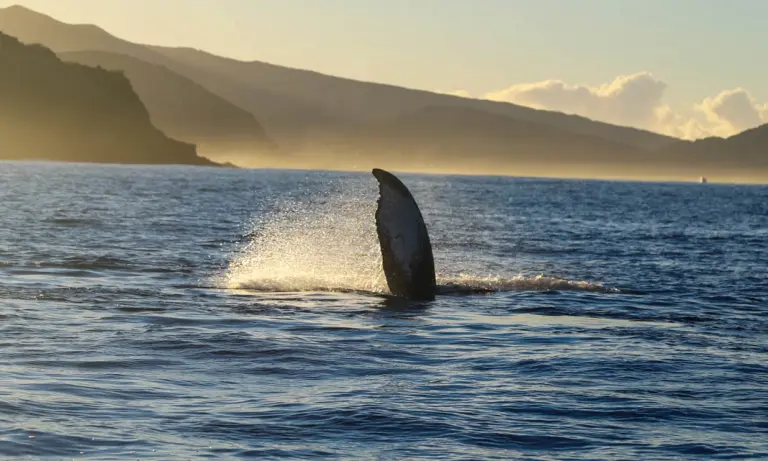
The Waianae Coast offers calm, protected water and good visibility, which makes it easier to spot the blow, the first sign of a surfacing whale, from a distance. On a clear winter day, a whale blow is visible from a considerable distance before the animal itself surfaces.
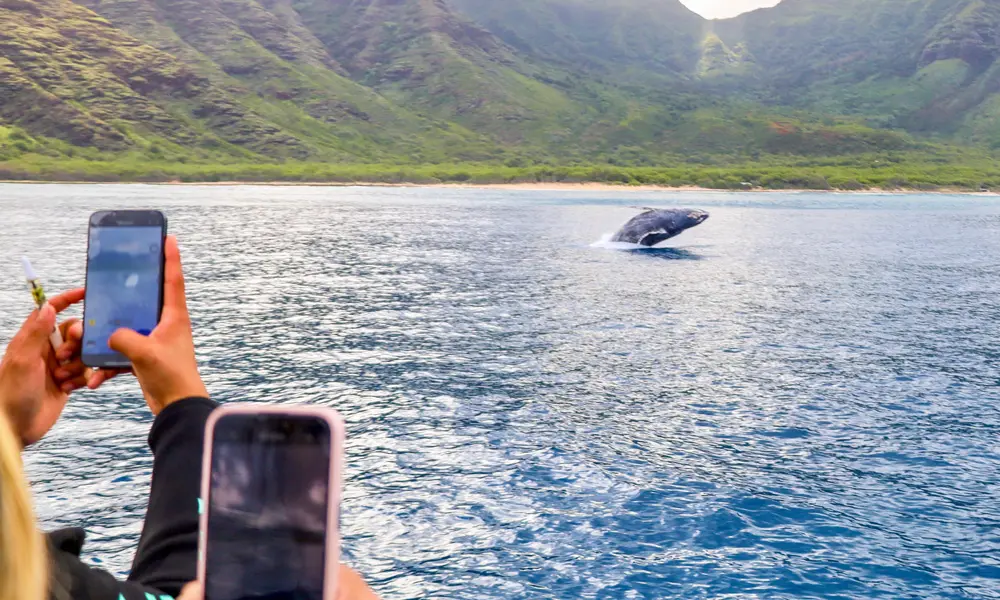
Here is something many visitors do not realize: Humpback whales are frequently spotted on Dolphins and You tours during winter months.
The tour operates off the Waianae Coast year-round, which puts guests in the middle of prime humpback habitat from December through April. The same waters where spinner dolphin pods rest each morning are also the waters where humpback whales surface, breach, and travel during their Hawaiian stay.
Whale sightings on the tour are not guaranteed, just as dolphin sightings are not guaranteed on a whale watching tour. But during peak season, the captain and crew are actively watching for spouts alongside the dolphin pods, and sightings happen on a significant proportion of winter tours.
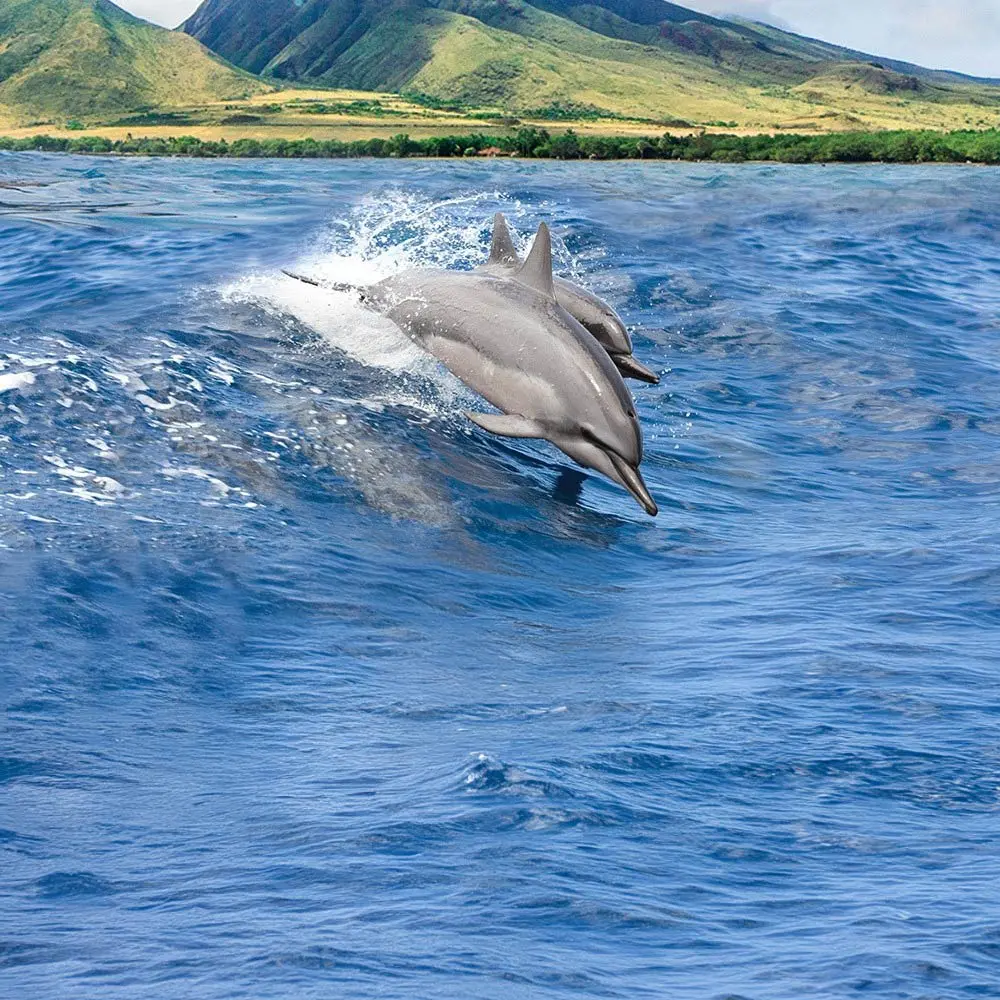
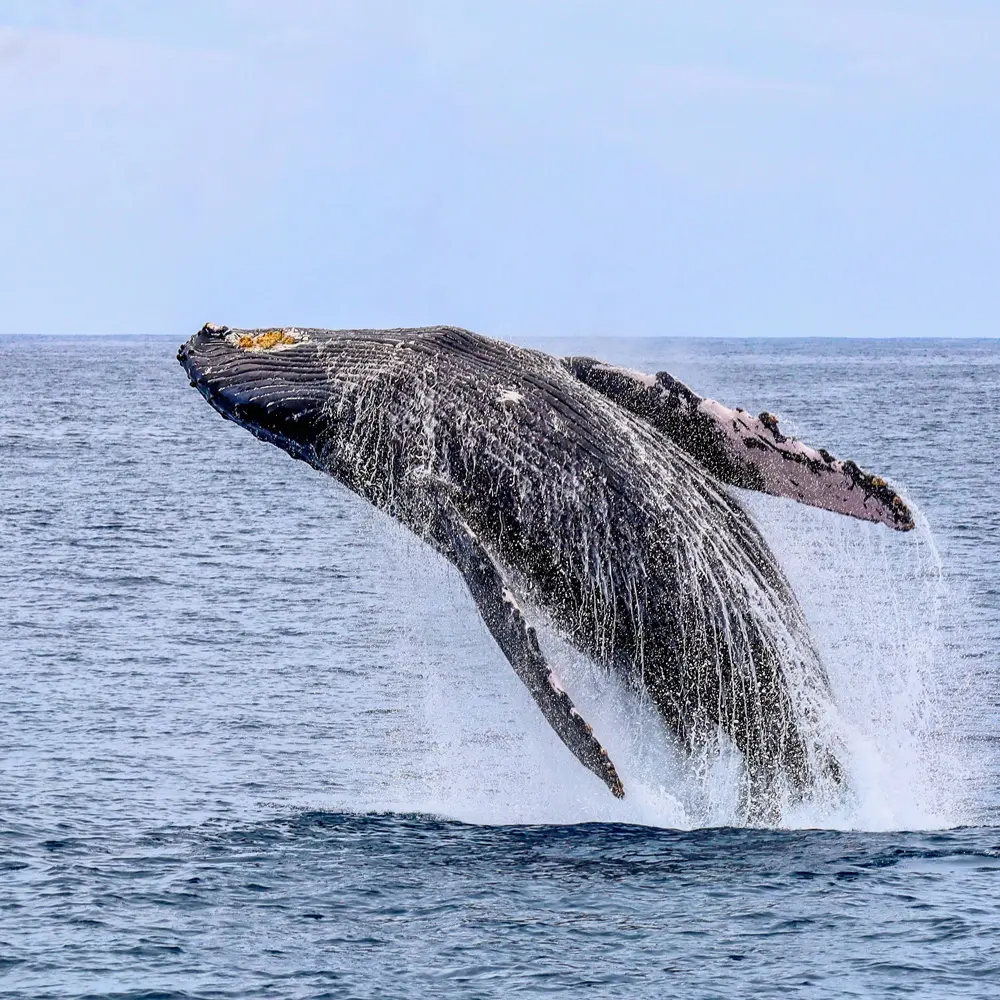
This is the distinctive feature of an Oahu winter tour: the possibility of seeing both species in the same morning.
Humpback whales migrate to Hawaii specifically for the calm, warm nearshore waters that also draw spinner dolphins to the Waianae Coast each morning. The two species share the same general habitat during the winter months, which means a single morning on the water can produce encounters with both.
On a typical winter tour, guests watch spinner dolphin pods from the boat during the dolphin watching portion of the tour. A whale blow or breach spotted in the distance sends the boat toward the sighting while remaining at a respectful, legal distance from the animal. The snorkel stop with sea turtles follows. It is a full morning of Hawaiian marine wildlife in a single trip.
The winter months on the Waianae Coast offer something that is simply not available in summer: the chance to see Hawaii’s two most iconic marine mammals in the same outing.
For visitors who want to focus exclusively on whale watching, or who are visiting Oahu specifically during peak season and want to maximize their time on the water with whales as the primary focus, a dedicated whale watching tour is the right choice.
And You Creations operates dedicated humpback whale watching tours departing from Waikiki during the winter season. These tours are designed specifically around whale sightings, with captains and crew focused entirely on locating and observing humpback behavior during the peak months.
A dedicated tour pairs well with a Dolphins and You tour if you want to cover both species on separate, focused outings during a winter visit to Oahu.
Knowing what to watch for makes a significant difference in how much you see during whale season.
Want to learn more about Hawaii's marine wildlife?
Dolphins and You · Oahu, Hawaii
From December through April, humpback whales share the waters off Oahu's west coast with resident spinner dolphin pods. Join Dolphins and You tour and see what the season brings.
4.9 ★
Google & TripAdvisor
35 yrs
in business
🐳
whales in season
Dolphin tours depart from Waianae Boat Harbor, West Oahu. Whale watching tours depart from Waikiki.