





On most mornings, a Dolphins and You tour is about one thing: spinner dolphins. The pods that rest along the Waianae Coast after a night of offshore hunting are the reason guests come from across the world to be on this particular stretch of water at this particular time of day.
But from December through March, something else happens. The same channels where dolphins travel become a migration corridor for one of the largest animals on Earth. And on many days during that season, both animals show up on the same trip.
Humpback whales migrate to Hawaiian waters each winter to breed and give birth. The journey from their feeding grounds in Alaska covers roughly 3,200 miles and takes six to eight weeks of nearly continuous swimming. They arrive with almost no food reserves and spend the winter in Hawaii’s warm, shallow waters nursing their calves and mating, without eating.
The peak of humpback season around Oahu runs from mid-December through late March, with the highest concentration of whales typically in January and February. During this window, the channels off the Waianae Coast see regular whale activity, often in the same waters where spinner dolphins rest and travel each morning.

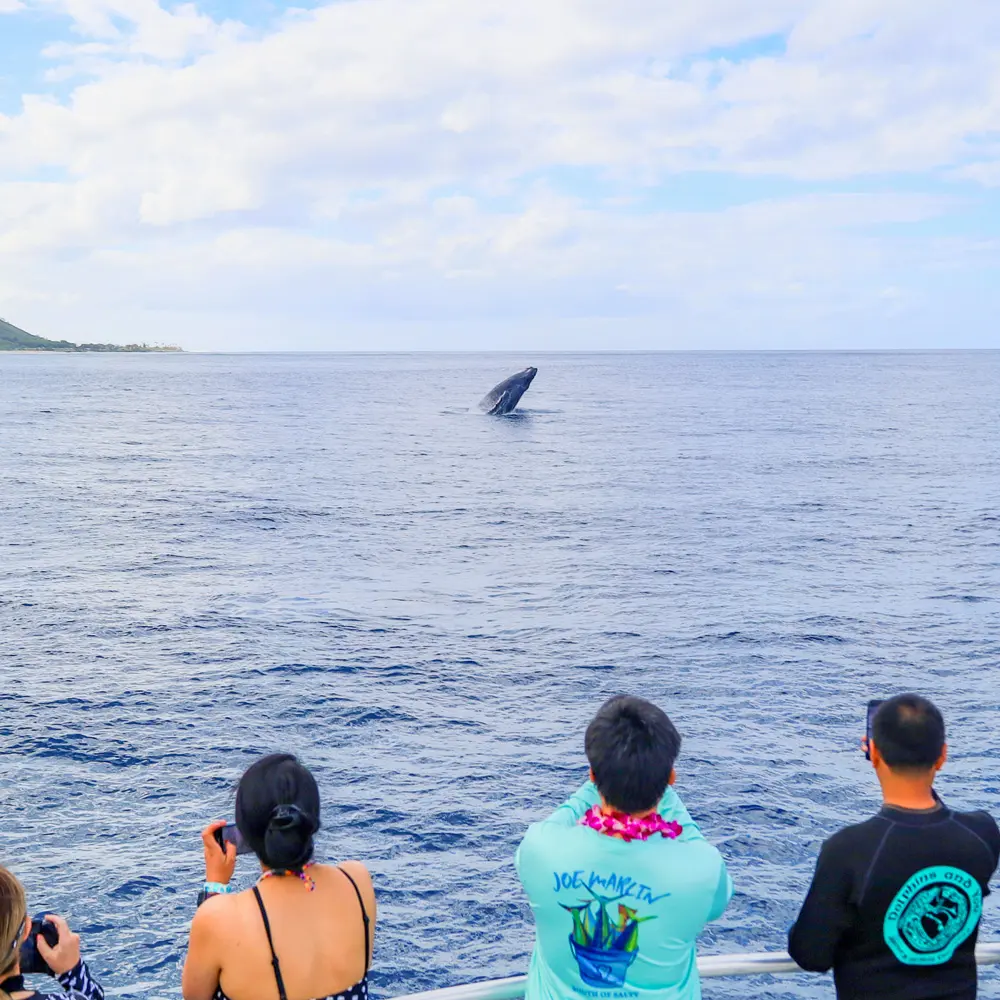
The Waianae Coast sits along the leeward side of Oahu, where calm conditions and deep offshore channels create ideal conditions for both species. Spinner dolphins are drawn to this coastline year-round for its sheltered bays and proximity to deep feeding water. In winter, humpback whales use the same channels as travel routes between the open ocean and Hawaii’s coastal breeding areas.
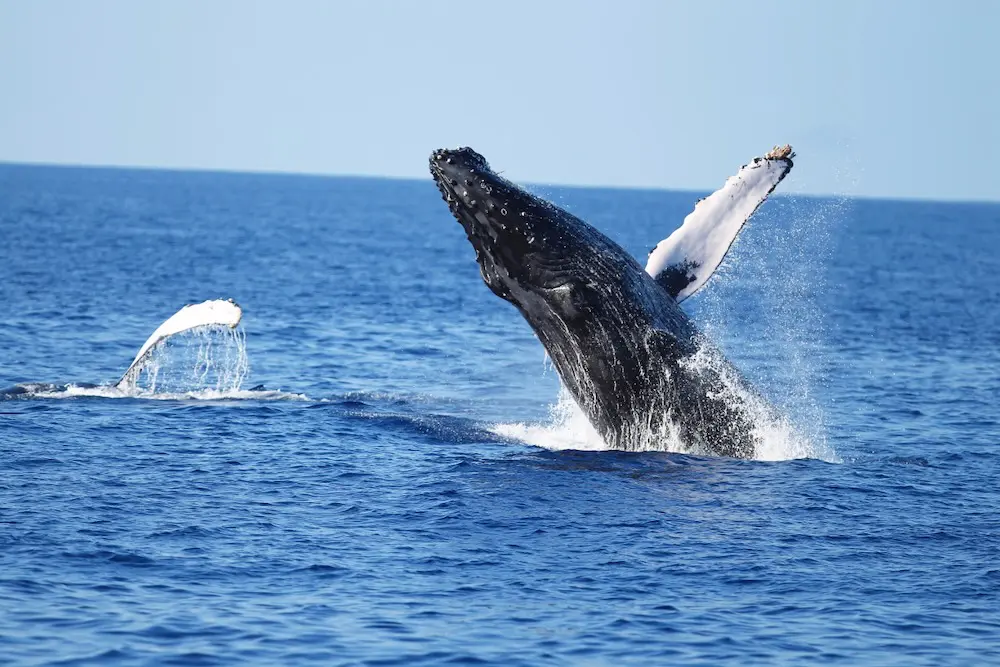
On a winter morning tour, the crew scans for both. Signs of whale presence include spouts rising above the surface, arching backs before deep dives, pectoral fin waves, and the dramatic full breach that can be seen from a significant distance. The captain reads the water for smooth patches, bird activity, and synchronized surfacing that can indicate whale movement below.
What guests experience on these tours varies considerably. Some mornings bring close passes from adult humpbacks traveling just off the bow. Others offer distant spouts and tail lifts on the horizon as the crew focuses on the spinner dolphin pods nearby. Understanding the difference between how dolphins and whales behave at the surface makes it easier to know what you are looking at in real time.
A few practical things improve your experience during whale season:
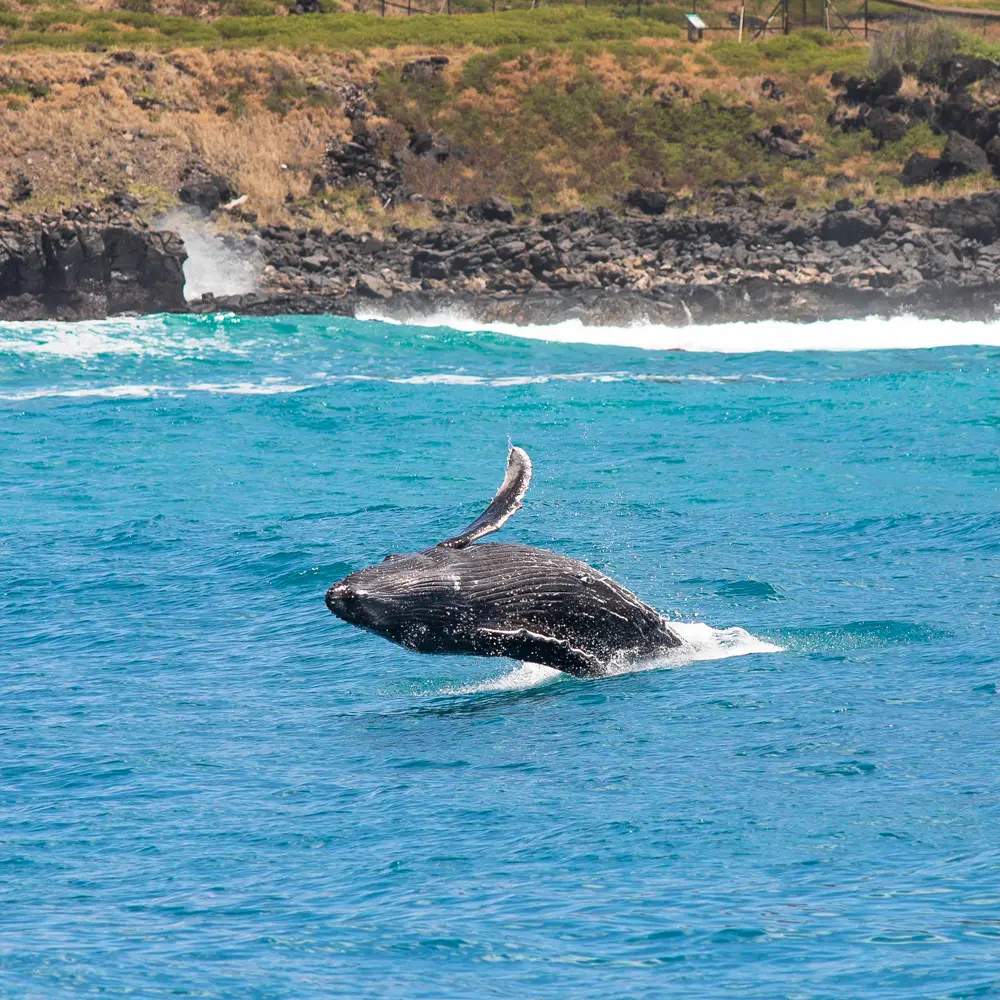
The Waianae Coast in winter offers something genuinely unusual: a place where year-round resident dolphins and seasonally migrating whales share the same waters on the same morning. The spinner dolphin pods that make this coastline famous do not disappear during whale season. They are still there, still resting after their nightly hunts, still spinning and socializing near the surface.
The humpbacks simply join them for a few months. And on the right morning, with the right conditions, you can watch both from the same boat without traveling anywhere.
Book a winter morning tour with Dolphins and You and see what December through March on the Waianae Coast actually looks like.
Want to learn more about the marine life you can encounter in Hawaiian waters?
Want to see humpback whales in person?
From December through March, humpback whales share Hawaiian waters with Oahu's resident spinner dolphins. Here are two ways to see them.
Waianae Coast · West Oahu
Dolphins and You Dolphin Tour
Join our morning dolphin watching tour on the west side of Oahu. During whale season, there is a high chance of spotting humpback whales alongside the spinner dolphin pods.
View dolphin tour details →Waikiki · December to March Only
Whales and You — Dedicated Whale Watching Tour
Departing from Kewalo Basin Harbor near Waikiki, our dedicated whale watching tour focuses entirely on finding humpback whales. Includes an onboard hydrophone to hear the whales sing.
🐋 If no whales are spotted, you get a free return trip — guaranteed.
View whale watching tour details →