

Meet the Rough-Toothed Dolphin: Hawaii’s Deepest-Water Ocean Dweller
Ask most people which dolphins live in Hawaiian waters, and the answer you will almost always hear is spinner dolphins. The spinners are there, and they are remarkable, but Hawaii is home to more cetacean species than most visitors ever realize. One of the more unusual is a deep-ocean animal that most people have never heard of. The rough-toothed dolphin lives year-round in the offshore waters around the Hawaiian Islands, and it looks, behaves, and lives so differently from everything else out there that spending a few minutes learning about it changes the way you see the ocean.
What Are Rough-Toothed Dolphins?
The rough-toothed dolphin carries the scientific name Steno bredanensis, and it is the only member of its genus. The genus name, Steno, comes from the Greek word for narrow, a reference to the distinctive long, narrow beak. The species name, bredanensis, honors Joseph van Breda, a Dutch naturalist who first formally described the animal in the early 1800s.
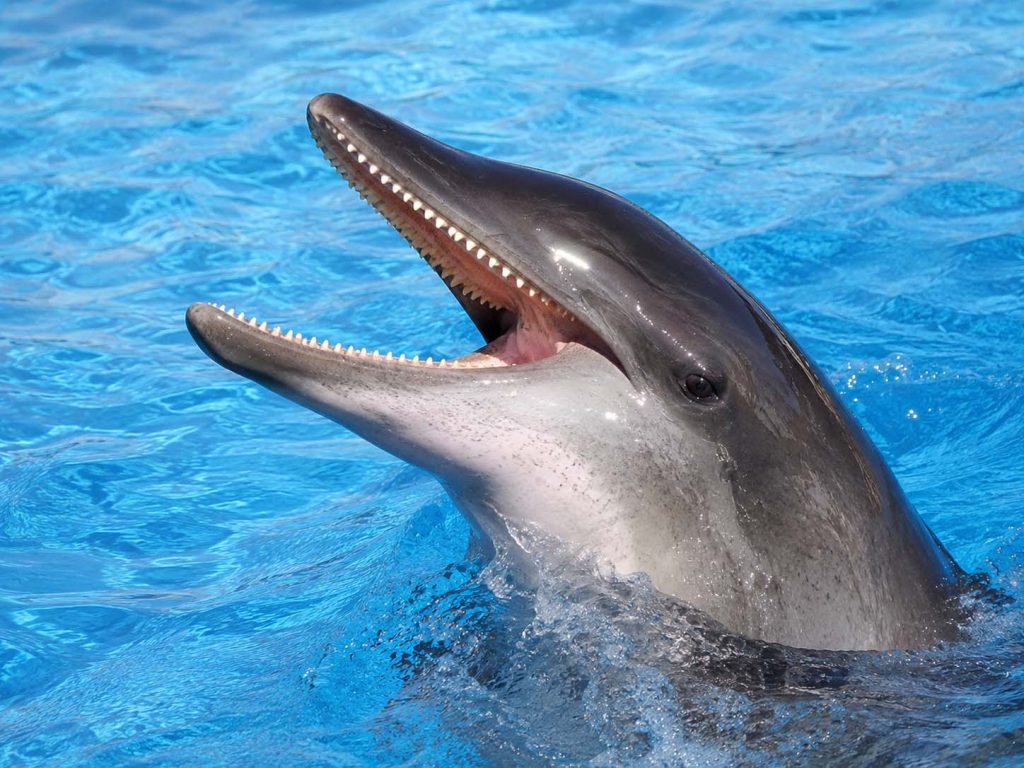
The name rough-toothed is a direct description of what makes this dolphin genuinely different from all others. Most dolphins have smooth, cone-shaped teeth. The rough-toothed dolphin’s teeth have fine ridges and wrinkles along their surface, a texture that is clearly visible and felt up close. To a biologist examining an animal in the field, those textured teeth are one of the clearest identifiers of the species.
How to Tell a Rough-Toothed Dolphin from Other Species
If you are on the water near Oahu and a group of dolphins surfaces nearby, a rough-toothed dolphin will stand out from spinners and bottlenose if you know what to look for.
The most distinctive feature is the head shape. Almost all dolphin species have a clearly defined crease, a sharp line where the beak meets the forehead. In the rough-toothed dolphin, that crease is completely absent. The forehead, called the melon, blends smoothly and continuously into the beak with no visible break. The result is a long, sloping look unlike any other dolphin in the Pacific.
The coloration adds to the unusual appearance. The back and upper body are dark gray to charcoal. But the lips are white or pinkish-white, and the sides of the body are often marked with irregular white, pale yellow, or pinkish blotches and spots. No two individuals are marked exactly alike, which makes photo identification practical for researchers tracking specific animals over time.
Adult rough-toothed dolphins range from about seven to nine feet in length and weigh between 200 and 350 pounds, placing them solidly between a spinner dolphin and a bottlenose in size.
Where Rough-Toothed Dolphins Live in Hawaii
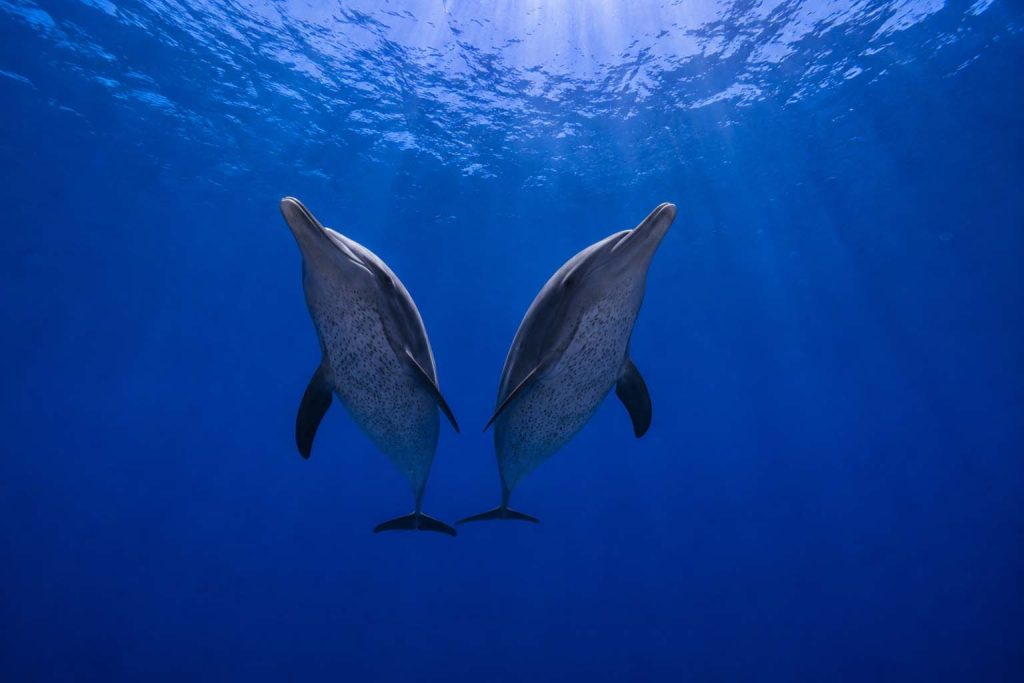
Rough-toothed dolphins are found in tropical and subtropical waters worldwide, spanning the Pacific, Indian, and Atlantic Oceans. In Hawaii, they are considered year-round residents, with documented populations around Kauai and Niihau according to NOAA research. They have also been documented in waters off Oahu, the Big Island, and other main Hawaiian Islands.
Unlike spinner dolphins, which reliably return to specific coastal bays to rest during the day, rough-toothed dolphins spend most of their time in deeper offshore water. Their typical habitat runs from roughly 1,000 feet of depth and beyond, making them genuinely pelagic animals even within the context of Hawaiian coastal waters.
This preference for deep offshore habitat is a large part of why so little is known about them compared to Hawaiian spinner dolphins, which have been studied intensively for decades in the nearshore waters they favor. Rough-toothed dolphins are simply harder to find and harder to observe consistently.
What Rough-Toothed Dolphins Eat
Rough-toothed dolphins prefer large prey. Their diet consists primarily of large fish, squid, and occasionally octopus. In Hawaiian waters, mesopelagic fish, species that live in the deep-water layer between roughly 600 and 3,000 feet, make up a significant part of what they hunt. Many of these prey species are only accessible to animals capable of deep, sustained dives, which likely explains this dolphin’s preference for offshore deep-water habitat.
Unlike spinner dolphins, which use coordinated group hunting techniques to round up fish schools at night, rough-toothed dolphins appear to hunt more individually or in loose association within their pods. They have been observed tossing and playing with large fish at the surface before consuming them, a behavior that has been documented but is not fully understood.
Life in a Tight Pod
Rough-toothed dolphins form small, close-knit groups. Most pods in Hawaiian waters contain somewhere between 10 and 25 individuals, though they may temporarily join with other groups or other cetacean species when feeding or traveling. They have been documented swimming alongside bottlenose dolphins, pilot whales, and other species around the Hawaiian Islands, often in what appear to be relaxed, non-aggressive associations.
Within their pods, rough-toothed dolphins appear to form stable, long-term social bonds. Research into their social structure is still in early stages compared to what has been documented for spinner dolphins, but photo-identification studies suggest that the same individuals travel together consistently over the course of years.
Their traveling style is also distinctive. Rough-toothed dolphins sometimes ride bow waves alongside boats, as many dolphins do. But they also have a characteristic way of moving at the surface in which the head and beak angle slightly downward while the animal swims forward, giving them a different silhouette than the more upright surface profile of a spinner or bottlenose.
An Extraordinary Discovery off Kauai
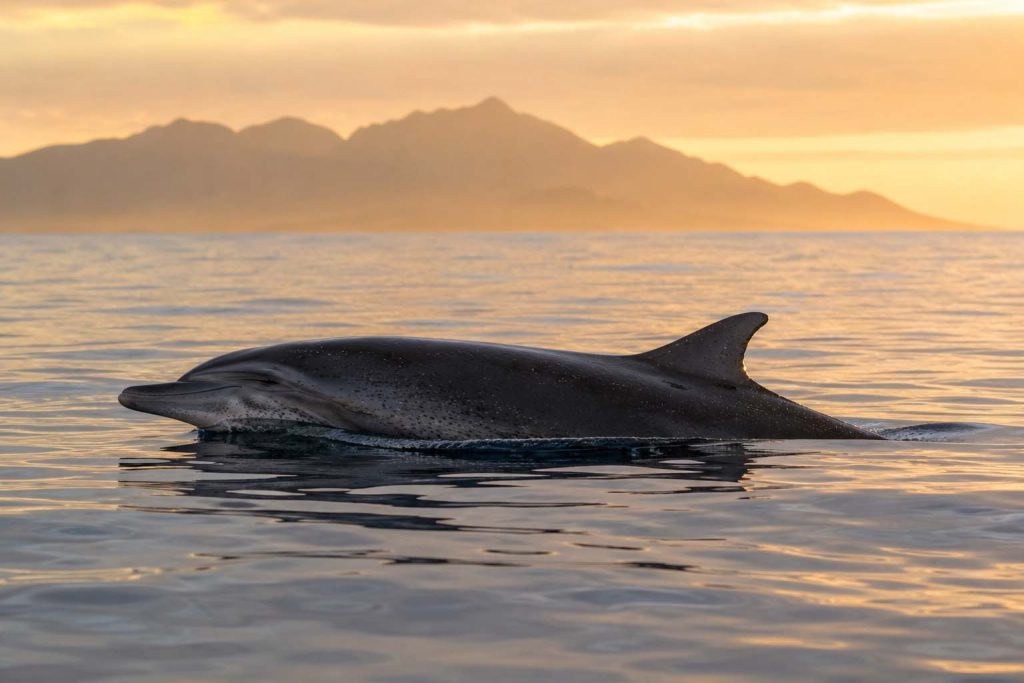
In 2017, researchers from NOAA’s Pacific Islands Fisheries Science Center were conducting a cetacean survey off the coast of Kauai when they photographed and biopsied an unusual animal that did not match any known species. When the genetic results came back, they confirmed something that had never been documented in the wild before: a hybrid between a rough-toothed dolphin, Steno bredanensis, and a melon-headed whale, Peponocephala electra.
The hybrid had a body shape and coloration that blended features of both parent species. Researchers confirmed the cross-species parentage through DNA analysis. Finding two genetically distinct cetacean species that had successfully produced offspring together, in Hawaiian waters, was a reminder of how much is still unknown about the ocean around these islands. It also highlighted the rough-toothed dolphin’s apparently social and wide-ranging nature, since encountering a melon-headed whale in the open ocean and forming any kind of bond requires crossing between very different lifestyle patterns.
How Rough-Toothed Dolphins Are Protected
All cetaceans in Hawaiian waters, rough-toothed dolphins included, are protected under the Marine Mammal Protection Act. Federal rules prohibit approaching, chasing, or interacting with any wild dolphin or whale in a way that disrupts its natural behavior. NOAA enforces these protections for commercial operators and private boaters alike.
In Hawaii, spinner dolphins have specific additional protections under a 2021 NOAA rule requiring boats and swimmers to stay at least 50 yards away in their resting bays and restricting approach angles. Rough-toothed dolphins, as offshore deep-water animals, are typically encountered in different conditions, but the same underlying legal protections apply to every wild cetacean in American waters.
Could You Spot One on an Oahu Tour?
Rough-toothed dolphins do not follow the same reliable daily routine as Hawaii’s spinner dolphins. They are not guaranteed on any trip, and that is exactly what makes an encounter with one genuinely special. The Dolphins and You tour runs out of Waianae Harbor on Oahu’s west coast, where the seafloor drops quickly into the kind of deep offshore water that rough-toothed dolphins favor. Sightings do happen, particularly when conditions push the tour farther offshore.
The full three-hour tour departs at 8:00 AM and 12:00 PM daily and includes snorkeling with Hawaiian green sea turtles, kayaking, stand-up paddleboarding, a 12-foot water slide, a sandwich lunch, and live hula on board. Transportation from Waikiki and Ko Olina is included. On any given day, the ocean decides what appears, and that unpredictability is exactly what makes going out worth it.
The Dolphin Most People Never Think to Look For
Spinner dolphins get most of the attention in Hawaii, and they have earned every bit of it. But every trip offshore is also a window into an ocean that runs much deeper and holds far more than what the surface suggests. Rough-toothed dolphins have been living in Hawaiian waters for far longer than anyone has been watching for them, moving through deep offshore water in tight pods, hunting large prey, and occasionally surfacing close enough to a passing boat to leave everyone on deck a little stunned. The ocean is always full of more than you came expecting to find.
Want to learn more about every dolphin species found in Hawaiian waters?
👉Return to our complete guide to dolphin species in Hawaii →
Tours depart from Waianae Boat Harbor, West Oahu, where Hawaii’s spinner dolphins gather every morning.