


Watching wild dolphins from the deck of a boat, it is easy to see them as cheerful, acrobatic animals. They spin, they leap, they race alongside the hull without any apparent care in the world. But researchers who have spent years observing dolphins in the wild have seen something that does not fit that image at all. They have seen mothers carrying dead calves through the water for days. They have seen pod members circling the spot where another dolphin died, long after the body was gone. They have documented behavior that, in a human context, we would call mourning without hesitation. The science around dolphin grief is still being developed, but what has already been recorded is enough to change the way you think about these animals.
What Researchers Have Witnessed
Since 2019, scientists have recorded more than 30 instances of postmortem calf-carrying behavior in cetaceans, the group that includes all dolphins and whales. Multiple species are represented in that number: Indo-Pacific bottlenose dolphins, spinner dolphins, Australian humpback dolphins, and others. In each case, an adult, almost always the mother, was seen supporting or carrying the body of a dead infant through the water. Some observations lasted a few hours. Others went on for nearly a week.
The behavior is physically costly. A dead calf creates drag that forces the mother to work harder to swim, surface, and breathe. She cannot feed normally while carrying the body. She falls behind the rest of the pod. For an animal built around efficiency and group survival, this is a real sacrifice. The fact that mothers persist despite those costs is what makes researchers pay close attention.
In some documented cases, females carried the bodies of calves that were not their own. Other pod members have been observed swimming closer than usual to the grieving mother, lingering near her instead of moving ahead with the group. Researchers describe this as attendance behavior, a collective response that suggests the whole pod registers the loss, not just the individual who lost the calf.
Spinner Dolphins and What They Do
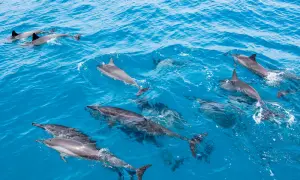
Spinner dolphins, the species most commonly seen on an Oahu dolphin tour, are among those documented showing this behavior. In the Red Sea, researchers observed a spinner dolphin pushing the body of a young animal directly toward a nearby research vessel. That kind of directed behavior, moving a dead animal toward humans, suggests more than simple attachment or confusion. It points to a social response to death that reaches beyond the immediate mother to involve the surrounding environment.
Spinner dolphins live in large, tightly bonded pods where individual relationships are established over years. Members recognize each other by sound, travel with the same companions night after night, and rely on the group for everything from finding food to raising young. The death of one pod member does not go unnoticed. For these animals, one individual is not interchangeable with another, which makes each loss meaningful to the group in a way that would not be possible for less socially complex creatures.
What Dolphin Whistles Reveal
Some of the most striking evidence around dolphin grief comes not from what they do with their bodies, but from what they do with their voices. Research in recent years has documented measurable changes in dolphin whistle patterns around the time of a pod member’s death.
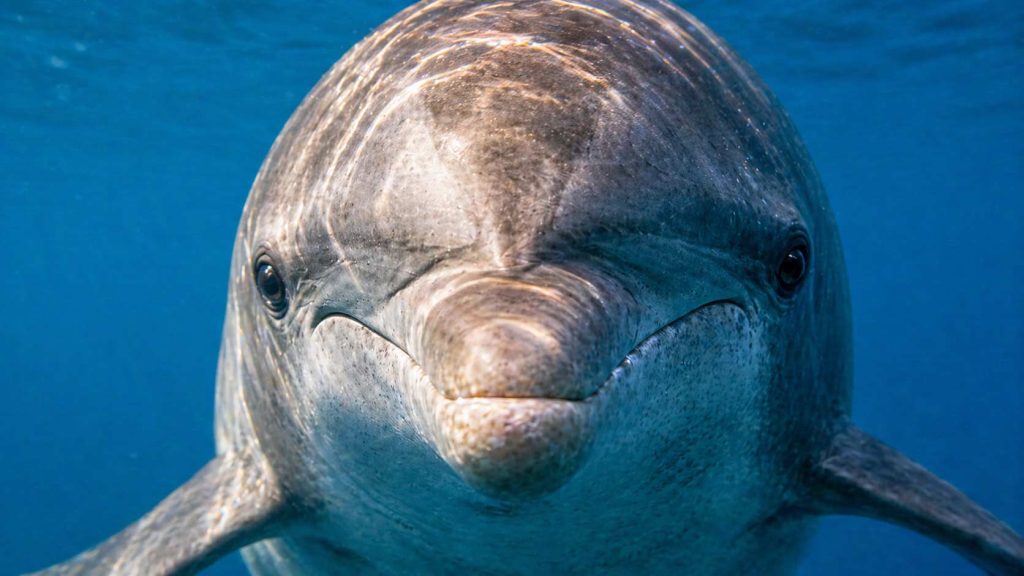
Dolphins develop signature whistles, unique calls that function almost like names. Every individual has one. Other pod members learn to recognize it, and dolphins use these signatures to identify and locate each other in open water. When a dolphin dies, remaining pod members have been found emitting the signature whistle of the deceased animal at higher rates in the days that follow. It is a measurable behavior with no obvious survival benefit. It reads, simply, like calling a name that no longer gets an answer.
Can We Call It Grief?
Here is where scientists are careful. Labeling an animal’s behavior as grief carries weight. Grief in the human sense involves a conscious understanding of death, memory of the individual lost, and emotional processing over time. Whether dolphins experience all of those elements is not something researchers can measure directly. What they can measure is behavior, and the behavior is consistent enough across species, locations, and circumstances that dismissing it as reflex or instinct no longer holds up.
The scientific picture that has emerged is this: cetaceans with larger brains relative to their body size, living in more complex and stable social groups, are the most likely to show grief-like responses after a death. Dolphins fit that description precisely. Large brains. Long-term social bonds. Individual recognition of pod members over years. Those same conditions, in humans, are exactly what make grief possible. When you reproduce them in a different species, the outcome appears to be similar.
- Mothers have been observed carrying deceased calves for up to seven days
- Females sometimes carry the bodies of calves that were not their own offspring
- Signature whistle rates for deceased pod members increase in the days following a death
- Attendance behavior around a grieving mother suggests a collective group response to loss
What This Means About the Animals You See on Tour
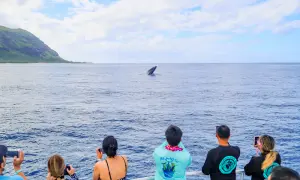
When the Dolphins and You boat reaches the Waianae Coast in the morning, and the pod appears off the bow, most guests are watching the spinning and the speed. That is understandable. But what that pod represents is a group of animals that know each other by name, that spent the previous night hunting together in deep water, and that carry real social histories with every member of the group. These are not anonymous animals moving in a crowd. They are individuals embedded in relationships that last for years.
The grief research adds something important to that picture. These dolphins are not just social. They are attached. The loss of one pod member changes how the others move, how they communicate, and how they spend their time in the days that follow. Every animal you see from the boat is part of a web of relationships that goes much deeper than what is visible from above the surface.
Gone but Not Forgotten in the Pacific
The question of whether dolphins truly grieve the way humans do does not have a clean answer yet, and it may never have one. But the evidence that exists is harder to dismiss than it once was. More than 30 documented cases of postmortem carrying. Changed whistle patterns in the days after a death. Pod members choosing to stay near their loss instead of moving on. For animals that cannot speak for themselves, that adds up to something worth taking seriously.
The next time you watch a pod of spinner dolphins gliding through the morning water off Oahu, it is worth remembering that what looks effortless on the surface carries real depth underneath it. These animals feel the weight of what they lose. Science is still finding the language to describe exactly how, but the behavior itself has been there all along, in the water, for anyone patient enough to watch.
Want to explore more about how Hawaii’s spinner dolphins think, feel, and behave?
👉Return to the Dolphin Behavior and Intelligence guide →
Tours depart from Waianae Boat Harbor, West Oahu, where Hawaii’s spinner dolphins gather every morning.