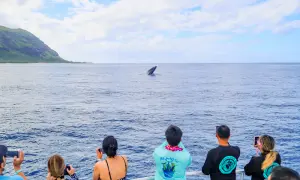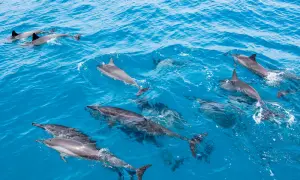



If you want to see wild spinner dolphins in Oahu, nearly every experienced guide will send you west. There is a reason for that. The Waianae Coast attracts spinner dolphins almost every single day, and that reliability is not luck. It comes from a specific combination of geography, ocean conditions, and biology that fits the daily needs of Hawaiian spinner dolphins better than almost anywhere else on Earth.
Here is what makes this coastline so consistently productive. For a complete look at how spinner dolphins spend every hour of the day and night, 👉see our full 24-hour spinner dolphin daily routine guide →
The daily rhythm of spinner dolphins is built around
To understand why the Waianae Coast works so well for spinner dolphins, it helps to first understand how their day is actually structured. Spinner dolphins are nighttime hunters. After dark, they move offshore into deep water to chase the small fish, squid, and shrimp that migrate upward from the ocean depths each night. By the time a pod has finished hunting and made its way back toward shore, sunrise is often already approaching.
What they need after a full night of deep-water hunting is a safe, calm, warm place to rest and recover. That is exactly what the Waianae Coast provides.
A spinner dolphin’s day follows a predictable pattern:
- Night: Hunt small fish, squid, and shrimp offshore in deep water
- Early morning: Travel back toward the coast as prey descends again
- Morning to midday: Rest and socialize in shallow, sheltered bays
- Afternoon: Travel along the coast and prepare to head offshore again after sunset
This rhythm is one of the most consistent behavioral patterns in the animal kingdom. And the Waianae Coast is designed, almost perfectly, to support it.
Shallow, sheltered bays for daytime rest
The leeward side of Oahu’s west coast is naturally protected from the strong trade winds and swells that affect the island’s windward shores. The bays along the Waianae Coast are calm, warm, and shallow, which gives spinner dolphins a safe environment to rest, socialize, and care for their young without the energy cost of fighting currents or staying alert for predators in open water.
Sandy bottoms in these bays make it easier for dolphins to detect approaching animals from a distance. The visibility in calm, clear water supports the kind of social behavior that holds a pod together, synchronized surfacing, gentle body contact, and the spinning leaps the species is famous for. Calves learn by copying adults in this environment, and the social bonds formed during daytime rest periods directly improve how well the pod functions during the night’s hunt.
Tiger sharks, the primary predators of adult spinner dolphins in Hawaii, tend to prefer deeper water. The shallow coastal bays of the Waianae Coast offer a degree of natural protection that open ocean water does not, which matters significantly to a pod that includes nursing mothers and young calves.

Deep water close to shore
What makes the Waianae Coast particularly rare is not just the sheltered bays. It is the combination of sheltered bays and rapid access to deep water just offshore.
Hawaii’s islands rise steeply from the seafloor. A few miles off the Waianae Coast, the ocean floor drops sharply into water hundreds of meters deep. This means spinner dolphins can move from their daytime resting bays to their nighttime feeding grounds in a relatively short swim, without having to travel long distances before the hunting begins.
The deep channels just offshore bring dolphins close to rich feeding zones every night. Small mesopelagic fish and squid follow the vertical migration pattern that brings them near the surface after dark, and the deep water off the Waianae Coast places spinner dolphins directly in the path of that migration. It is essentially a dining room and a rest stop within easy reach of each other.
Consistent food supply and clear water
Hawaii’s ocean temperatures are comfortable year-round, which supports the stable prey populations that spinner dolphins depend on. The clarity of Hawaiian water improves both echolocation effectiveness and visual communication within the pod. Spinning leaps are easier to see and respond to in clear water, making the social coordination that holds a pod together more efficient in Hawaiian conditions than in murkier ocean environments.
The Waianae Coast also benefits from relatively consistent prey availability in its offshore waters. While the specific composition of a pod’s nightly catch may vary, the deep channels off this coastline reliably support populations of lanternfish, squid, and shrimp throughout the year, which is one reason spinner dolphin presence here is stable across seasons rather than concentrated in a few peak months.
Less boat traffic than the rest of Oahu
Compared to the waters around Waikiki and the south shore, the Waianae Coast sees significantly less recreational and commercial boat traffic. For spinner dolphins, which are sensitive to noise and disturbance during their daytime rest periods, this quieter environment makes a meaningful difference.
NOAA regulations require all vessels to stay at least 50 yards from resting spinner dolphins, and the relative calm of the Waianae Coast means fewer accidental encounters and less cumulative disturbance than dolphins would face in busier parts of the island.
Why morning tours work
The timing of Dolphins and You tours is built directly around the spinner dolphin’s daily rhythm. Tours depart from Waianae Boat Harbor in the early morning, which is exactly when pods are returning from their nightly hunt and settling into the shallow coastal bays to rest.
This is the most reliable window for encounters. The dolphins are close to shore, moving slowly, and present in consistent numbers. As the day progresses, pods may begin shifting position along the coast, and by late afternoon they are preparing to move offshore again. The morning window is not arbitrary. It is timed to match what the dolphins are actually doing.
Understanding that every pod you see on a morning tour has already spent the night executing a coordinated deep-water hunt changes the way you watch them. The calm surface behavior, the slow synchronized movement, the pods drifting together in the morning light, is what recovery looks like for one of the ocean’s most capable predators.
👉 Check availability for the Dolphin and You tour.

Want to understand the full picture of how Hawaii’s spinner dolphins live and behave?
👉Explore the Dolphin Behavior and Intelligence section of our Ultimate Guide to Dolphins in Oahu →
Tours depart from Waianae Boat Harbor, West Oahu, where spinner dolphins return every morning.