
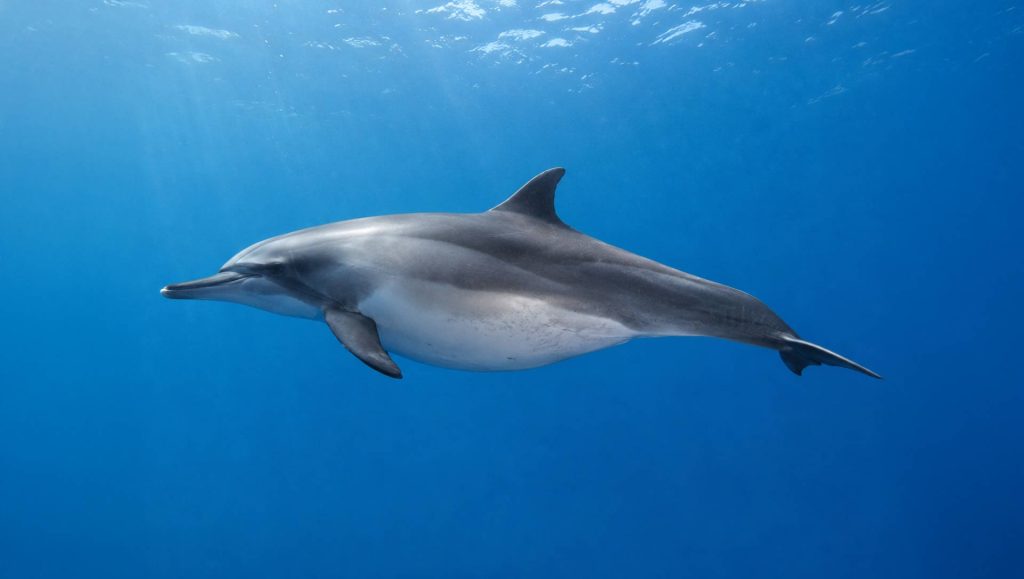
There is nothing quite like watching a newborn dolphin calf take its very first breath beside its mother in the open Pacific. Hawaii’s spinner dolphins carry their young for close to a year, and the journey from a single moment of conception to a leaping, spinning calf racing through Hawaiian waters is one of the most breathtaking stories in the sea. Whether you are a first-time visitor hoping to spot a new calf on an Oahu dolphin tour or simply someone who has always wondered what dolphin pregnancy looks like, the biology behind these births is worth knowing.
How Long Are Spinner Dolphins Pregnant?
Spinner dolphins, known to scientists as Stenella longirostris, carry their calves for approximately ten and a half to eleven months. That is nearly as long as a human pregnancy, and it explains why female spinner dolphins give birth only once every two to three years on average. Raising a calf takes an enormous investment of time and energy, and the long gestation period is just the beginning of that commitment.
During pregnancy, the growing calf develops inside the mother much like other marine mammals, drawing nutrients through the placenta as it grows. Researchers who have studied pregnant dolphins in the water have noted that expectant mothers swim noticeably slower during the final weeks of pregnancy, their bodies shaped and weighted differently as the calf nears full development. Life in a pod means the pregnant female is rarely alone, staying close to trusted companions who will play a major role once the birth arrives.
How Are Dolphin Calves Born?
Dolphin calves are born tail-first. This is the opposite of most land mammals and is critical for survival: if a calf were born head-first, it could drown before the birth was complete. By entering the world tail-first, the calf can surface and take its very first breath the moment its head clears the birth canal. The whole process typically happens quickly, and the mother stays close to the surface throughout.
A newborn spinner dolphin calf is about two and a half feet long and weighs roughly twenty pounds. That may sound small, but the calf is remarkably well-developed from the moment it arrives. Within minutes, the calf begins swimming, staying pressed close to its mother’s side in a position called echelon swimming, where the calf drafts in the pressure wave created by the mother’s movement. This helps the calf conserve energy while its small muscles are still building strength.
The First Hours and Days of Life
Calves begin nursing within hours of birth. Dolphin milk is thick and far richer in fat than most land animal milk, allowing calves to grow quickly in the demanding open ocean environment. A nursing calf rolls onto its side beside its mother to feed, a behavior that looks simple but requires real coordination and practice. Calves typically continue nursing for one to two years, sometimes longer, even as they begin practicing how to catch small fish alongside the adults.
The bond between a mother spinner dolphin and her calf is immediate and intense. The two swim in almost constant contact during the first weeks of life. Researchers have found that mother dolphins use specific calls to communicate with their calves from the very beginning, a kind of vocal signature that helps the calf recognize its mother in the bustling activity of a pod.
How the Pod Supports New Mothers
Spinner dolphins do not raise calves alone. Other adult females in the pod, particularly those who are not nursing their own young at the time, often step in to help watch over and guard newborn calves. Scientists call this alloparenting, and it is one of the clearest signs of the deep social bonds that exist within dolphin pods. A new mother can rest, feed, and recover from birth knowing that trusted pod members are keeping close watch on her calf.
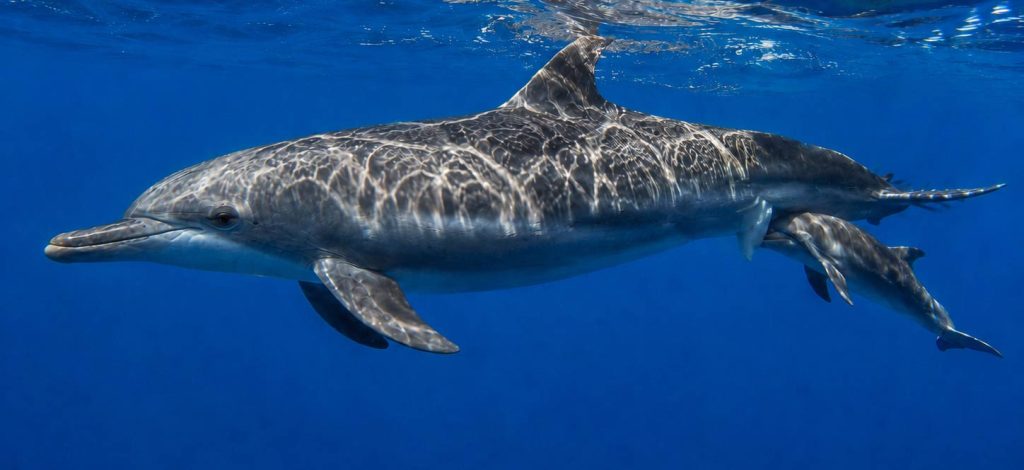
This cooperative care makes spinner dolphin pods remarkably resilient. When a new life enters a pod, the whole group adjusts. Adults tend to move more slowly in the days following a birth. Juveniles in the pod often seem drawn to new calves with unmistakable curiosity, hovering nearby as if observing something they know matters. Here is a quick look at the key milestones of a spinner dolphin’s early life:
- Born tail-first after roughly eleven months in the womb, immediately surfacing to breathe
- First nursing begins within hours and continues for one to two years
- Begins learning to catch fish alongside pod adults while still nursing
- Females reach sexual maturity between five and seven years old; males between seven and ten
Growing Up Along the Waianae Coast
Young spinner dolphins in Hawaii grow up in some of the most biologically rich nearshore waters in the Pacific. The Waianae Coast on Oahu’s west side is a key resting and socialization area for local pods, and calves spend their earliest months learning the rhythms of coastal life here. Days are spent resting and socializing in the calm, shallow bays. Nights are spent offshore, where the pod dives into the deep water column to hunt for fish and squid in the darkness.
Female spinner dolphins may produce calves across several decades of their lives, with the two-to-three-year interval between births meaning a single female can contribute many calves to her pod over a lifetime. Each one of those calves arrives into the pod the same way: tail-first, pressing close to its mother, and ready to learn.
Spotting Mothers and Calves on an Oahu Tour
Hawaiian spinner dolphins give birth year-round, with no single season being completely calf-free. That means any morning on the water off the Waianae Coast has a genuine chance of encountering a mother and her young calf swimming side by side. Calves are noticeably smaller than the adults around them and often swim in tight formation directly beside their mothers. If you are watching a pod move through the water, keep an eye out for that telltale size difference. It is one of the most moving things you will see on the open ocean.
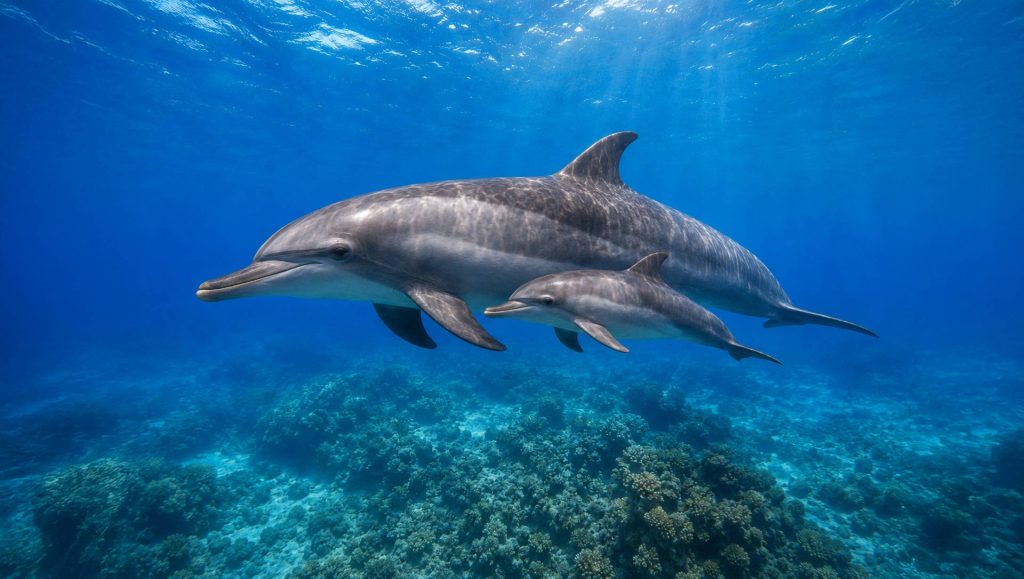
On Dolphins and You tours, guides follow NOAA wildlife protection guidelines and are trained to recognize when a pod includes nursing mothers and young calves. The boat gives those animals extra space to rest and move without interruption. Watching a mother and calf swim together in the wild is a reminder that every pod you encounter out there is a living community with its own young to protect.
When New Life Meets the Open Ocean
Dolphin pregnancy and birth in Hawaiian waters is a quiet miracle happening just offshore, season after season. A calf born tail-first into the Pacific, pressing close to its mother and finding its first breath, carries with it the future of the pod. Every newborn spinner dolphin in Oahu’s waters is one more thread in an ecosystem that depends on healthy oceans, clean coastlines, and the kind of respectful, distance-keeping observation that lets these animals live as naturally as they always have. The next time you see a pod gliding through the waves on a morning tour, take a moment to look for the small ones. You might just be looking at a new beginning.