

Hawaiian Fish Species: A Guide to Tropical Fish Found on Oahu’s West Coast
Hawaii’s coral reefs support one of the most diverse marine ecosystems in the Pacific. The fish species that live here are found nowhere else on Earth in the same combination, shaped by millions of years of isolation and adaptation to the warm, clear waters of the Hawaiian archipelago.
On a snorkeling trip along Oahu’s west coast, you are likely to encounter several of the species described below, sometimes all in the same hour. Here is what you are looking at and why each one matters.
The humuhumunukunukuapuaa: Hawaii’s state fish (Reef Triggerfish)
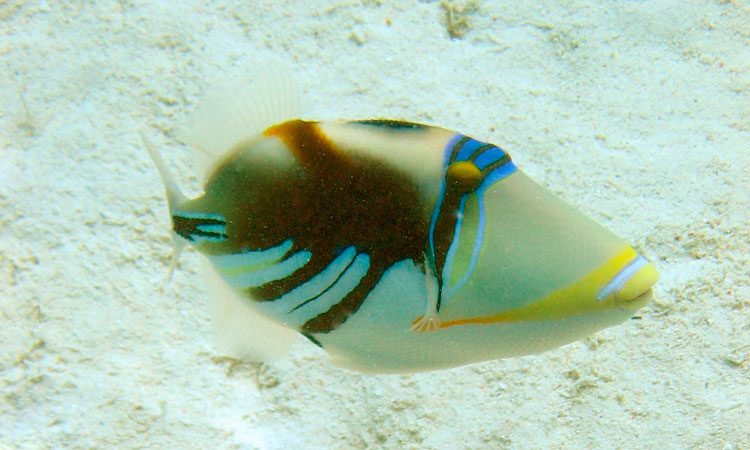
The humuhumunukunukuapuaa, officially known as the reef triggerfish or Rhinecanthus rectangulus, is Hawaii’s state fish and one of the most recognizable marine animals in the islands. The name, which refers to the fish’s resemblance to a pig’s snout in Hawaiian, is famously one of the longest common names of any fish in the world.
It is a small but boldly patterned fish, with a yellow, black, and white body, a distinctive black band running through the eye, and a sharp spine that locks upright when the fish retreats into a coral crevice. That locking mechanism is how the triggerfish got its common name: it uses the smaller rear spine to lock the larger front spine in place, making it almost impossible to pull out of a hiding spot.
Reef triggerfish are found in shallow reef environments throughout Hawaii, typically in water between 3 and 100 feet deep. They are territorial, especially around nests, and will charge intruders much larger than themselves. On a snorkeling trip along Oahu’s west coast, you are likely to see them darting between coral heads in the shallower reef sections.
Hawaiian butterflyfish and yellow tang
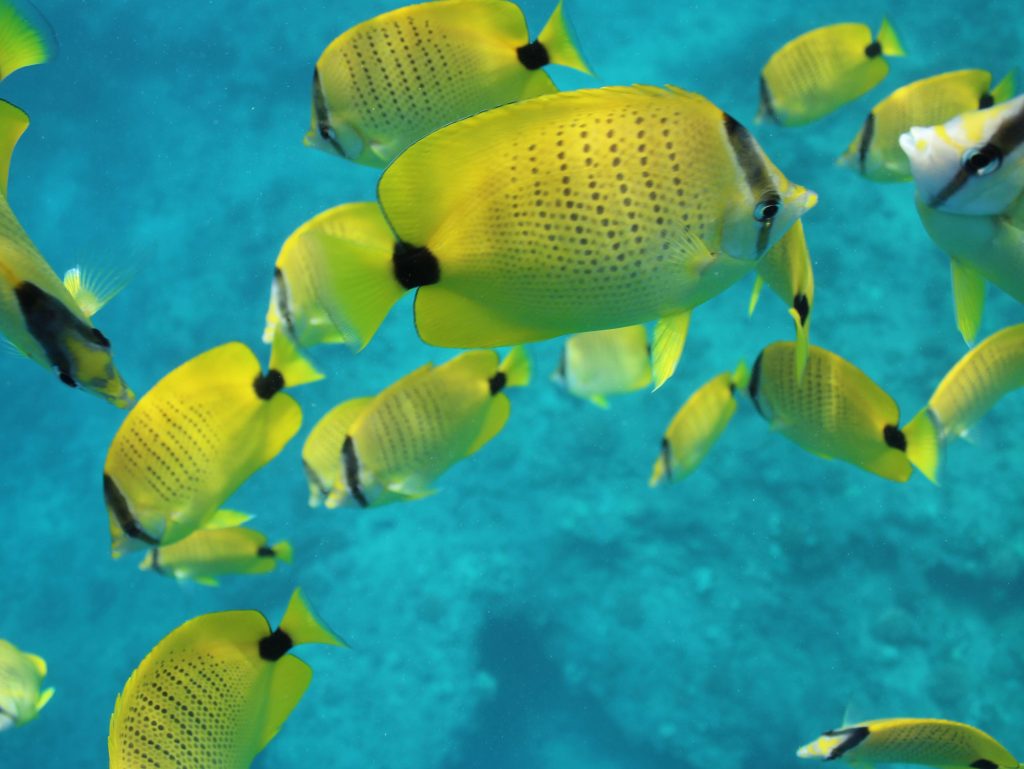
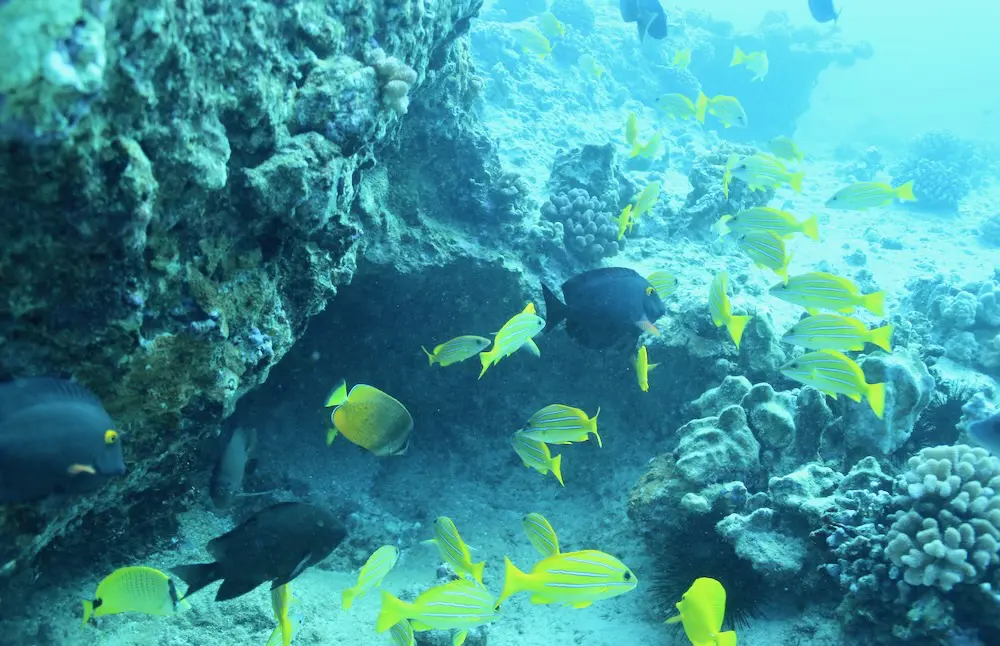
Hawaii is home to more butterflyfish species found nowhere else on Earth than any other island group in the world. The most commonly encountered include the raccoon butterflyfish, with its distinctive black mask and yellow-orange body, and the fourspot butterflyfish, marked by two pairs of false eyespots. Both species are monogamous, traveling and feeding in pairs that remain together for years.
The yellow tang is arguably the most visually striking fish on the Hawaiian reef, a solid, bright yellow disc-shaped fish found in large numbers along shallow coral formations. Despite its small size, it plays a significant ecological role: yellow tangs are herbivores that graze continuously on algae, preventing algae overgrowth that would otherwise smother the coral and eliminate the habitat that supports the entire reef community.
When snorkeling around these species, it is important to avoid touching the reef or the fish. Even light contact can damage the mucus coating that protects fish from disease, and physical contact with coral causes damage that takes years to recover.
Parrotfish: the reef builders
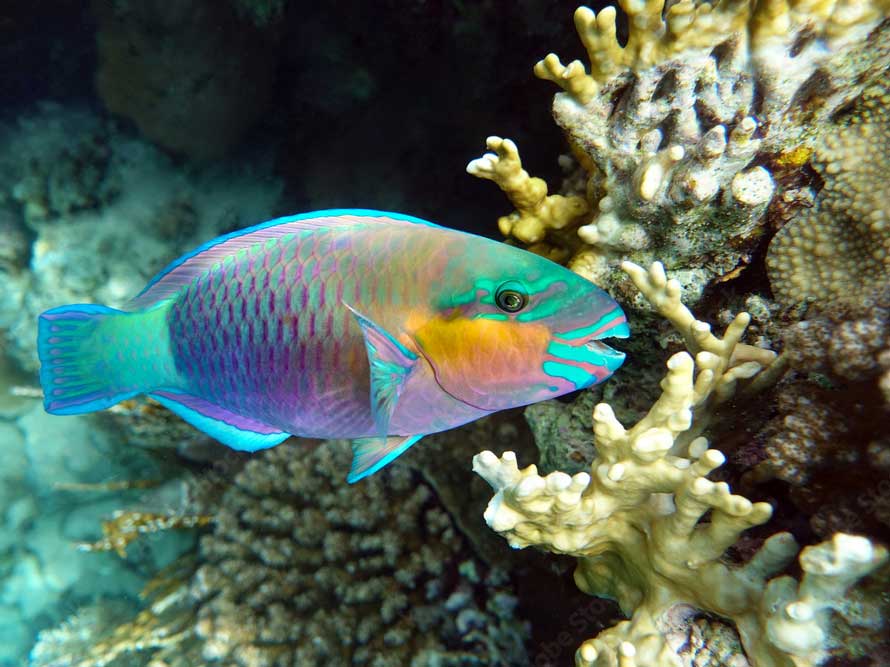
Parrotfish are among the most ecologically important species on Hawaiian reefs, though many visitors do not realize what they are looking at. They are large, colorful fish with fused beak-like teeth that allow them to bite directly into coral rock to access the algae growing on and inside it. The coral material they cannot digest passes through their bodies as fine white sand.
A significant portion of the white sand on Hawaiian beaches is parrotfish waste. A single large parrotfish can produce hundreds of pounds of sand per year. This makes parrotfish essential to the beach system as well as the reef system, and their decline through fishing pressure has measurable effects on both.
Several parrotfish species are found on Oahu’s west coast reefs, including the stareye parrotfish and the bullethead parrotfish. Both undergo dramatic color changes as they mature, with juveniles and females often appearing striped or mottled and adult males developing the vivid blue-green and pink coloration most people associate with the species
Surgeonfish and Moorish idol
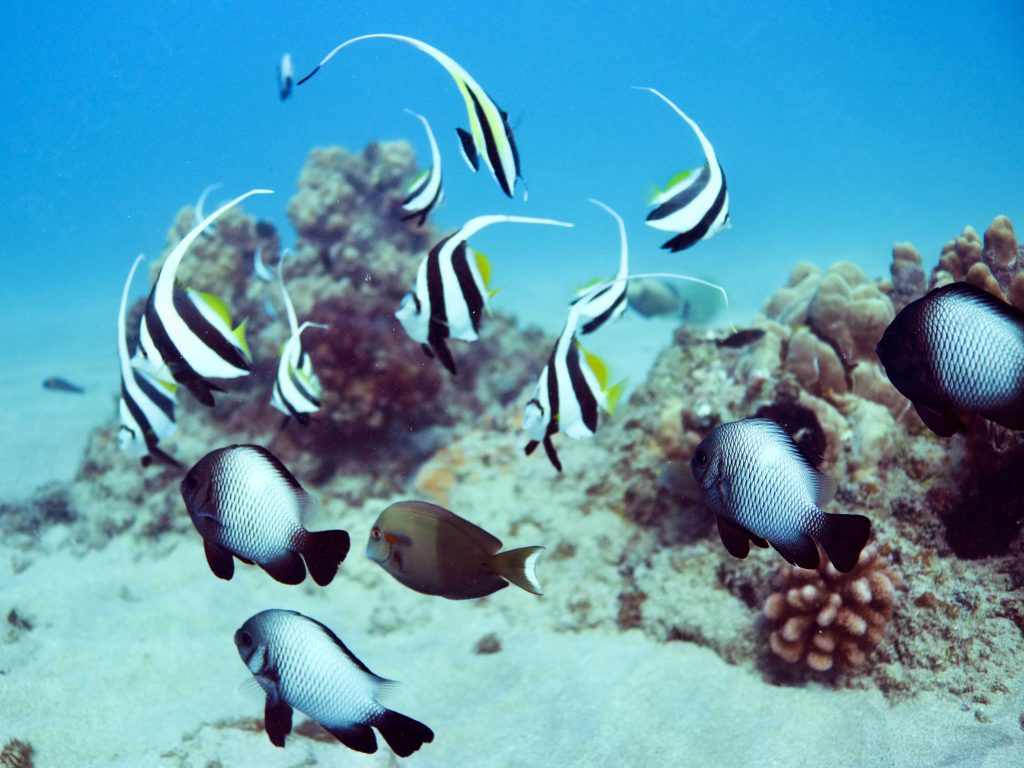
Surgeonfish are named for the sharp, scalpel-like spine located on either side of the tail base, which can inflict a serious cut if the fish is handled or approached carelessly. Several species are common on Hawaiian reefs, including the convict tang, named for the vertical black and white stripes that cover its body, and the achilles tang, a dark brown fish with a vivid orange teardrop patch near the tail spine.
The Moorish idol is one of the most striking fish on the reef, with bold vertical black, white, and yellow bands and a dramatically elongated dorsal fin. Despite its visual similarity to butterflyfish, it is more closely related to tangs and surgeonfish. It is also notoriously difficult to keep in captivity, which has made it a sought-after subject for underwater photographers on reef snorkeling trips.
Spotted eagle rays and sea turtles: what else you might encounter
The reef fish described above share their habitat with larger animals that snorkelers frequently encounter on Oahu’s west coast.
Hawaiian green sea turtles, known in Hawaiian as honu, are commonly seen grazing on algae along the reef. They are protected under federal law, and the correct response when encountering one is to give it space and let it determine the interaction. Sea turtles are air breathers that must surface regularly, and a turtle that is being followed or surrounded by snorkelers is a stressed turtle.
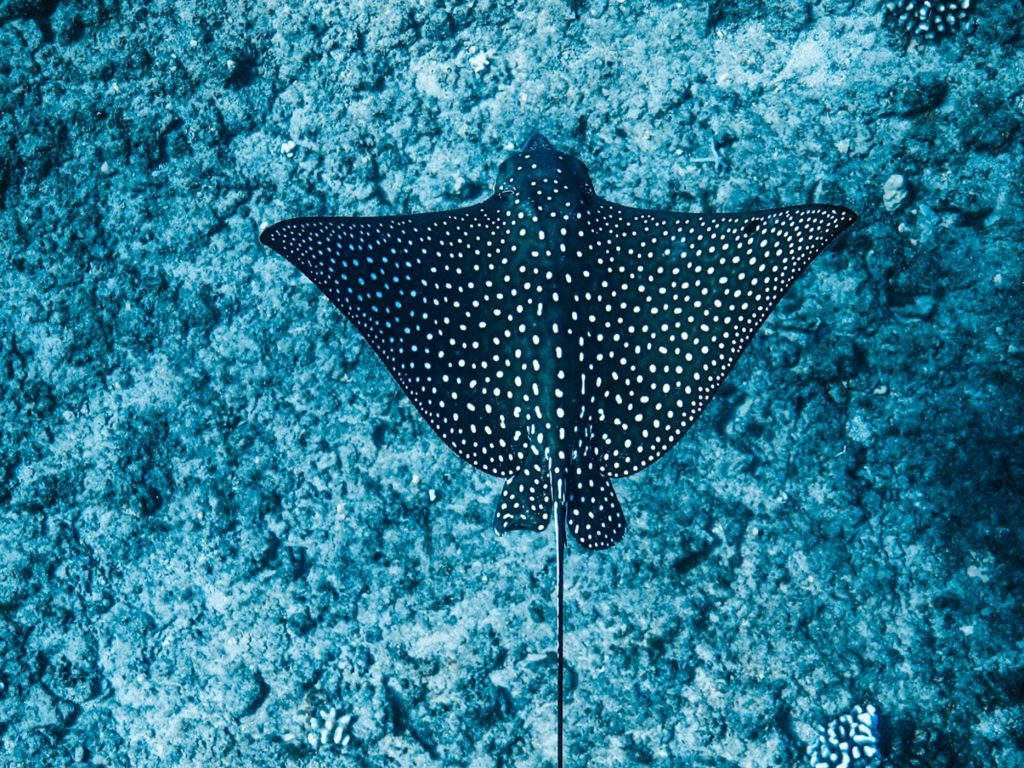
Spotted eagle rays are occasionally seen gliding through the water column above the reef, identifiable by their white-spotted dark backs and long, whip-like tails. Unlike stingrays, which rest on the bottom, eagle rays are active swimmers that spend most of their time in open water above the reef.
Where to see Hawaiian fish species in the wild
Oahu’s west coast has some of the island’s clearest and calmest water for snorkeling, particularly in the protected bays and coves between Kahe Point and Makua Beach. The combination of calm conditions, shallow reef, and high fish diversity makes this stretch of coastline consistently productive for snorkeling year-round.
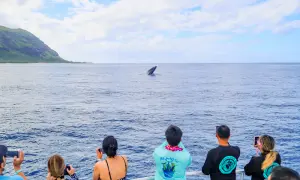
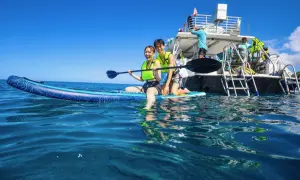
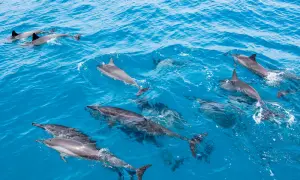
The Dolphins and You morning tour includes snorkeling in the clear water off the Waianae Coast, where guests encounter many of the species described in this guide in their natural reef habitat. The same stretch of coast where spinner dolphins rest each morning is also home to some of the most accessible and diverse reef snorkeling on Oahu.
Join us on the water and see what is living in the reef below.
Want to explore more about the marine life found in Oahu’s ocean?
👉 Return to our complete guide to marine life in Oahu’s ocean →
From the reef triggerfish to the Hawaiian butterflyfish, each species plays a unique role in maintaining the health and vitality of these underwater realms. As stewards of the ocean, it’s our responsibility to protect and preserve these iconic creatures for future generations to enjoy. And what better way to experience the wonders of Hawaii’s marine life than by joining a dolphin watching tour off the shores of Oahu?

Tours depart from Waianae Boat Harbor, West Oahu, where Hawaii’s marine life gathers every morning.