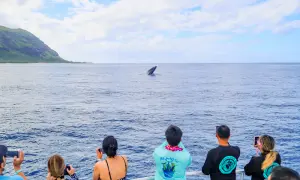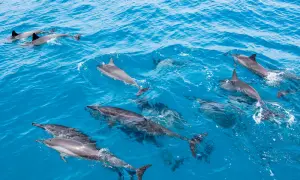


If you have ever stood at the bow of a boat off Oahu’s west coast and watched a group of spinner dolphins take turns surfing the pressure wave at your hull, you already know that dolphins are playful. What might surprise you is that scientists have spent decades studying exactly why dolphins play, and what they have found goes well beyond what most people expect. Dolphins do not just play as babies. They play their entire lives, and the reasons behind that play reveal a level of intelligence, social complexity, and emotional depth that puts them in a very short list of animals on earth.
What Counts as Play in the Animal World
Play behavior is not easy to define in science. The standard definition requires that an activity be repeated, done for its own sake rather than for an immediate survival benefit, and performed by an animal that is relaxed and not under stress. For many animals, play fades as they mature. For dolphins, it does not. From the youngest calves in a pod to adult spinners who have lived in Hawaiian waters for decades, play is a consistent and recognizable part of daily life. Researchers studying dolphin behavior have identified several distinct categories of dolphin play, and each one reveals something different about what is happening inside a dolphin’s mind.
Types of Play Spinner Dolphins Engage In
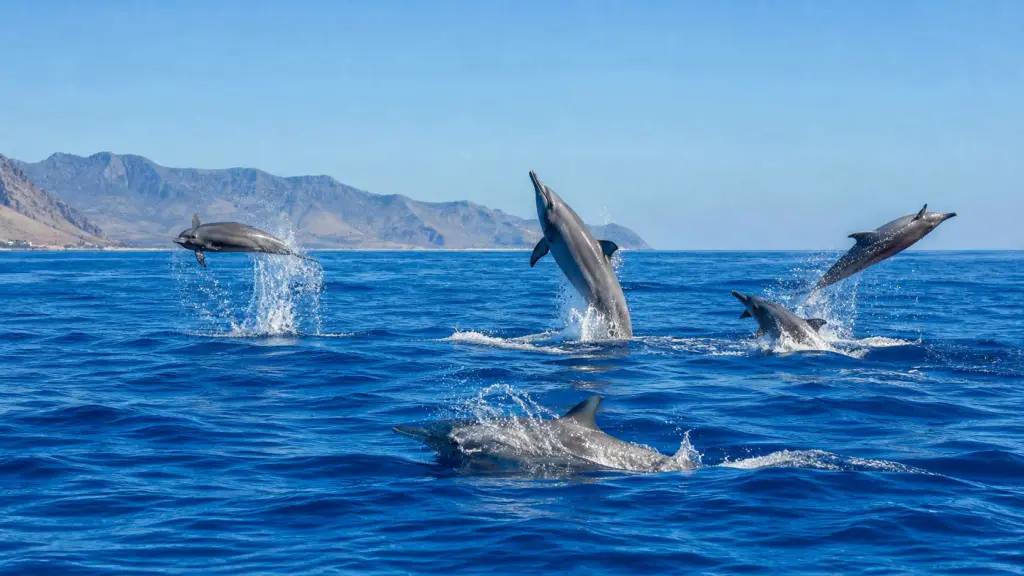
The most visible type of dolphin play is aerial behavior: the spinning leaps, surface slaps, and high jumps that define spinner dolphins in the minds of most people who have seen them. Spinner dolphins are the only dolphin species known to spin longitudinally as they leap, rotating on their body axis multiple times before landing. Scientists believe spinning may serve several purposes at once, including shaking off small parasites called remoras, communicating with the pod, and expressing a form of exuberant play after hours of nighttime feeding.
Beyond aerial acrobatics, spinner dolphins also engage in object play. Wild dolphins have been observed carrying pieces of seaweed, sponges, and even fish through the water, passing them between pod members, and releasing them into current streams only to chase them back down. This kind of behavior mirrors what scientists see in great apes and certain bird species, and it signals deliberate engagement with the environment for no purpose other than the activity itself. Social play is another common form, and it shows up most vividly among calves and juveniles chasing one another through the water at full speed.
- Aerial play: spinning leaps, surface slaps, and full rotations out of the water
- Object play: carrying and passing seaweed, sponges, or fish through the pod
- Social play: chasing, contact games, and synchronized swimming among calves and juveniles
- Wave play: riding the pressure waves created by boats, ocean swells, and larger whales
Why Do Dolphins Swim Next to Boats? The Science Behind Bow Riding
One of the most common questions guests ask on a Dolphins and You tour is why dolphins come so close to the boat. The short answer is that boats offer dolphins several things at once: a free ride, a source of stimulation, and an opportunity for social play.
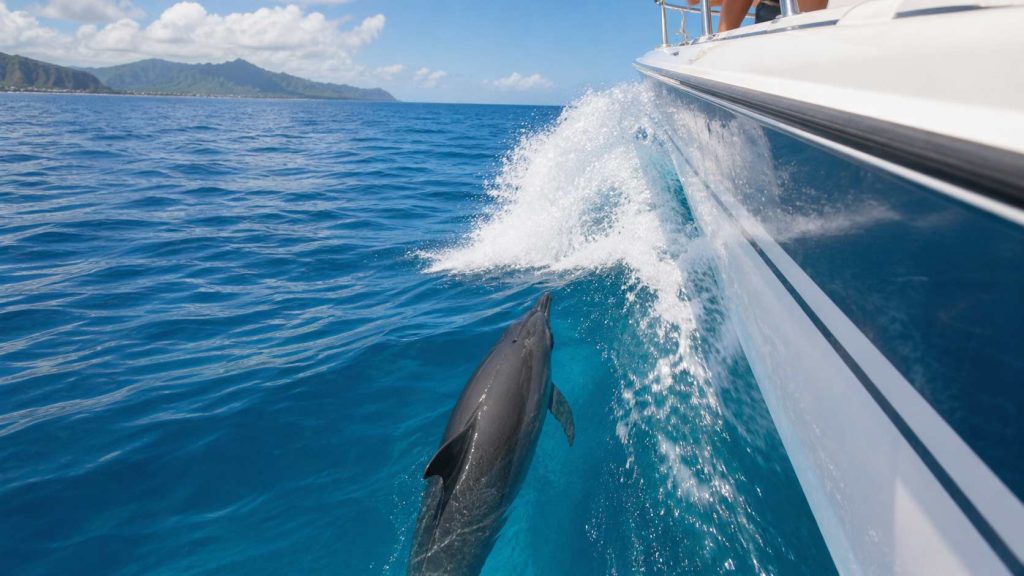
The bow wave: hydrodynamics as a playground
Bow riding is one of the most well-documented forms of dolphin play. When a boat moves through water, it creates a pressure wave at the bow. Dolphins actively seek out that wave, position themselves inside it, and ride it for extended periods without using their own swimming effort. The hydrodynamic force of the wave carries them forward, allowing them to travel at the speed of the vessel for essentially no energy cost.
They gain no feeding advantage from this, and they regularly leave and return to the wave by choice, which tells researchers the dolphins are doing it for the experience rather than out of necessity. Spinner dolphins off Oahu’s Waianae Coast are known to approach tour vessels and ride the bow wave for minutes at a time, switching positions with each other mid-ride, a clear sign that the social element is as important as the ride itself.
Engine noise and the curiosity factor
Boat engines produce low-frequency sound that travels well through water and falls within the range dolphins can easily detect. That sound is novel, consistent, and interesting to curious animals built to investigate their acoustic environment. Dolphins approach boats partly because the sound draws their attention the way an unusual noise might draw a human to a window.
Additionally, the movement of a boat through water stirs up fish and other small sea creatures, concentrating prey near the surface in the boat’s wake. While bow riding itself is not a feeding behavior, the presence of a boat in dolphin waters can make the surrounding area temporarily richer in food, which keeps a pod in the vicinity longer.
Why dolphins approach from the side and stern as well
Not all dolphin-boat interactions are bow riding. Dolphins also approach from the sides and stern of moving vessels, surfing the wake waves that trail behind the hull. Wake waves are different in shape from bow waves but serve a similar function: they provide free propulsion and a dynamic, changing surface that calves in particular find endlessly interesting to navigate.
For young spinner dolphins, riding in the wake of a boat is a learning opportunity. The constantly shifting wave surface requires rapid adjustments of body position and speed, building exactly the kind of coordination and spatial awareness that calves will need when hunting in turbulent nighttime water alongside the adults in their pod.
What you can observe from the deck
Spinner dolphins engaged in bow or wake riding display relaxed body posture, spontaneous changes of direction, and playful contact with other pod members while still inside the wave. All of those are behavioral signatures of play rather than goal-directed activity. For many guests on the Dolphins and You tour, watching a dolphin slot itself perfectly into the bow wave just a few feet below the rail is one of the most memorable moments of the entire experience.
Look for dolphins taking turns at the front of the bow wave, nudging each other out of position and slipping back in. Watch for calves drafting alongside adults inside the same wave. If a dolphin breaks away from the wave, spins fully out of the water, and slots back in without missing a beat, you are watching one of the most accomplished athletes in the ocean performing at the intersection of play and precision.
Pufferfish, Seaweed, and the Meaning of Object Play
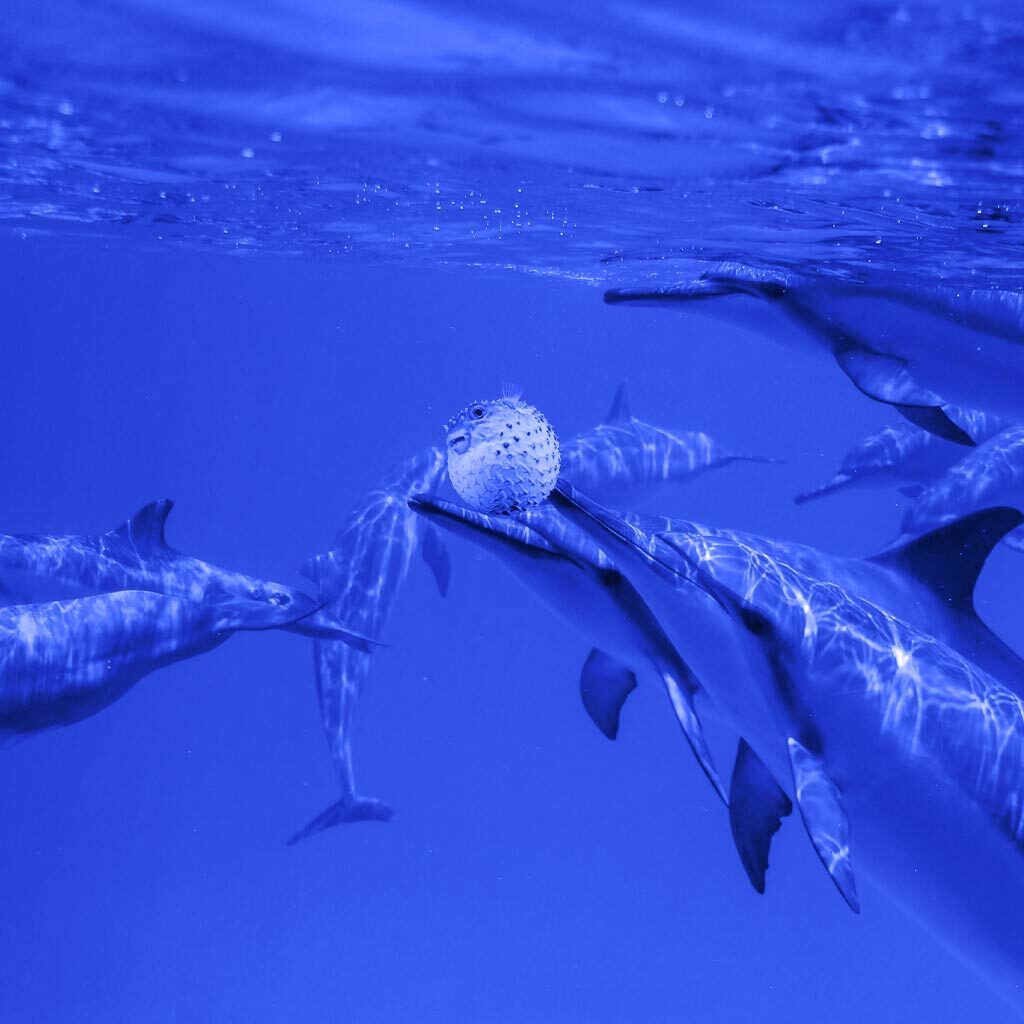
Spinner dolphins do not limit their object play to things they find in the water column. Wild dolphins around the world have been documented playing with pufferfish, gently passing the inflated fish between pod members without triggering its toxic defense response. Researchers observing this behavior note that dolphins handle pufferfish with remarkable care and precision, using their rostrums to nudge rather than bite, and sharing the fish in a pattern that looks more like a group activity than predation.
The most widely discussed explanation is that dolphins find pufferfish interesting precisely because of their unusual defensive behavior. When gently handled, a pufferfish begins to release small amounts of tetrodotoxin, a potent neurotoxin. Some researchers have proposed that low-level exposure may produce a mild narcotic effect in dolphins, though this hypothesis remains debated. What is clear is that the behavior is deliberate, repeated, and social, which meets every scientific criterion for play.
For Hawaiian spinner dolphins, pufferfish encounters are less common than object play with seaweed or fish, but the underlying behavior is the same. Dolphins are among the few species that engage in object play as adults, not just as juveniles, and the pufferfish example sits at the intersection of play, curiosity, and the kind of exploratory intelligence that defines this species.
Why Calves Learn Through Play
For young spinner dolphins, play is not optional. It is how they develop the physical and social skills they will rely on for the rest of their lives. Studies on wild dolphin calves have shown that calves who interact with older juveniles in their pod develop more complex play behaviors at a younger age than those who only spend time with other very young dolphins. Observation and imitation drive early development in dolphin calves just as they do in human children.
Play in calves builds three things: physical coordination, social awareness, and problem-solving ability. A calf chasing another through open water is developing turning speed and spatial judgment. A calf watching an older dolphin carry a piece of seaweed and then attempting the same behavior is learning through imitation. A calf figuring out how to position itself inside a bow wave is learning hydrodynamics by doing it. None of this is accidental. It is preparation that looks like fun because, for dolphins, it is both.
- Calves in groups with older juveniles develop complex play behaviors earlier than those without
- Social play teaches young dolphins the behavioral norms of their specific pod
- Object play builds problem-solving skills and control of the rostrum and flippers
- Physical chasing games develop stamina, coordination, and awareness of other dolphins in tight spaces
Play Does Not Stop at Adulthood
One of the most significant findings in dolphin play research is that adults never outgrow it. Adult spinner dolphins in the wild continue to engage in play throughout their lives, well past reproductive maturity and into old age. This is rare in the animal kingdom. For most species, play drops sharply at adulthood because the demands of survival take over. In dolphins, play and survival behavior coexist indefinitely.
Adult dolphins in Hawaii have been observed in extended object play sessions, wave riding, and aerial behaviors that serve no apparent survival function. Scientists interpret this as evidence that dolphins have the cognitive and emotional capacity for something very close to leisure: the ability to engage in an activity simply because it is satisfying. That is a trait shared with only a handful of other species, among them great apes, elephants, and humans.
What Dolphin Play Tells Us About Intelligence
Play requires a brain that can hold multiple goals at once, distinguish between serious and non-serious behavior, and engage with the world creatively rather than just reactively. Dolphins score high on all three. Their large, heavily folded brains contain structures closely associated with social cognition and emotional processing. Research has shown that dolphins can recognize themselves in mirrors, solve novel puzzles, understand symbolic communication, and remember the signature whistles of pod members they have not seen in over 20 years.
Play is both a product of that intelligence and a driver of it. Animals that play more tend to develop larger neural networks associated with problem-solving and social awareness. In dolphins, this cycle of play reinforcing brain development and brain development enabling more complex play has been running for millions of years. The result is one of the most cognitively sophisticated animals on the planet, and also one of the most visibly joyful.
What You Might See on a Dolphins and You Tour
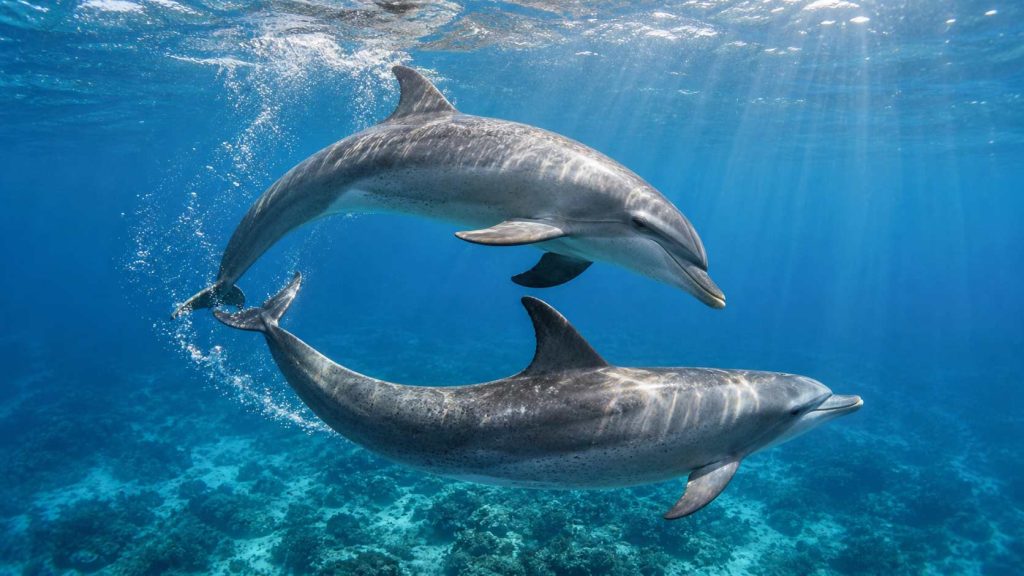
The Dolphins and You tour departs from Waianae Boat Harbor on Oahu’s west coast and heads offshore to one of the most active spinner dolphin corridors in the main Hawaiian Islands. The tour follows NOAA guidelines, which means guests observe dolphins from the vessel rather than entering the water near them. That approach actually creates some of the best play-watching conditions available, because spinner dolphins that are not being pressured by swimmers tend to approach the boat on their own.
Look for dolphins riding the bow wave at the front of the vessel. Watch for two or three dolphins surfing together and switching positions. If a spinner launches fully out of the water and rotates several times before landing, you are watching one of the most acrobatic play behaviors in the ocean. The tour runs daily at 8 AM and 12 PM, lasts three hours, and includes snorkel gear, lunch, a hula performance, and complimentary hotel pickup from Waikiki and Ko Olina.
Every Spin Is a Window Into the Mind of the Sea
Spinner dolphins off Oahu were not waiting for boats to arrive before they started playing. They have been doing it for thousands of years, in pods that stretch along the Waianae coast long before the first tourists ever came to Hawaii. The spins, the chasing, the sponge tossing, the wave riding: all of it points to the same conclusion. These are animals with rich inner lives, strong social bonds, and a remarkable capacity to find something that looks very much like joy in the middle of the open ocean.
Watching that play from the deck of a boat, even briefly, is a reminder that the ocean is not empty. It is full of minds working in ways we are still learning to understand.
Want to explore more about how Hawaii’s spinner dolphins think and behave?
👉Return to the Dolphin Behavior and Intelligence guide →
Tours depart from Waianae Boat Harbor, West Oahu, where Hawaii’s spinner dolphins gather every morning.