


Do Dolphins Feel Pain? The Surprising Science Behind How Dolphins Handle Injury
When a dolphin surfaces next to a boat with a jagged scar from a shark bite and swims away like nothing happened, a natural question comes up. Do dolphins actually feel pain? The answer is more interesting than a simple yes or no. Dolphins have pain receptors, respond to harmful stimuli, and show clear distress in certain situations. But their biology has also evolved some of the most sophisticated natural pain-management systems in the animal kingdom. Here is what the science says and what it means for the animals you might encounter on the water off Oahu’s Waianae coast.
Yes, Dolphins Feel Pain
Science is clear on this: dolphins are capable of experiencing pain. Like all mammals, they have nociceptors throughout their bodies. These are the nerve endings responsible for detecting harmful stimuli and sending pain signals to the brain. When researchers have tested dolphin pain response in clinical settings, the animals withdraw and react to painful stimuli the same way you would expect from any sentient mammal. Bottlenose dolphins respond to needle pricks with withdrawal movements and what researchers describe as protest behavior, reactions that are consistent with the experience of pain rather than simple reflexes.
This is not surprising when you consider the structure of a dolphin’s brain. Dolphins have a highly developed limbic system, the same brain region in humans associated with emotional processing and the lived experience of pain. Their brains are also large relative to their body size, with complex folding in the cerebral cortex that correlates with sophisticated cognitive and sensory processing. The ability to perceive pain is not just a reflex for dolphins. The evidence suggests it is a fully processed experience.
What Makes Dolphin Pain Different
Here is where the dolphin story gets genuinely remarkable. While dolphins clearly feel pain, their biology manages it in ways that have no real parallel in land mammals. Scientists studying cetacean genetics have identified positive selection pressure on at least three analgesic genes in dolphins and whales: ARRB2, KCNK4, and OPRL1. These genes are involved in blocking or dampening pain signals after injury. The genetic changes found in cetaceans appear to enhance their analgesic response, essentially giving their bodies a more powerful internal painkiller system than most other mammals possess.
There is also a structural component. Research has found that the parts of the spinal cord most associated with sensing external and internal pain are reduced in dolphins compared to land mammals. The substantia gelatinosa, a region of the spinal cord’s gray matter closely involved in processing pain signals, is diminished or nearly absent in dolphin anatomy. What this means in practice is that a dolphin’s nervous system registers pain, but manages and dampens that signal in ways that allow the animal to keep functioning under conditions that would incapacitate most other creatures.
The Shark Bite That Heals Overnight
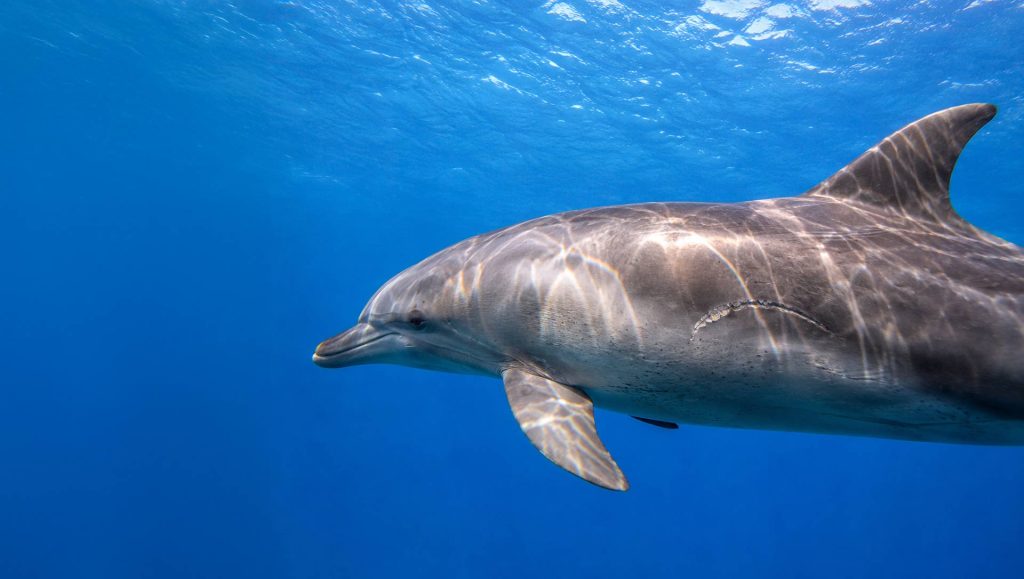
The most dramatic illustration of dolphin pain management comes from their recovery after shark injuries. Wild dolphins, particularly in Hawaiian waters, are sometimes bitten by tiger sharks or other predators. These are not minor wounds. A significant shark bite can remove substantial amounts of muscle and blubber from a dolphin’s side, leaving a wound that would be life-threatening for a human and would require months of intensive care and recovery.
Dolphins have been observed returning to normal swimming and feeding behavior within two days of suffering severe shark bites. Researcher Michael Zasloff documented this phenomenon and identified several mechanisms at work. First, dolphins appear to activate their diving reflex in response to trauma. This reflex, which normally activates when dolphins dive deep and slows the heart rate while redirecting blood away from the skin and extremities, also reduces blood loss when an injury occurs. The body essentially treats the wound the same way it treats a deep ocean dive.
Second, the dolphin’s blubber layer plays an active role in fighting infection. Blubber is not simply stored fat. It contains natural organohalogens, compounds with antimicrobial properties that appear to be released when tissue is damaged. This built-in antimicrobial system helps prevent the serious infections that would otherwise follow a large open wound in a warm ocean environment teeming with bacteria.
Third, dolphin wound healing resembles the kind of tissue regeneration seen in fetal development rather than typical adult mammal scar formation. The wound fills in through sophisticated integration of new tissue with the existing structure of collagen and elastic fibers, restoring the body’s contour more completely than most adult mammals can achieve. The result is an animal that may carry a visible scar as a permanent record of the encounter, but functions without lasting limitation.
Why Dolphins Don’t Show Their Pain
If dolphins feel pain, why do injured dolphins appear so unbothered? The answer is almost certainly evolutionary. In the ocean, showing injury means advertising weakness. A dolphin that slows down, swims erratically, or visibly struggles after an injury is more likely to attract a second attack from a predator already close by. Natural selection has strongly favored dolphins that can mask their distress and maintain normal behavior even when significantly hurt.
This does not mean the pain is absent. It means the dolphin’s biology is suppressing the outward expression of it. The same evolutionary logic applies to many wild animals. What is unusual about dolphins is the degree to which their biology has specialized to make this possible, combining genetic adaptations, spinal cord structure, immune chemistry, and vascular control into a system that is genuinely extraordinary by any measure in the animal kingdom.
Watch: The Science of Dolphin Intelligence
A dolphin’s capacity to perceive and manage pain is inseparable from the broader complexity of its mind. National Geographic’s exploration of what we know about dolphin intelligence gives useful context for understanding just how sophisticated these animals are.
What This Means for How We Treat Them
Understanding that dolphins feel pain matters beyond biology. It is part of why Hawaii’s wild spinner dolphins are protected under the Marine Mammal Protection Act. Harassment, chasing, touching, or separating mother-calf pairs are all forms of disturbance that cause documented stress responses in wild dolphins. Even if an animal does not slow down or visibly react in a way a human would recognize as pain, that does not mean the disturbance is harmless.
Research on spinner dolphins in Hawaii has shown measurable stress hormone responses to boat activity that comes too close, to swimmers who crowd or chase the animals, and to disturbance during the daytime rest periods these dolphins require to recover from overnight feeding runs. The animals may look calm. The biology often tells a different story. Responsible dolphin watching means maintaining respectful distances, never surrounding a pod, and staying out of the water when dolphins are actively resting inshore.
What You Might Notice on the Water
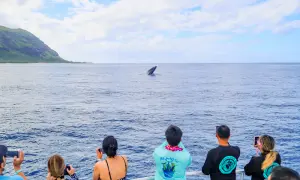
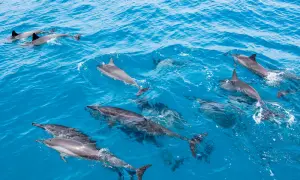
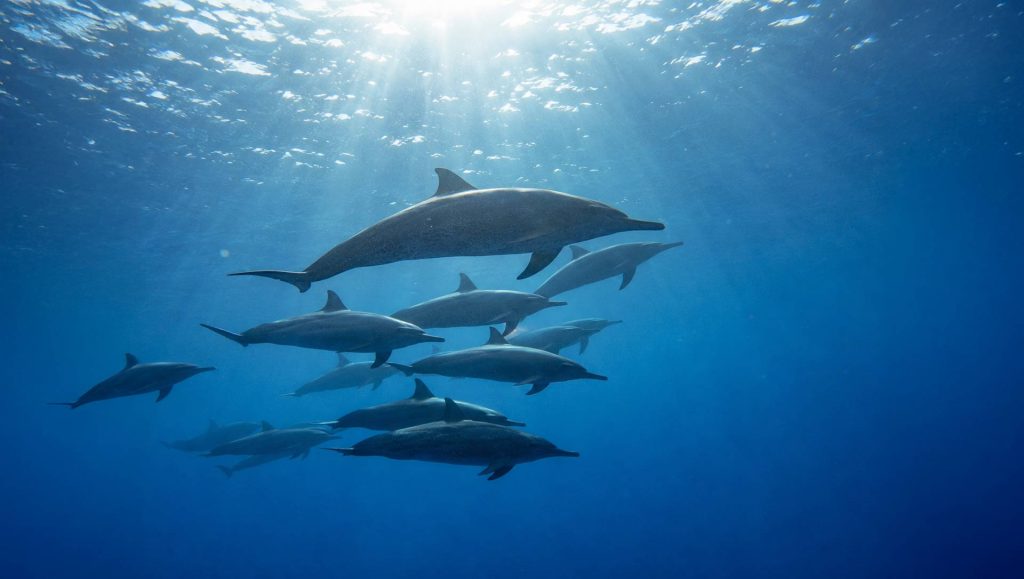
When you are out on the ocean watching spinner dolphins off Oahu’s Waianae coast, look closely at the individuals in the pod. Many will carry faint crescent-shaped scars on their flanks, the healed marks of old shark encounters. Some will have small nicks in their dorsal fins. These are the permanent records of a life lived fully in the open Pacific, and the fact that these dolphins are surfing the bow wake, spinning in the air, and moving with the easy confidence of animals completely at home in their environment tells you something extraordinary about what their bodies are capable of managing.
The Dolphins and You tour departs from Waianae Boat Harbor at 8:00 AM and noon daily. The three-hour excursion follows NOAA-compliant ethical viewing standards, giving wild pods the space they need while putting you close enough to watch them living that life. Snorkel gear, kayaks, paddleboards, a water slide, and a fresh sandwich lunch are all included.
A Body Built to Keep Going
The dolphin’s relationship with pain is one of the quiet marvels of the natural world. These animals feel. They experience. And their bodies have spent millions of years developing some of the most sophisticated biological tools on earth for managing what they feel, so they can keep moving, keep feeding, keep socializing, and keep raising their young. The scarred dolphin leaping off your bow is not indifferent to the world. It is just extraordinarily well equipped for it.
Want to explore more about how spinner dolphins are built to survive in the open ocean?
👉Return to the Spinner Dolphin Anatomy and Biology guide →
Tours depart from Waianae Boat Harbor, West Oahu, where Hawaii’s spinner dolphins gather every morning.