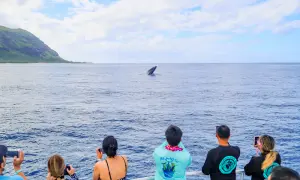



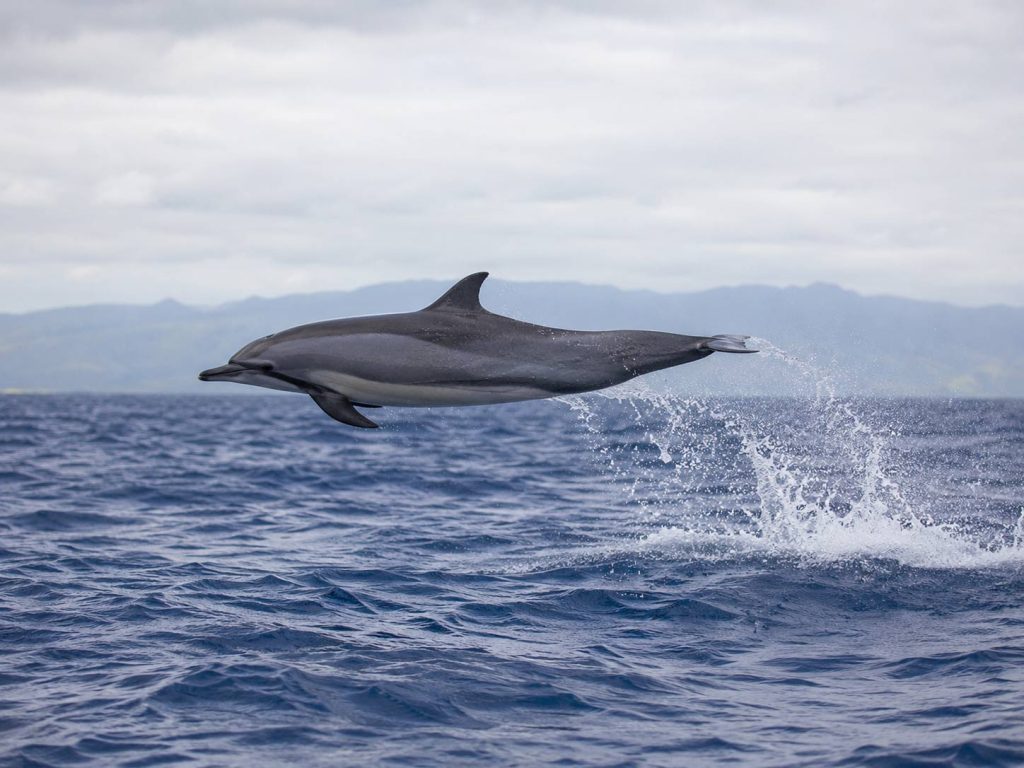
Most people watching spinner dolphins leap off the Waianae Coast are focused on the jump, the spin, the splash, the sheer speed of it. Almost no one is thinking about what is underneath the skin, but what is there matters more than you might expect. Every Hawaiian spinner dolphin carries a layer of specialized fat called blubber, and it is one of the most efficient biological materials found in the animal world. It keeps them warm, fuels them through lean times, shapes how they move through water, and carries far more responsibility than its simple name suggests.
What Blubber Actually Is
Blubber is not ordinary fat. It is a dense, specialized layer of tissue sitting just beneath the skin of all marine mammals, from the smallest spinner dolphin to the largest blue whale. It is made up almost entirely of lipids, fat molecules packed tightly together in a way that sets it apart from the fat found in land animals. At its peak, blubber can be nearly 93 percent lipid, making it one of the most thermally resistant materials produced by any living creature.
For a dolphin, this layer handles four critical jobs at once. Every spinner dolphin off Oahu is running all four simultaneously, whether it is sleeping, sprinting, or launching itself ten feet into the air.
- Thermal insulation: blocking heat loss to surrounding water
- Energy storage: providing fuel during lean feeding periods or heavy nursing
- Hydrodynamic shaping: creating the smooth profile that reduces drag at speed
- Shock buffering: cushioning internal organs from pressure and impact
How the Body Controls Blubber
Blubber does not just sit there passively insulating the body. It is an active tissue threaded with blood vessels that can expand or contract depending on what the dolphin needs. When the water is cold, those vessels tighten, reducing blood flow through the blubber layer and keeping warm blood concentrated in the body’s core. When a dolphin is working hard and generating excess heat, the vessels can widen, allowing blood to flow outward and release warmth through the skin.
This system functions like a thermostat built directly into the body wall. It gives dolphins fine control over heat distribution that helps them manage everything from high-speed sprinting to hours of extended rest at the surface.
Why Hawaiian Spinner Dolphins Have Less of It Than Cold-Water Dolphins
The ocean off Oahu’s Waianae Coast sits between 75 and 85 degrees Fahrenheit year-round. For a spinner dolphin, that is not particularly cold. Dolphins living off the coasts of Scotland, Norway, or the northern Pacific face water temperatures that drop to 40 degrees or below. Those animals carry substantially thicker blubber layers as a result.
Hawaiian spinner dolphins (Stenella longirostris) spend their entire lives in warm tropical water, which means thermal insulation is a smaller part of their blubber’s job. Their blubber tends to be thinner and more evenly distributed than that of their cold-water relatives. What they do rely on it heavily for is energy storage and body shape, and both matter just as much in warm water as in cold.
That smooth, streamlined body profile is not just visually striking. The skin surface above it renews every two hours, creating a surface that works together with the blubber beneath to minimize drag. It is aerodynamic and hydrodynamic engineering at a biological level. The even distribution of blubber under the skin creates the torpedo shape that allows spinner dolphins to reach speeds of over 20 miles per hour and perform the aerial spins they are famous for. Drag is the enemy of a fast swimmer. Blubber, distributed correctly, eliminates it.
Blubber as an Energy Reserve
When food is abundant, a spinner dolphin’s blubber thickens slightly as the body stores excess energy in the form of fat. When prey is harder to find, the body begins drawing on those reserves by metabolizing blubber from the inside out. This allows dolphins to keep swimming, socializing, and functioning during periods when hunting yields less than usual.
This reserve is especially important for nursing mothers. Producing milk is one of the most calorie-intensive things any mammal can do, and a spinner dolphin calf nurses frequently in its first months of life. A mother’s blubber layer absorbs a significant part of that energy demand, which is one reason healthy females typically carry more blubber than males of the same size and age.
Calves are born with significantly thinner blubber than adults. In their first weeks and months, they have not yet developed the same thermal buffer their mothers carry. One reason calves swim so tightly beside their mothers is physical warmth. A calf tucked into its mother’s slipstream burns less energy on forward movement and benefits from the warmth radiating from the mother’s larger body. As the calf grows and nurses regularly, its own blubber layer thickens, and the tight formation between them gradually loosens.
What Blubber Tells Scientists
Marine biologists who study wild dolphin populations pay close attention to blubber thickness because it is one of the clearest physical indicators of an animal’s overall condition. A dolphin carrying adequate blubber looks smooth and full behind the skull and across the back. An animal that is malnourished or fighting serious illness often shows a sunken, pinched area just behind the head, where blubber reserves are depleted first.
Researchers use ultrasound to measure blubber depth in research animals and in stranded dolphins receiving veterinary care. The thickness and composition of the blubber layer can reveal a great deal about an animal’s diet quality, stress levels, and reproductive status, all from a non-invasive measurement taken through the skin.

Because blubber is fat-rich tissue, it also tends to accumulate fat-soluble compounds that cycle through the ocean food chain. Researchers studying dolphin populations in Hawaii and elsewhere monitor blubber samples as part of long-term health tracking, using them to understand what animals have been exposed to over time and how those exposures may affect reproduction and immunity.
Want to learn more about how Hawaii’s spinner dolphins are built for life in the ocean?
👉Explore our Ultimate Guide to Dolphins in Oahu →
See It in Action on the Water
What you actually see from the deck of a Dolphins and You tour off Oahu’s Waianae Coast, is the result of all of this biology working together. The result is a fast, smooth, perfectly shaped body moving through clear Pacific water. The blubber beneath that skin is why the profile looks the way it does, why the dolphins move the way they do, and why a healthy animal looks so full and round through the midsection.
Dolphins and You operates out of Waianae Harbor on Oahu’s west coast, running daily tours at 8:00 AM and 12:00 PM. The full three-hour tour includes snorkeling with Hawaiian green sea turtles, a 12-foot water slide, kayaking, stand-up paddling, lunch, and a live hula performance. Transportation from Waikiki is included, and booking ahead is recommended since spots are limited.
The Biology That Makes Every Spinner Look Like What It Is
Blubber is invisible from the surface. But without it, a spinner dolphin off Oahu could not sprint, could not sustain itself through a lean feeding week, could not nurse a calf through its first months, and could not maintain the internal warmth that keeps every system running. The next time you watch one breach and spin off the Waianae Coast, you are seeing what a perfectly insulated, perfectly fueled marine body can do. The layer making all of it possible is the one nobody ever thinks to ask about.
Want to learn more about how Hawaii’s spinner dolphins are built for life in the ocean?
👉Return to the Spinner Dolphin Anatomy and Biology guide →
Tours depart from Waianae Boat Harbor, West Oahu, where Hawaii’s spinner dolphins gather every morning.