

When you watch a pod of spinner dolphins moving through the water off Oahu’s western coastline, what you are seeing is not just a group of animals traveling together. You are watching the result of a sophisticated social system that governs nearly everything these dolphins do, from who they sleep beside, to who they hunt with after dark, to who helps raise their young. The social life of a spinner dolphin pod is as complex as anything happening above the surface of the water, and understanding it makes every encounter on the ocean that much more meaningful.
What Is a Dolphin Pod?
At the most basic level, a pod is a group of dolphins that travel together. But for Hawaiian spinner dolphins, known to scientists as Stenella longirostris, the concept of a pod is far more layered than it first appears. Spinner dolphins are deeply social animals, and their pods are not fixed groups with the same members every day. Instead, they operate on a dynamic system that researchers call a fission-fusion society, where the makeup of any given group shifts constantly based on what the dolphins need at a given moment.
The spinner dolphins found along the Waianae Coast of Oahu belong to the Oahu and 4-Islands stock. NOAA estimates this population at roughly 300 individuals. That may sound modest, but these dolphins interact across the entire population in shifting, overlapping social groups that make even a familiar cluster of 20 look completely different from one day to the next.
The Fission-Fusion Society: Always Changing, Never Random
The term fission-fusion describes the way spinner dolphin pods constantly split off and come back together depending on daily conditions and social needs. It sounds like a loosely organized arrangement, but it is anything but random. The dolphins are making active decisions about who to spend time with, and those decisions are guided by factors including relationships, reproduction, safety, and food.
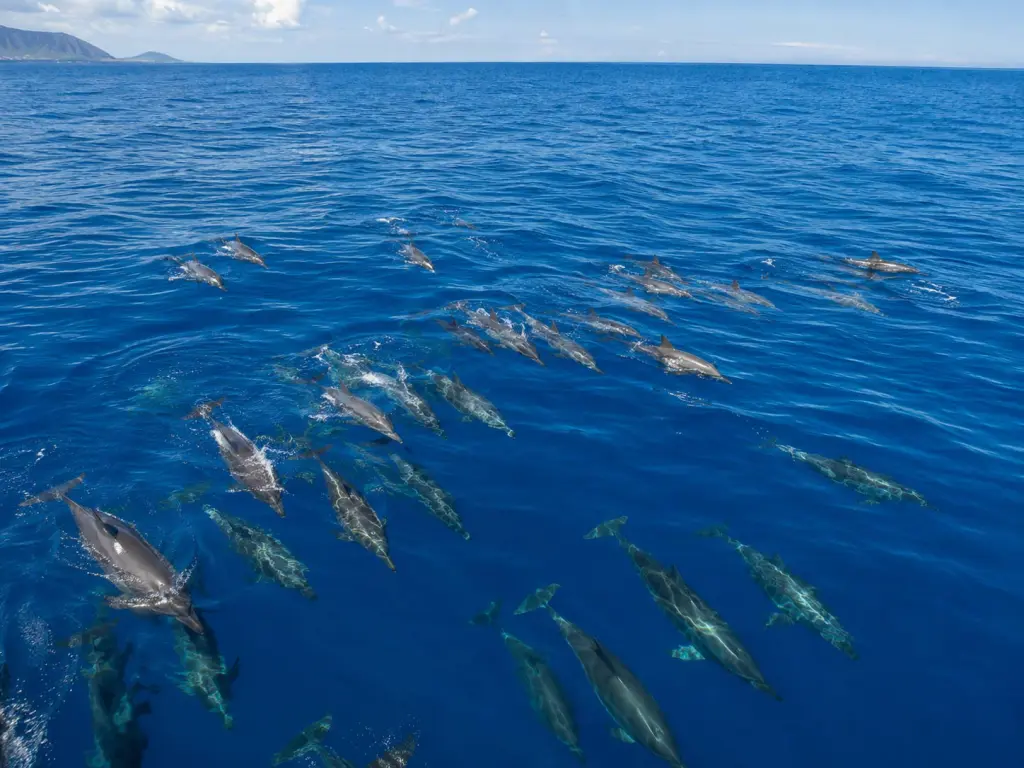
During the daytime rest period in calm coastal waters, pods typically break into smaller, quieter groups of a dozen to a few dozen animals. These smaller clusters tend to contain dolphins with established social bonds, familiar individuals that rest comfortably near each other. They move slowly at the surface, often in tight formation, conserving energy before the night’s work begins.
At night, when it is time to hunt, those small daytime groups join together with other pods in deeper offshore water. A group that numbered twenty in the morning can become part of a coordinated hunting school of a hundred or more by midnight. When the hunt ends, the large group splinters again as dolphins return to the coastal bays they know best.
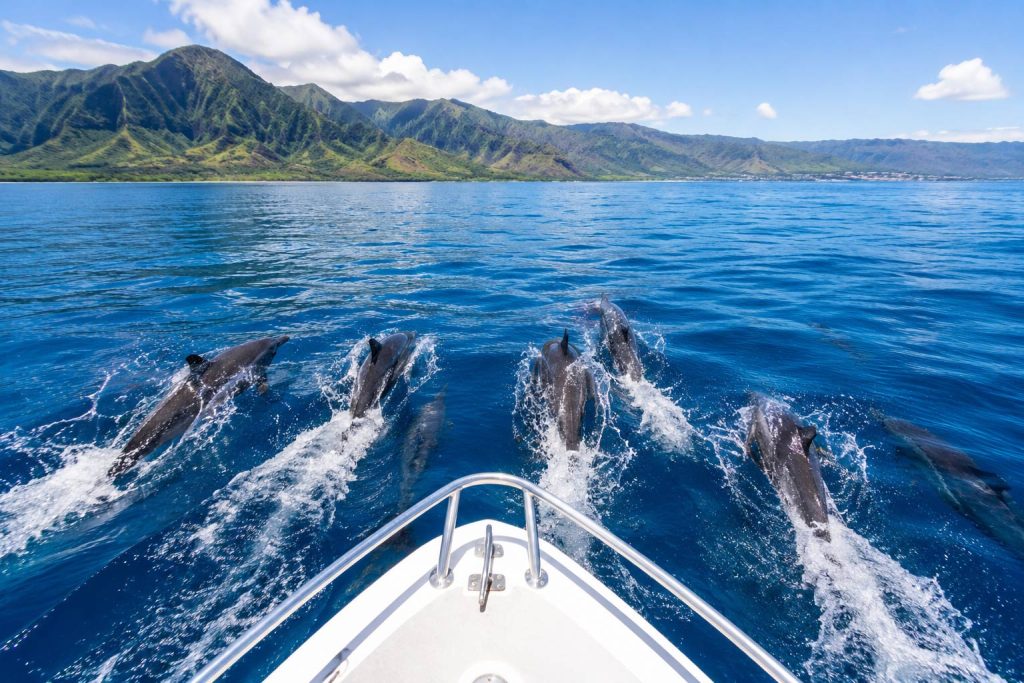
How Pods Spend Their Days Along the Waianae Coast
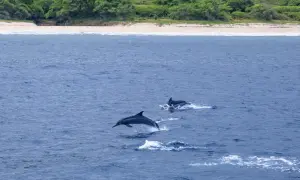
Spinner dolphins in Hawaii are predictable in their daily rhythm. Daylight hours are spent in the protected coastal waters along the west side of Oahu, in the calm bays and coves near the Waianae Coast. This is where the Dolphins and You tour departs from Waianae Boat Harbor each morning, and it is where guests most often encounter pods moving slowly and peacefully in shallower water.
During these daytime hours, the dolphins are doing several things at once. They are resting. They are socializing, touching and swimming alongside companions they know well. Mothers are keeping their calves close. Juveniles are practicing behaviors they will need as adults. The surface may look calm, but within the pod there is constant subtle communication happening through clicks, whistles, and physical contact.
The daytime gathering in coastal bays is not only about resting. These waters provide relative safety from open-water predators and give calves a sheltered environment to grow and practice social behaviors before they are ready for the deeper, darker hunting grounds.
What Happens After Dark
Once evening comes, the dynamics of a spinner dolphin pod shift dramatically. The animals move offshore into the open ocean, heading away from the protection of the coastline and toward the deep-water column where their prey lives. This is the mesopelagic zone, a deep, dark layer of the ocean where small fish, squid, and crustaceans rise toward the surface each night in what scientists call the deep scattering layer.
Hunting in this darkness requires numbers and coordination. Individual pods that spent the day in smaller scattered groups now join with others, merging into schools of hundreds of animals working together to locate and surround prey. They use echolocation to track movements in near-total darkness, clicking and listening as a coordinated group. By morning, the large hunting schools dissolve again. The smaller familiar groups separate out and return to their coastal resting areas, closing the cycle and starting it over.
Who Dolphins Choose to Travel With
One of the most remarkable things about spinner dolphin pod structure is that it is not random. Research into dolphin social networks shows that spinner dolphins form real preferences, individual animals they seek out repeatedly, travel beside consistently, and maintain relationships with over years and even decades.
These long-term bonds tend to form between animals of similar age and sex, between mothers and daughters, and between adult males who form alliance pairs. Calves grow up surrounded by specific individuals who help raise and protect them, and those early relationships often last well into adulthood. A dolphin that grew up beside a particular pod member is likely to still be found near that animal years later. Every time you watch a pod moving through the water, you are watching a community built on years of shared experience.
Nursery Groups and the Protection of Young Dolphins
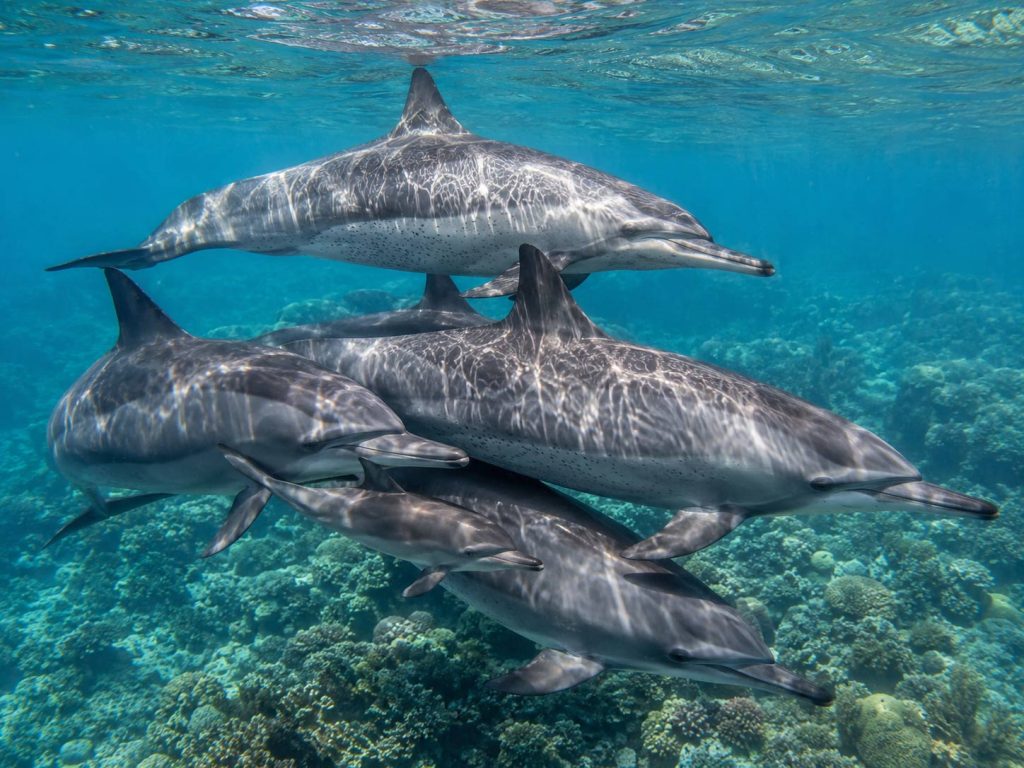
Within the larger fission-fusion structure of a pod, certain subgroups form with a specific function: protecting young calves. Mothers with nursing calves tend to cluster together during the daytime rest period, often toward the center of a resting group where the youngest animals are most sheltered. Female dolphins without calves of their own frequently stay close to these nursery clusters, participating in what scientists call alloparenting, watching over calves that are not their own.
The presence of a new calf changes the behavior of a pod in visible ways. Adults swim more slowly. The group stays tighter. And the calf, still learning to control its own movement, stays pressed close to its mother’s side, drafting in the pressure wave she creates to conserve energy. The whole pod adjusts to accommodate the youngest members, which is one reason spinner dolphin calves in Hawaii have a relatively strong early survival rate despite being born into the open ocean.
What This Means When You Are on the Water
When a Dolphins and You guide spots a pod from the boat on a morning departure from Waianae Boat Harbor, they are reading more than just location. An experienced guide is watching how the group is moving, where the calves are positioned, whether the animals are resting or active, and how the pod’s energy is shifting. That information shapes how the boat approaches, how long it stays, and what guests are likely to see.
A tight, slow-moving daytime pod with calves near the center will be given more distance and a calmer approach than a group of active adults bow-riding and spinning at the surface. A large pod that has not yet broken into its smaller daytime clusters may be seen moving purposefully, its hundred or more members flowing through the water in loosely parallel lines as they navigate back toward the coast from a night of feeding. Watching a pod that size on the move is something very few people ever forget. Understanding that these pods are organized social communities is what turns a boat ride into something genuinely moving.
Every Pod Has a Story
The spinner dolphins that gather along Oahu’s west coast each morning are not a crowd. They are a community. Every pod you see out there has its own internal structure, its own long-standing relationships, its own losses to carry, and its own history built across years of shared ocean life. The fission-fusion nature of their society means the group you see today will look different tomorrow, but the individuals within it carry those bonds with them wherever they go.
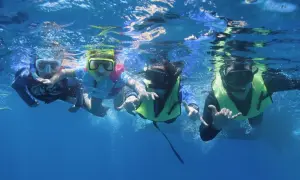
Dolphins and You operates morning and midday tours departing from Waianae Boat Harbor on Oahu’s west coast. The three-hour excursion follows NOAA guidelines for wildlife observation and gives guests an unobstructed view of wild spinner dolphins in the waters they call home. The tour includes complimentary hotel pickup from Waikiki and Ko Olina, a full lunch, all snorkel gear, and a live hula performance on board. Adults are $151 and children ages 2 to 11 are $117 with the Summer20 discount code. Book at dolphinsandyou.com.
Want to explore more about how Hawaii’s spinner dolphins think, feel, and behave?
👉Return to the Dolphin Behavior and Intelligence guide →
Tours depart from Waianae Boat Harbor, West Oahu, where Hawaii’s spinner dolphins gather every morning.