
Every year, marine mammals wash ashore on beaches around the world, sometimes alone, sometimes in groups of hundreds, sometimes alive and sometimes already gone. It is one of the most visible and heartbreaking events in the ocean world. In 2024, NOAA documented over 8,000 confirmed cetacean and pinniped strandings in the United States alone, a number well above the 18-year historical average. Most people who witness a stranding are left with urgent questions and very little information. Here is a clear look at why dolphin strandings happen, what researchers have learned about the most puzzling cases, and what you should do if you ever encounter a stranded marine mammal on an Oahu beach.
What Is a Dolphin Stranding?
A stranding happens any time a cetacean, which includes all whales, dolphins, and porpoises, comes ashore and cannot return to the water on its own. Individual strandings involve a single animal that is sick, injured, or in the final stages of its life. Mass strandings involve two or more animals, sometimes hundreds, all coming ashore within a short window of time.
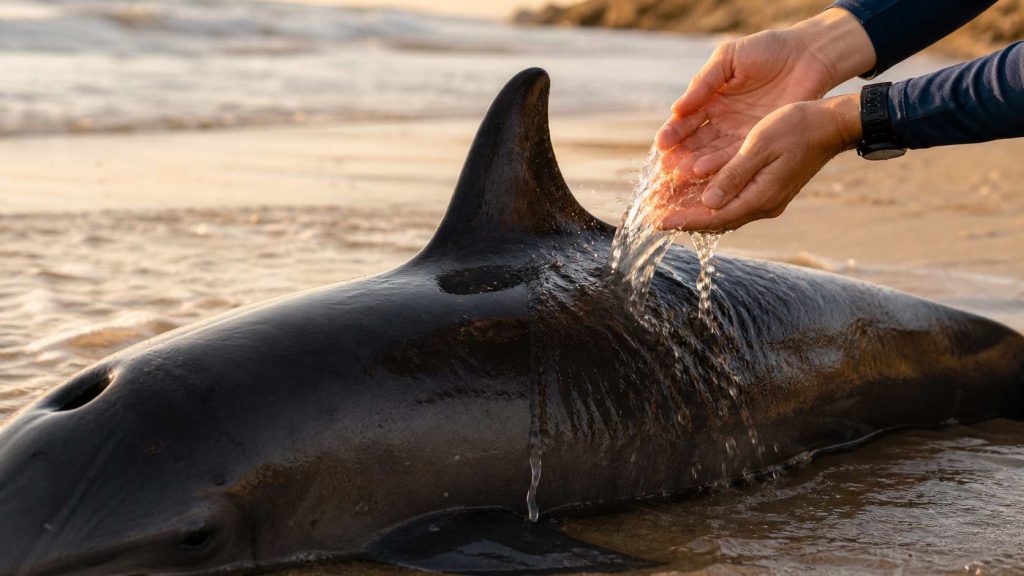
Most stranded dolphins are alive when they are found, but they face serious dangers the moment they leave the water. Their bodies are built to be buoyant and supported by the ocean on all sides. On land, their own weight compresses their internal organs. They overheat quickly in direct sun, and their skin dries and cracks within hours without constant moisture. Their blowhole, the only opening they use to breathe, must be kept completely clear of sand, water, and debris at all times to prevent suffocation.
Natural Causes: When the Ocean Itself Is the Problem
Disease is among the most common natural drivers of dolphin strandings. Morbillivirus, a marine equivalent of measles, has caused repeated mass mortality events in dolphin populations along the U.S. Atlantic coast, killing thousands of animals over multi-year outbreaks. Bacterial infections, parasites, and fungal diseases can all impair a dolphin’s ability to navigate, surface, and swim with normal strength.
Physical injury is another major cause. Dolphins that have been struck by a boat propeller, entangled in fishing gear, or injured by a predator sometimes swim toward shallow water to rest, and eventually cannot make their way back out through the surf. Old age also plays a role. Older dolphins that are weakening and no longer able to keep pace with their pod may hug the coastline too closely until they can no longer hold their position against the current.
Unusual ocean conditions can push dolphins ashore as well. Powerful storm systems temporarily shift water temperatures, disrupt current patterns, and scatter the prey populations that dolphins depend on. Harmful algal blooms produce natural toxins that build up in the fish and squid that dolphins eat, causing disorientation and neurological symptoms that can make accurate navigation nearly impossible.
When Loyalty Becomes Deadly: How Social Bonds Lead to Mass Strandings
Some of the most dramatic and puzzling stranding events involve large numbers of animals coming ashore together. Pilot whales, which are actually large members of the dolphin family, are responsible for the majority of mass strandings recorded worldwide. In early 2026, a mass stranding in Scotland killed 55 pilot whales when the entire pod followed a female in distress during a difficult birth into shallow coastal water. Their extraordinary loyalty to one another, the very quality that makes dolphin societies so sophisticated, became fatal.
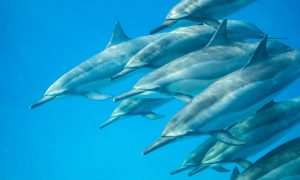
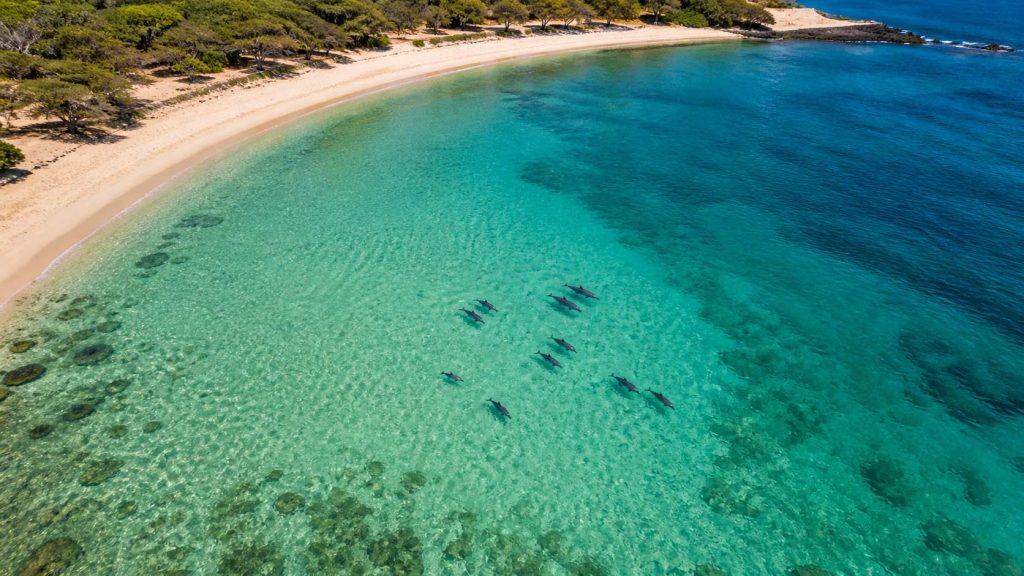
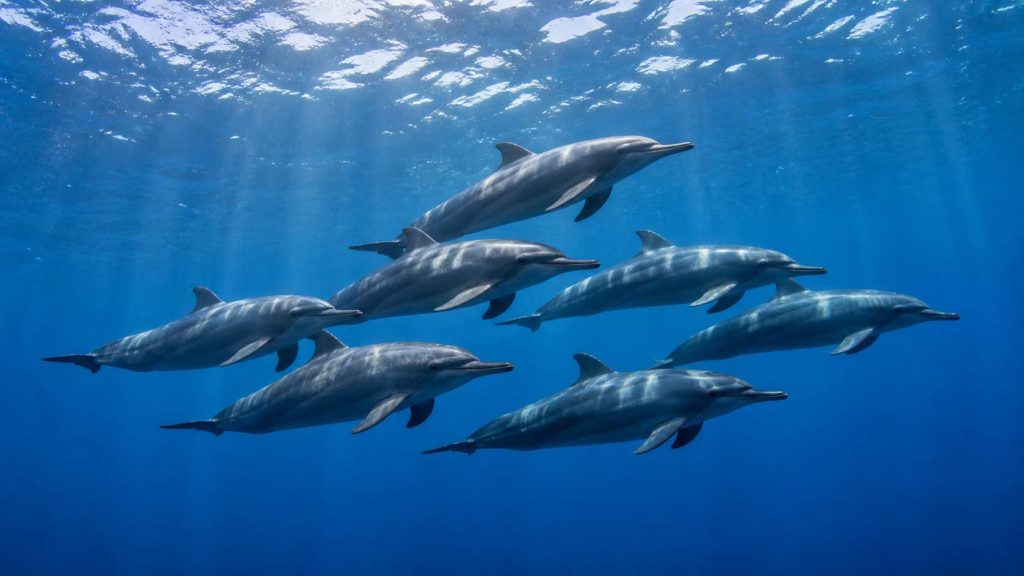
Spinner dolphins, classified as Stenella longirostris and the species most commonly spotted on the Dolphins and You tour off the Waianae Coast of Oahu, maintain tight social structures built around family groups. Mass strandings of spinner dolphins are far less common than those involving pilot whales, but the underlying mechanism is the same: when one member of the pod moves toward shore in distress, others often follow rather than abandon their companion. Their most powerful instinct, staying together, can work against them in coastal waters.
Human-Related Causes: When We Are Part of the Problem
Not all strandings have natural origins. Military sonar exercises, particularly low-frequency active sonar used in deep-water naval training, have been linked to mass strandings of beaked whales and dolphins in multiple documented incidents. The intense sound pressure can cause disorientation and tissue damage, and animals may surface too quickly in response, suffering the equivalent of decompression sickness.
Ocean noise from commercial shipping, offshore construction, and recreational boat traffic is a growing chronic stressor for cetaceans. Dolphins rely on echolocation and acoustic communication for virtually everything they do: hunting, navigating, bonding with their pod, and guiding their young. Persistent background noise degrades the effectiveness of all those systems over time, gradually wearing down a dolphin’s ability to function in its environment.
Chemical pollution adds another layer of long-term risk. Dolphins accumulate persistent organic pollutants like PCBs in their fatty tissue over their lifetimes. High concentrations of these chemicals suppress immune function, leaving dolphins more vulnerable to the viral and bacterial diseases that cause many individual strandings.
What Happens After a Dolphin Strands
NOAA Fisheries oversees the National Marine Mammal Stranding Response Network, a national system of trained veterinarians and marine mammal specialists who respond to strandings across the United States. When an animal strands alive, responders assess its condition, stabilize it with shade and fluid management, and make a decision about whether it can be guided back to sea, transported to a rehabilitation facility, or in the worst cases, humanely euthanized to end suffering.
Not every stranded dolphin survives. Animals that are severely ill or have been out of the water too long often cannot recover. But even in those cases, the stranding provides something valuable: data. Necropsies allow researchers to document diseases, collect tissue samples, measure chemical contamination levels, and track trends in dolphin health across years and populations. In Hawaii, this research directly informs how NOAA updates and enforces protections for spinner dolphins under the Marine Mammal Protection Act.
What to Do If You Find a Stranded Dolphin in Hawaii
If you come across a dolphin that appears stranded or in distress on an Oahu beach, your first job is to call for help and keep everyone else calm and at a safe distance. Wild dolphins are powerful animals, and well-meaning but untrained interference can make a bad situation worse. The steps below, drawn from NOAA guidance and the recommendations of marine mammal response organizations, give you the best chance of helping the animal while keeping both the dolphin and bystanders safe.
- Call NOAA’s 24-hour marine mammal hotline or use the Dolphin and Whale 911 app to report the location and describe what you see
- Stay nearby to monitor the animal but do not touch it, move it, or attempt to push it back into the water
- Keep the dolphin’s skin moist by carefully pouring seawater over its body, but never over the blowhole
- Keep the area around the blowhole completely clear of sand, debris, and standing water at all times
- Ask bystanders to step back, keep children and pets well away, and minimize noise around the animal
- Do not feed the dolphin, apply sunscreen to its skin, or attempt any kind of treatment without guidance from a trained responder
Why Spinner Dolphins Matter on the Waianae Coast
The Waianae Coast of Oahu is one of the most reliably active locations for spinner dolphin sightings in the entire Hawaiian Islands. These animals spend their days resting in the calm, shallow bays along the western shore after spending their nights hunting in offshore deep water. The bays provide shelter, warmth, and the social time that spinner dolphin pods depend on to maintain the bonds that hold them together.
The crew aboard the Dolphins and You tour is trained in NOAA-compliant wildlife interaction guidelines and knows how to recognize when a dolphin in the water is behaving unusually. The tour never chases, crowds, or interrupts a resting pod, because maintaining that respectful distance is exactly what allows these populations to return to the same bays day after day. A healthy, undisturbed pod is one that is building the social resilience it needs to face whatever the ocean brings next.
The Ocean’s Most Loyal Animal Deserves Our Best Effort
A dolphin that strands on a beach is not just one animal in trouble. It is a signal, sometimes about disease, sometimes about ocean conditions, sometimes about the cumulative pressure that human activity has placed on the marine environment. The same spinner dolphins you might watch from the deck of a tour boat off the Waianae Coast are living out the full complexity of a dolphin’s life, including its vulnerabilities. Knowing what causes strandings and knowing what to do when you encounter one makes you a more prepared and more capable person the next time you stand at the edge of the Pacific.