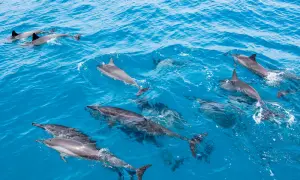



If you have ever watched spinner dolphins arc through the water off Oahu’s west coast and wondered how long those animals actually live, the answer is both surprising and a little sobering. Hawaiian spinner dolphins are not the long-lived giants of the dolphin world. They are quick-cycling, highly social animals with a lifespan that rarely stretches past 25 years in the wild. Every pod you see along the Waianae Coast carries its oldest members in their prime, and the youngest calves swimming close to their mothers may outlive some of the adults around them by just a few years.
A Life Measured in Decades
The Hawaiian spinner dolphin, known to scientists as Stenella longirostris, typically lives between 20 and 26 years in the wild. The oldest individuals on record reached their mid-twenties before dying of natural causes. That lifespan is shorter than most people expect when they first hear it. These are animals that spend every day at sea, feeding at night in deep water and resting in sheltered bays during the day, and two and a half decades is all most of them get.
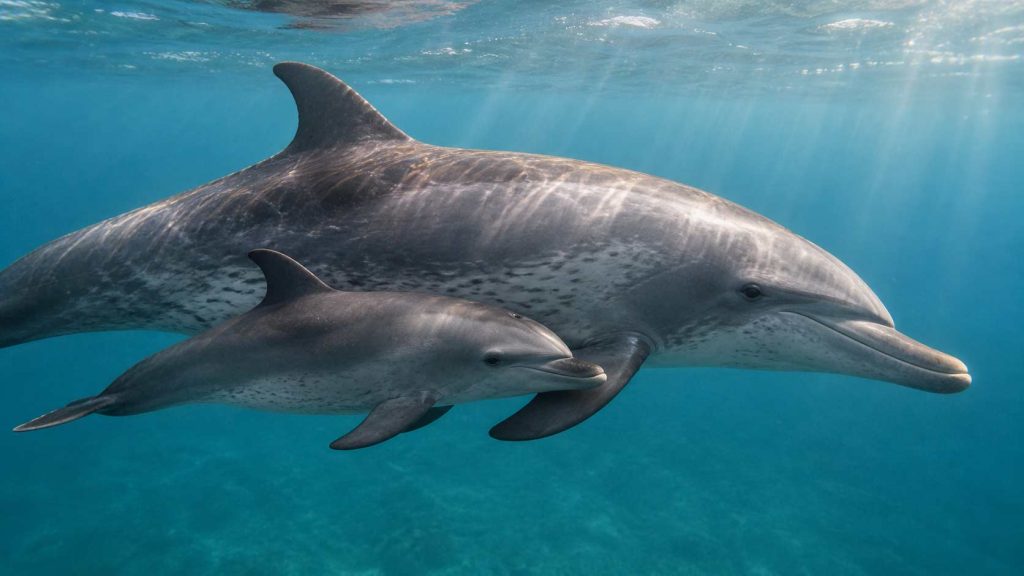
To put that in perspective, a spinner dolphin born the year a family visits Oahu on vacation is approaching old age by the time the youngest child on that trip finishes college. The years move quickly for these animals, and the pace of their lives reflects it. They reach sexual maturity between 7 and 10 years old. Females give birth to a single calf roughly every three years, and each calf spends more than a year nursing before becoming fully independent. A healthy female in her prime might raise four or five calves over the course of her entire life.
How Scientists Read a Dolphin’s Age
One of the more fascinating parts of this story is how researchers figure out how old a dolphin is in the first place. Wild dolphins carry no birth records. When a spinner dolphin strands or is found deceased and examined by researchers, the biological clock is locked inside its teeth.
Each year of a dolphin’s life leaves a faint ring in the dentin of its teeth, similar to the growth rings inside a tree trunk. Scientists call these growth layer groups. By slicing a tooth thinly enough to see through under a microscope, staining it, and counting the alternating bands of dense and less dense material, a trained researcher can estimate the animal’s age within about a year or two. For Hawaiian spinner dolphins, this method has been applied to stranded animals for decades, giving scientists an accumulating picture of how long these populations typically live and how that window changes when threats increase.
How Spinner Dolphins Compare
Spinner dolphins sit on the shorter end of the dolphin lifespan range. Bottlenose dolphins, the larger grey dolphins many people recognize from aquariums, regularly live 40 to 50 years in the wild. Female bottlenose dolphins in well-studied populations in Florida have been documented living past 67 years. The orca, technically the largest member of the dolphin family, pushes further still, with some wild females documented past 90 years of age.
Spinner dolphins are smaller, faster-cycling animals. They reproduce more quickly and live shorter lives, which follows a common biological pattern across the animal world. Smaller body size typically correlates with faster metabolism and a shorter lifespan, and spinner dolphins follow that pattern closely. What they lack in longevity, they make up for in sheer energy, social complexity, and the kind of aerial acrobatics that make watching them one of the most memorable experiences in Hawaiian waters.
What Shortens a Spinner Dolphin’s Life
Even a natural 20- to 25-year window can be cut short. The most serious ongoing threat facing Hawaiian spinner dolphins is entanglement in fishing gear. Longlines and drift nets can trap a dolphin underwater, and because dolphins breathe air just like we do, entanglement becomes fatal within minutes if the animal cannot surface. NOAA’s regulations around the Hawaiian Islands have required changes to commercial fishing practices that have meaningfully reduced dolphin bycatch over the years. Learn more about the threats facing Oahu’s spinner dolphins →
Boat strikes are another significant cause of premature death. A dolphin hit by a propeller can suffer injuries severe enough to prevent normal swimming and surfacing. Ocean noise from heavy vessel traffic interferes with the echolocation spinner dolphins depend on to navigate and hunt, increasing the risk of disorientation and stranding. Plastic pollution and chemical contamination accumulate in a dolphin’s fatty tissue over years of feeding, and high toxin loads have been linked to immune suppression and reproductive failure in dolphin populations worldwide.
The Waianae Coast is one of the most critical daytime resting habitats for Hawaii’s spinner dolphin population. NOAA regulations prohibit close approaches to spinner dolphins in their designated rest areas during daytime hours specifically because rest is not optional. Dolphins deprived of adequate sleep show reduced immune function and lower reproductive success, which directly shortens individual lives and slows population recovery over time.
Watch: Dolphins Up Close
This National Geographic presentation takes a deep look at dolphin biology, intelligence, and behavior. It is a great companion to any dolphin tour and puts everything you will see on the water into a broader scientific context.
Twenty Years of Ocean: A Life Well Lived
A 20-year-old Hawaiian spinner dolphin has made thousands of nighttime feeding dives into deep open water, raised multiple calves, traveled the same stretches of ocean year after year, and navigated a world that has grown more complicated in every decade of its life. That lifespan is not long by orca standards. But inside those two decades is a complete life, lived at full speed, in the waters off an island that has depended on these animals for as long as anyone can remember. When you see them off the Waianae Coast, you are watching animals that are using every day they have.
Want to explore more about spinner dolphin biology and anatomy?
👉Return to the Spinner Dolphin Anatomy and Biology guide →
The Dolphins on Tour
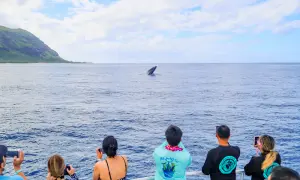
When you are out on the water with Dolphins and You along the Waianae Coast, the spinner dolphins you see have been using these waters for generations. Pod structure is stable over years, with individuals spending most of their lives in the same social group. An older female moving through the water in her late teens or early twenties has been a fixture in that area since before many of the guests on the boat were teenagers themselves.
Dolphins and You has observed the same spinner dolphin population on the Waianae Coast for more than 35 years. Every tour operates under NOAA-compliant guidelines, keeping the dolphins undisturbed in their rest zones while guests watch from the boat or snorkel in the surrounding reef. Departures run at 8 AM and 12 PM, with each tour lasting about three hours and including snorkeling, kayaking, paddleboarding, lunch, and a live hula performance onboard.
Tours depart from Waianae Boat Harbor, West Oahu, where Hawaii’s spinner dolphins gather every morning.