





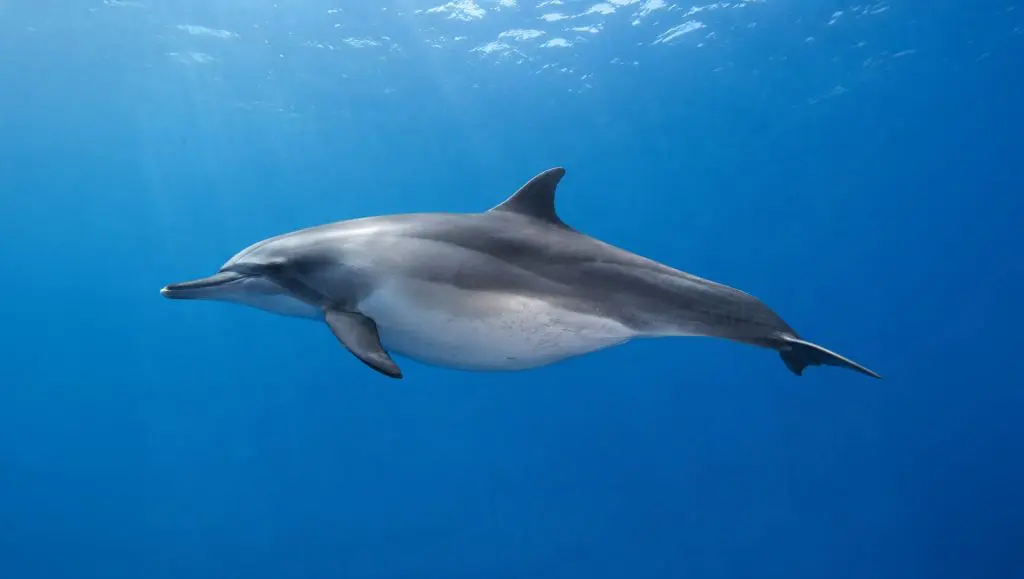
If you spot a small dolphin swimming pressed tight against an adult on a morning tour off the Waianae Coast, you are looking at one of the most carefully tended relationships in the ocean. That calf has been with its mother since before it took its first breath, and it will stay close to her for years.
Here is what the life of a baby spinner dolphin in Hawaii actually looks like, from before birth to the moment it becomes a fully independent member of the pod.
Hawaiian spinner dolphins, known to scientists as Stenella longirostris, carry their calves for approximately ten and a half to eleven months. That is nearly as long as a human pregnancy, and it explains why female spinner dolphins give birth only once every two to three years on average.
During pregnancy, the growing calf develops inside the mother much like other marine mammals, drawing nutrients through the placenta as it grows. Expectant mothers in Hawaii swim noticeably slower during the final weeks of pregnancy as the calf nears full development. They stay close to trusted companions within the pod, animals that will play a significant role once the birth arrives.
Female spinner dolphins reach sexual maturity between five and seven years of age. Dolphins do not have a fixed mating season and give birth year-round in Hawaiian waters, though certain months see higher concentrations of new calves.
Dolphin calves are born tail-first. This is the opposite of most land mammals and is critical for survival. If a calf were born head-first, it could drown before the birth was complete. By entering the world tail-first, the calf can surface and take its very first breath the moment its head clears the birth canal. The process typically happens quickly, and the mother stays close to the surface throughout.
A newborn spinner dolphin calf is roughly two and a half feet long and weighs about twenty pounds. Despite being small, the calf is remarkably well-developed from the moment it arrives. Within minutes, it begins swimming, staying pressed close to its mother’s side.
Sometimes a second female in the pod assists during birth and makes sure both the mother and calf are safe. This second dolphin is called the auntie dolphin, and she is often the only other dolphin the mother allows near her calf during the birth itself.
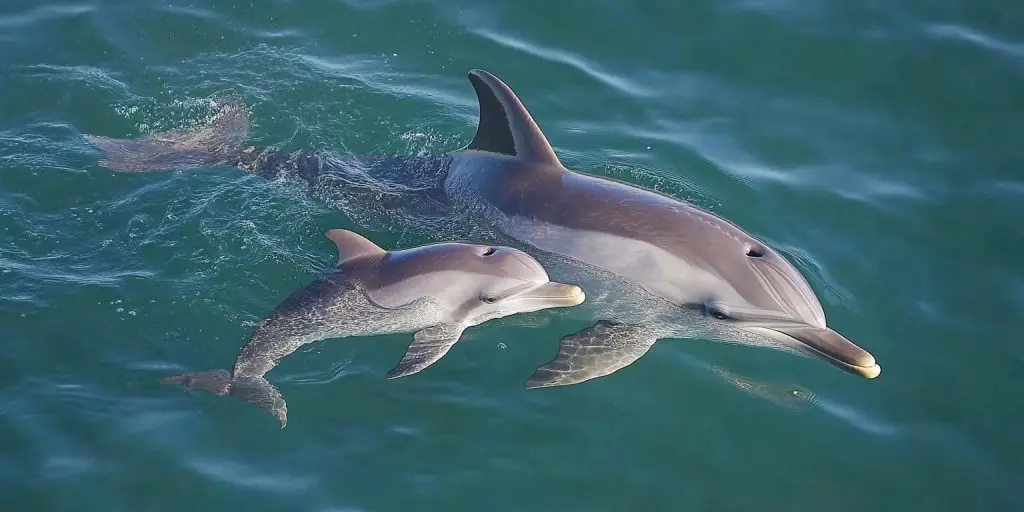
In the first days after birth, it is not unusual to see baby dolphins lifting their entire head out of the water to take a breath. Calves spend much more time at the ocean’s surface than adult dolphins do as they learn to hold their breath for longer periods.
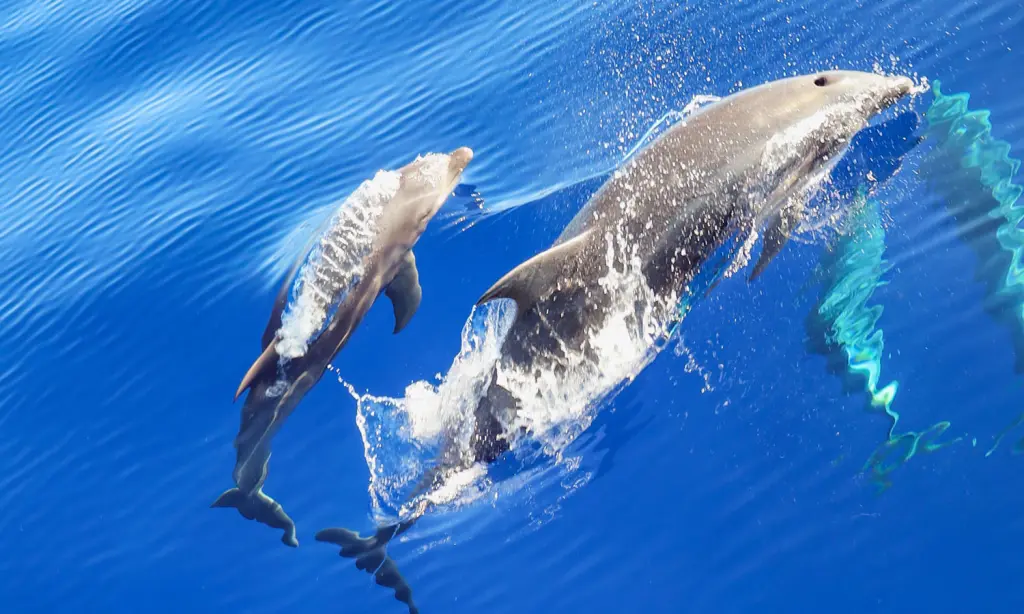
When underwater, calves stay in a position called echelon swimming, drafting in the pressure wave created by their mother’s movement. This hydrodynamic effect helps the calf conserve energy while its small muscles are still building strength. It is the same principle used by professional swimmers who draft behind a faster swimmer to reduce drag.
Calves begin nursing within hours of birth. Dolphin milk is thick and far richer in fat than most land animal milk, allowing calves to grow quickly in the demanding open ocean environment. A nursing calf rolls onto its side beside its mother to feed. Calves typically continue nursing for one to two years, sometimes longer, even as they begin practicing how to catch small fish alongside the adults.
Baby spinner dolphins are born with fine hairs on their snouts, which they eventually shed as they grow. Scientists believe this hair served an evolutionary purpose at some point in the distant past, a reminder that dolphins descended from land-dwelling mammals millions of years ago.
A dolphin mother is not just protecting her calf. She is shaping her first lessons about life in the ocean.
Dolphin mothers use specific calls to communicate with their calves from the very beginning, a kind of vocal signature that helps calves recognize their mothers amid the activity of a busy pod. Research has shown that bottlenose dolphin mothers adjust their signature whistles when their dependent calves are present, in ways that may support attention, bonding, and vocal learning.
In Hawaiian waters, spinner dolphins spend the day in nearshore bays resting and socializing, then move offshore at night to feed. For a calf, that daily rhythm is more than a schedule. It is the setting where early survival skills take shape. A calf growing beside its mother is learning when to be calm, when to move, where safety is, and how life in Hawaiian waters works.
It takes up to four months for a calf to grow its first set of teeth, and around six months to learn how to catch fish on its own. Even after calves learn to hunt small fish independently, they often stay with their mothers for three to six years. The bond between a mother spinner dolphin and her calf is one of the longest and closest in the ocean.
Spinner dolphins do not raise calves alone. Other adult females in the pod, particularly those not currently nursing their own young, often step in to help watch over and guard newborn calves. Scientists call this alloparenting, and it is one of the clearest signs of the deep social bonds within dolphin pods.
A new mother can rest, feed, and recover from birth knowing that trusted pod members are keeping close watch on her calf. When a new life enters a pod, the whole group adjusts. Adults move more slowly in the days following a birth. Younger dolphins in the pod are often drawn toward new calves with unmistakable curiosity, hovering nearby as if they know something important has arrived.
The pods that calves swim in during their earliest weeks are sometimes called nursery pods, groups made up mostly of females and their young. Calves swim in the middle of these formations, protected from predators like sharks and orca whales by the adults surrounding them.
On a morning tour along the Waianae Coast, calves are one of the most rewarding things to watch for. They are smaller, swim more erratically, and are almost always positioned directly beside or slightly behind an adult.
If you see a pair of dolphins where one is noticeably smaller and seems to mirror every movement of the larger one, you are watching echelon swimming in real time. That small dolphin is almost certainly a calf, drafting in its mother’s slipstream and learning the rhythms of the ocean one wave at a time.
The spinner dolphins that gather off West Oahu each morning are not simply resting. They are a functioning community, raising young, maintaining bonds, and preparing for another night offshore. Every calf in that pod represents nearly a year of pregnancy, years of maternal investment, and the collective attention of an entire social group.
Join us on the Waianae Coast and see what that actually looks like from the water.

Dolphins and You · Oahu, Hawaii
On most mornings along the Waianae Coast, spinner dolphin calves are visible swimming in echelon beside their mothers. Join Dolphins and You for an early morning tour and watch Hawaii's spinner dolphins, including the youngest members of the pod, in the wild.
4.9 ★
Google & TripAdvisor
35 yrs
in business
Wild
100% wild dolphins
Tours depart from the Waianae Coast, West Oahu, where Hawaii's spinner dolphins gather every morning.