


How Do Dolphins Get Fresh Water? The Surprising Science of Dolphin Hydration
Most people assume dolphins drink the ocean water surrounding them. They live in it, swim through it every second of every day, and it is always there. The assumption seems reasonable. But drinking seawater would actually dehydrate a dolphin and eventually kill it, just as it would kill a human stranded at sea with nothing else to drink. The way Hawaii’s spinner dolphins stay hydrated without ever taking a single sip of the ocean around them is one of the most quietly remarkable biological systems in marine science.
The Problem With Seawater
Seawater contains roughly three and a half percent salt. When a mammal drinks it, the kidneys have to work to expel that salt, and doing so requires more water than the seawater originally provided. The result is a net water loss. Drink enough and the body begins to dry out from the inside. This is true for humans, and it is equally true for dolphins. Despite spending their entire lives surrounded by water, dolphins can become dehydrated if their internal balance tips the wrong way. They are not immune to the ocean’s saltiness just because they live in it.
They stay hydrated, but not by drinking. They do it entirely by eating.
How Prey Becomes a Water Source
The fish, squid, and crustaceans that dolphins hunt are made up of roughly seventy percent water. That moisture is already present inside the prey’s tissues, and when a dolphin swallows a fish whole, that liquid enters the dolphin’s system right along with everything else. Researchers call this preformed water, meaning it is water that comes ready-made inside the food rather than being created by the body itself. It moves into the bloodstream and contributes directly to daily hydration needs, with no additional salt load attached.
Beyond that, dolphins also produce what scientists call metabolic water. When the body breaks down fats, proteins, and carbohydrates during digestion, one of the chemical byproducts is fresh water molecules. Every meal generates a small but consistent supply of internally produced water. Together, preformed water from prey and metabolic water from digestion form the dolphin’s complete hydration system. The ocean they swim in is never part of that equation.
The Kidney Connection
Dolphins also carry a significant advantage in how their bodies manage waste. Their kidneys belong to a structural type called reniculate kidneys, meaning they are divided into many small lobes, each functioning somewhat independently. This design gives dolphin kidneys an unusually large amount of active tissue relative to their overall size, allowing them to produce highly concentrated urine. Concentrated urine means the dolphin can expel salt and metabolic waste while losing very little water in the process, far less than a typical land mammal would require for the same job.
This efficiency also means the system has real tolerance built in. If a dolphin accidentally swallows small amounts of seawater while hunting, the kidneys can manage the extra salt without knocking the whole system off balance. The dolphin’s hydration is not sitting on a knife’s edge. It is designed with room to absorb ordinary variations and still come out stable.
Dolphin Skin: A Barrier, Not a Sponge
Another piece of the puzzle is the dolphin’s skin. Unlike some amphibians that can absorb water through their skin directly, dolphin skin is essentially impermeable to seawater. The outer layer acts as a firm barrier, preventing the ocean from passively entering the body through skin contact. No matter how long a dolphin spends in the water, saltwater cannot soak through. Every drop of water that enters the dolphin’s system does so through the mouth during eating, and from there it gets processed by the digestive system.
Taken together, prey-sourced water, metabolic water production, efficient kidneys, and impermeable skin give Hawaii’s spinner dolphins everything they need to stay fully hydrated in one of the saltiest environments on earth.
What This Means Out on the Water
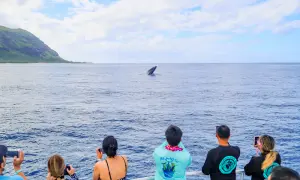
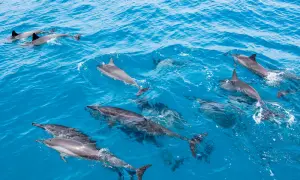
When you board the Dolphins and You tour from Waianae Boat Harbor and head out along the Waianae Coast, the spinner dolphins you encounter in the morning are typically finishing up a full night of deep-water hunting. Spinner dolphins spend their nights foraging offshore in the darker layers of the ocean, pursuing fish and squid that migrate upward at night. By morning, they return to the shallow coastal areas near the Waianae shoreline to rest, socialize, and recover from the night’s work.
That nighttime feeding run is not just about calories. Every fish and squid caught is also a water source. The dolphins you see breaking the surface in the morning light have spent the night quietly solving their hydration needs through their hunting, the same way their ancestors have done for millions of years. Watching them in the morning is watching the end result of a complete biological cycle.
The Dolphins and You tour includes everything you need to join them out there.
- Round-trip transportation from Waikiki or Ko Olina
- Snorkel gear including mask, fins, and life vest
- Sandwich lunch with chips and a beverage
- Live hula performance onboard
- Access to the 12-foot water slide, kayaking, and stand-up paddleboarding
Tours run daily with morning departures at 8:00 AM and midday departures at 12:00 PM, with the full experience lasting around three hours on the open water.
A Quiet Elegance Beneath the Surface
The biology of dolphin hydration does not announce itself the way a spinning leap or a burst of speed does. It runs quietly and continuously, built into the architecture of the kidney, the composition of the skin, and the nutritional profile of every fish a dolphin catches. But knowing it is there changes the way watching a morning pod of spinner dolphins feels. Those animals are not just resting or playing. They are the result of extremely refined biological engineering, tens of millions of years in the making, running exactly as designed.
Out on the water off the Waianae Coast, watching a pod break the surface in the early morning light, that is precisely what you are seeing.
Every Drop Counts: Why Dolphins Are Built for the Sea
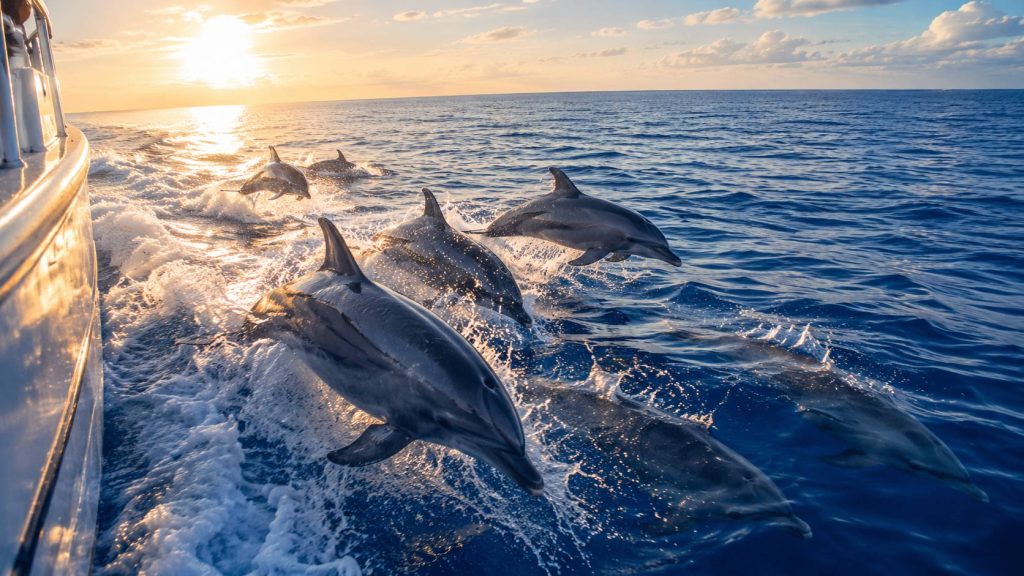
Dolphins never get to choose a glass of fresh water over the salt surrounding them. Their hydration depends entirely on what they hunt, what they digest, and how precisely their bodies handle the results. That dependency is not a weakness. It is a finely evolved solution, one that allows warm-blooded mammals to live their entire lives in the open ocean without ever needing a freshwater source. The sea is their home, their hunting ground, and thanks to biological systems that go back long before humans ever appeared on this planet, it provides everything they need. All they have to do is eat.
Want to explore more about how spinner dolphins are built for life in the ocean?
👉Return to the Spinner Dolphin Anatomy and Biology guide →
Tours depart from Waianae Boat Harbor, West Oahu, where Hawaii’s spinner dolphins gather every morning.