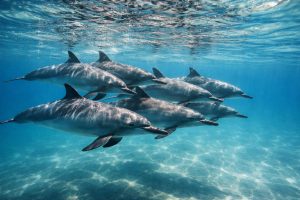


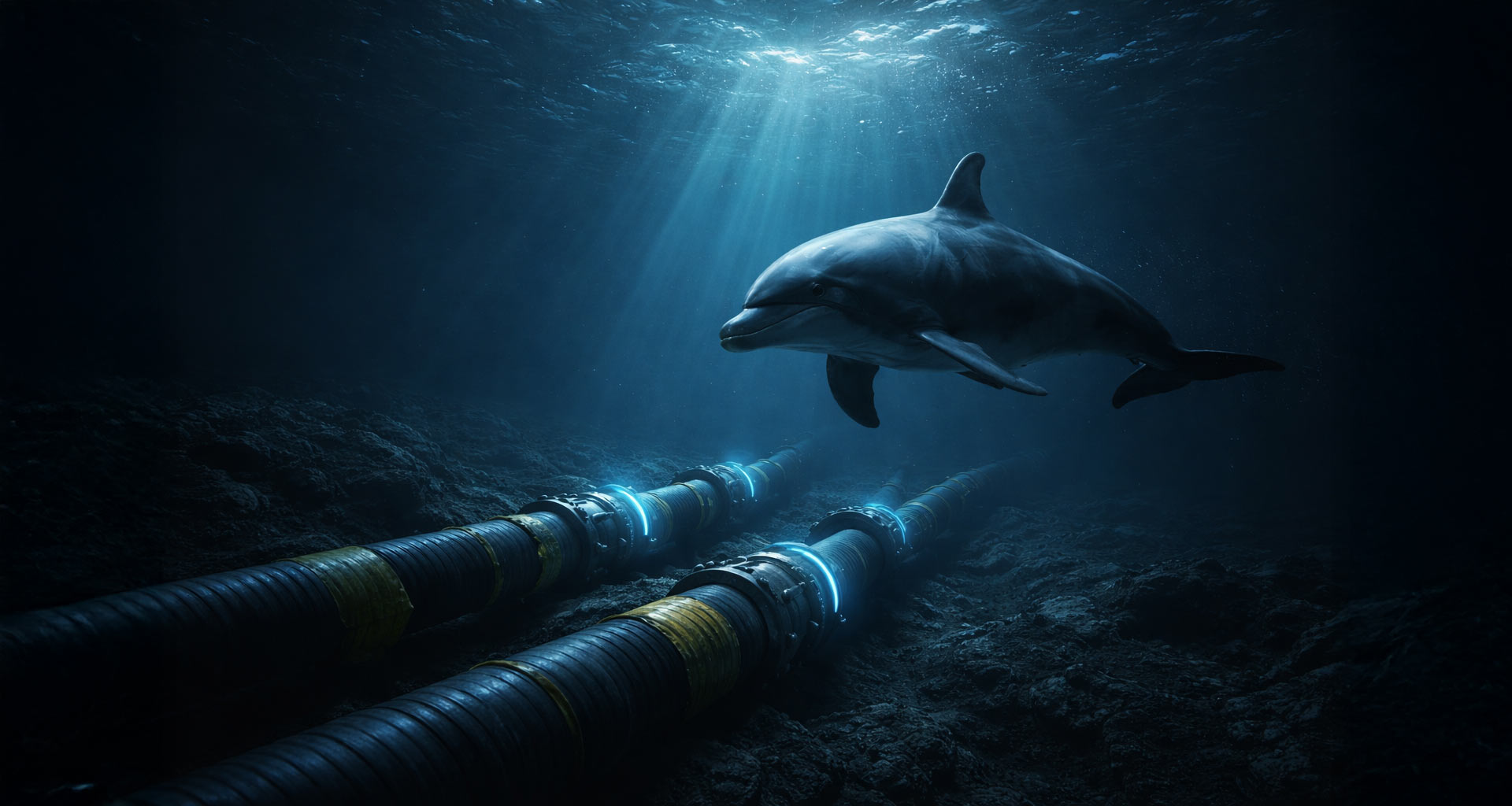
Most people picture the internet as something that lives in phones, laptops, and satellites. But nearly all global internet traffic actually travels through thick cables laid across the ocean floor. These underwater internet cables stretch for thousands of miles and quietly power modern life.
As this underwater network continues to grow, scientists have started asking an important question: How do these cables affect dolphins and other marine animals? The answer is more complex than many expect, and research is still ongoing.
This article looks at what researchers know so far, what they are studying next, and how future technology may better protect dolphins while keeping the world connected.
What Are Underwater Internet Cables?
Underwater internet cables, also called submarine cables, are long, insulated fiber-optic lines placed along the seabed. They carry data as pulses of light, not electricity.
A few key facts:
- Over 95% of international internet traffic travels through these cables
- Most are buried under the ocean floor near shorelines
- In deep water, cables usually rest on the seabed
- They are designed to last for decades
Unlike sonar systems or tracking devices, these cables operate passively. They do not send out sound waves or signals into the water.
Why Scientists Are Paying Attention Now
The number of underwater cables has increased as demand for data grows. At the same time, marine researchers are becoming more focused on how human infrastructure affects ocean ecosystems.
Scientists are especially interested in dolphins because:
- Dolphins rely heavily on sound and movement cues
- They travel long distances and cross cable routes
- They are sensitive to changes in their environment
Even small changes in the ocean can influence dolphin behavior over time.
Do Dolphins Interact With Internet Cables?
So far, there is no evidence that dolphins are harmed by the cables themselves. Dolphins do not chew on them or mistake them for food.
However, researchers are studying indirect effects, including:
- Subtle electromagnetic fields produced by cables
- Changes to seafloor habitats where cables are buried
- Human activity during cable installation and repair
These effects are usually mild, but scientists want to understand them better, especially in busy coastal areas.
Electromagnetic Fields and Dolphins
Fiber-optic cables do not carry electrical current the way power cables do. However, repeaters and power lines within the system can produce weak electromagnetic fields.
Current research suggests:
- Dolphins are unlikely to detect these fields directly
- Any electromagnetic exposure is very low
- Other species, like sharks or rays, may be more sensitive
Even so, scientists continue to test whether repeated exposure over many years could cause behavioral changes.
How Cable Installation Matters More Than the Cable
Most dolphin-related concerns focus on installation, not the cables once they are in place.
During installation:
- Ships operate close to shore
- Noise levels temporarily increase
- Seafloor habitats may be disturbed
Modern cable projects now follow strict environmental guidelines, including:
- Avoiding sensitive marine areas
- Scheduling work outside peak dolphin seasons
- Monitoring marine mammals during operations
These steps help reduce disruption to dolphin pods.
New Research Tools Using Cable Networks
Interestingly, underwater cables may help scientists protect dolphins in the future.
Researchers are exploring ways to use existing cable systems to:
- Monitor ocean temperature changes
- Track seismic activity that affects marine habitats
- Detect large-scale environmental shifts
Because these systems already exist, they may reduce the need for new equipment that could disturb marine life.
Future Advancements in Ocean-Friendly Technology
Looking ahead, future cable systems may become even safer for dolphins.
Possible advancements include:
- Better insulation to reduce electromagnetic output
- Smarter routing to avoid known dolphin pathways
- Shared data systems for conservation research
- Reduced need for maintenance vessels
As technology improves, the goal is to balance global connectivity with ocean protection.
What This Means for Dolphins and the Ocean
Right now, underwater internet cables are considered low-risk for dolphins compared to other human impacts like noise pollution, fishing gear, and habitat loss.
Still, scientists agree that continued research is important. As oceans become more developed, understanding every interaction helps protect marine life for future generations.
A Connected World, A Protected Ocean
The same cables that connect people across continents lie quietly beneath dolphin pathways every day. By studying how these systems interact with marine life, scientists are working toward a future where technology and nature can coexist.
Staying informed is one more way we can respect the ocean that gives us so much.