


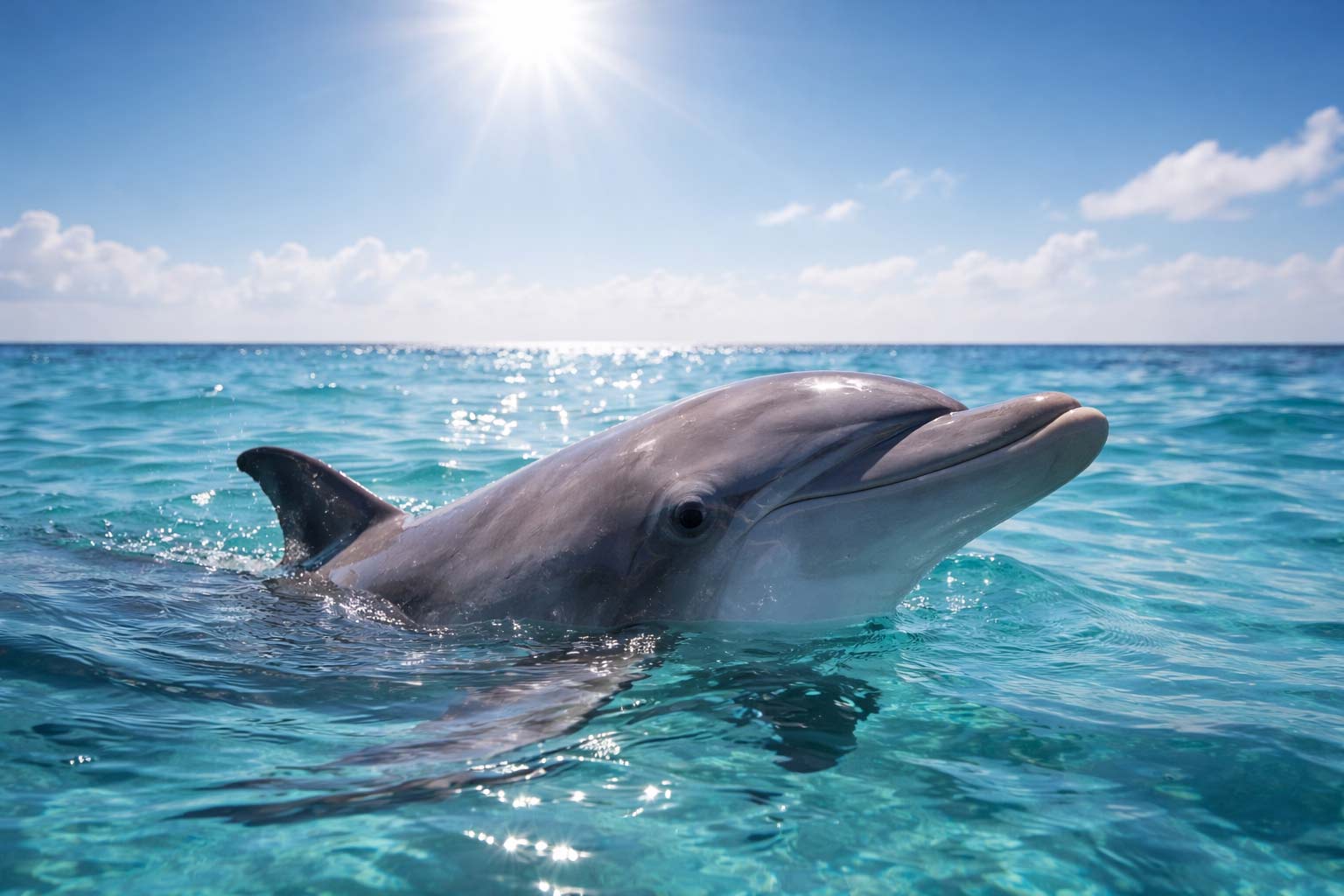
Dolphins spend a lot of time near the ocean’s surface, often swimming, playing, and resting in bright sunlight. This raises a common question many people ask Dolphins and You: if dolphins are in the sun all day, can their skin burn like ours? Dolphins are mammals, just like humans, but their bodies are built very differently. Their skin is thick, smooth, and constantly renewing, which gives them natural protection from the sun. While they do not sunburn the same way people do, long exposure to intense sunlight can still affect them in certain ways, especially in shallow or warm waters.
Dolphins and You focuses on helping people understand how dolphins live and adapt to their environment. Learning how sunlight impacts dolphins helps explain why they behave the way they do, such as diving deeper during the hottest parts of the day or changing their activity levels. These natural habits play a big role in keeping them healthy.
What Happens to a Dolphin on a Warm, Sunny Day?
On a warm, sunny day, dolphins usually continue their normal routines, but they may adjust how much time they spend at the surface. Their skin regenerates quickly, which helps limit damage from the sun. Dolphins also rely on the water itself to cool their bodies and shield them from direct sunlight. When the sun is strong, they often dive deeper where the water is cooler and darker.
Dolphins and You explains that while dolphins can develop skin issues, these problems are more often linked to water quality, illness, or environmental stress rather than simple sun exposure. Healthy dolphins in clean water are well equipped to handle sunny conditions.
Key points about dolphins and sunny weather:
- Their skin renews faster than human skin
- Water helps block and cool against sunlight
- Diving behavior reduces long sun exposure
What Is the Main Cause of Death for Dolphins?
The main causes of death for dolphins are not related to sun exposure. According to Dolphins and You, most dolphin deaths are linked to human activity or environmental factors. These include fishing gear entanglement, boat strikes, pollution, habitat loss, and illness. Changes in ocean temperature and food supply can also weaken dolphins over time.
Understanding these risks is important for dolphin conservation. Dolphins and You works to educate the public about how everyday human actions affect dolphins in the wild. Protecting oceans, reducing pollution, and practicing responsible boating can help lower these dangers and support dolphin populations.
Protecting Dolphins Beyond the Sunshine
Dolphins are naturally designed to live under the sun, but they still depend on healthy oceans to survive. While sunlight alone is not a major threat, human impact plays a much larger role in dolphin health and survival. Dolphins and You continues to share clear, honest information so people can better understand dolphins and take steps to protect them for future generations.