

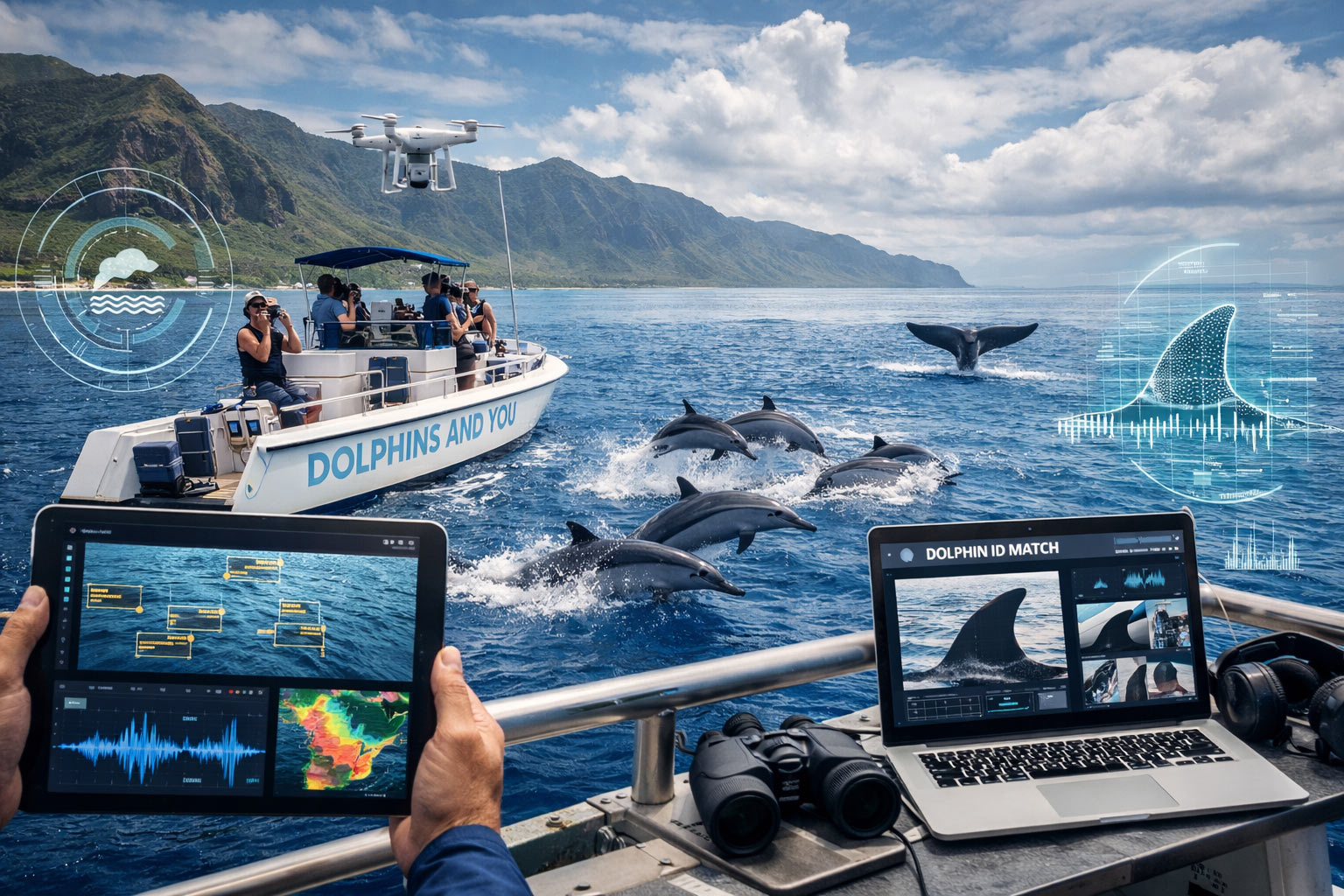
Artificial intelligence is stepping out of the lab and onto the waves, and it is starting to change how we care for dolphins and their homes. Around Oahu, new tools can scan sound recordings, drone videos and satellite images to find patterns that would take humans far longer to notice. Instead of listening to every minute of audio by hand, AI models can flag dolphin whistles, spot splashes in video frames and reveal where pods spend most of their time. For dolphin tour companies, this kind of insight is powerful. It helps answer a few big questions. Where are dolphins most likely to be this morning. How close is too close for a resting pod. Which bays have been very busy and might need a break. Companies like Dolphins and You pay attention to these trends when they plan routes, choose viewing spots and decide how long to stay in each area. The goal is simple. Use smarter tools to support smarter choices, so every tour has a lighter touch on the ocean while still giving guests an amazing experience.
By 2025, AI is also helping ocean teams look beyond single pods and see the wider picture of dolphin habitats. When thousands of hours of sound and video are fed into learning systems, clear maps begin to form. These maps highlight calm resting bays, busy feeding grounds and narrow travel paths that dolphins follow along the coast. They can also reveal noisy hot spots where boat traffic or construction might be making life harder for marine mammals. With that knowledge, tour operators and planners have a chance to steer away from trouble. A company like Dolphins and You can choose routes that avoid key resting areas, slow down in travel corridors and give extra space in shallow zones where mothers and calves may swim. AI tools can even help compare different route options before the boat leaves the harbor, so the crew can pick the plan that offers good viewing while still protecting sensitive spots. In this way, data from the wider ocean flows back into daily decisions on board and turns raw information into real protection.
For guests, the rise of AI in ocean research shows up in simple but meaningful ways on tour day. Before the boat leaves the dock, the crew may have already checked updated maps that blend recent sightings, wind and swell forecasts and long term dolphin patterns. That helps the captain decide which direction to travel, how far to go and which reef to visit for snorkeling after dolphin viewing. Some research projects invite visitors to share their own photos or short video clips from the tour. Later, those images can be processed with AI that recognizes fins, scars and body shapes, turning vacation photos into useful research data. When guides explain this process, guests begin to see themselves as partners in conservation rather than just spectators. They learn why the captain holds a certain distance, why the boat follows a gentle curve instead of cutting straight into the pod and how careful choices today help keep Oahu dolphins wild and healthy for the future.
Ways AI helps dolphins and habitats
- Scanning sound recordings to find dolphin whistles faster and more accurately.
- Tracking dolphin pods in drone and video footage so teams can see where they spend time.
- Mapping resting, feeding and travel areas to guide safer tour routes in Oahu waters.
- Highlighting noisy or crowded zones so leaders can set better speed and distance rules.
- Turning guest photos into useful data through dolphin fin identification projects.
- Helping tour companies like Dolphins and You plan trips that balance fun with protection.
Smarter Tech For A Kinder Ocean
AI can sound like a distant or cold idea, but out on the water it becomes very real. Every time a model helps find a quiet resting bay, flags a busy travel route or turns a simple phone photo into research data, it is helping people understand dolphins a little better. Companies such as Dolphins and You can use that understanding to adjust where they go, how fast they travel and how they teach guests to behave around wild marine life. That is what AI for the ocean should be about, not just cool gadgets but tools that guide kinder choices. When visitors pick tours that respect both dolphins and data, they send a clear message that advanced tech and deep care for the ocean can work together. In the long run, that partnership between people, AI and the sea gives Oahu dolphins the best chance to thrive, no matter how busy the islands become.