


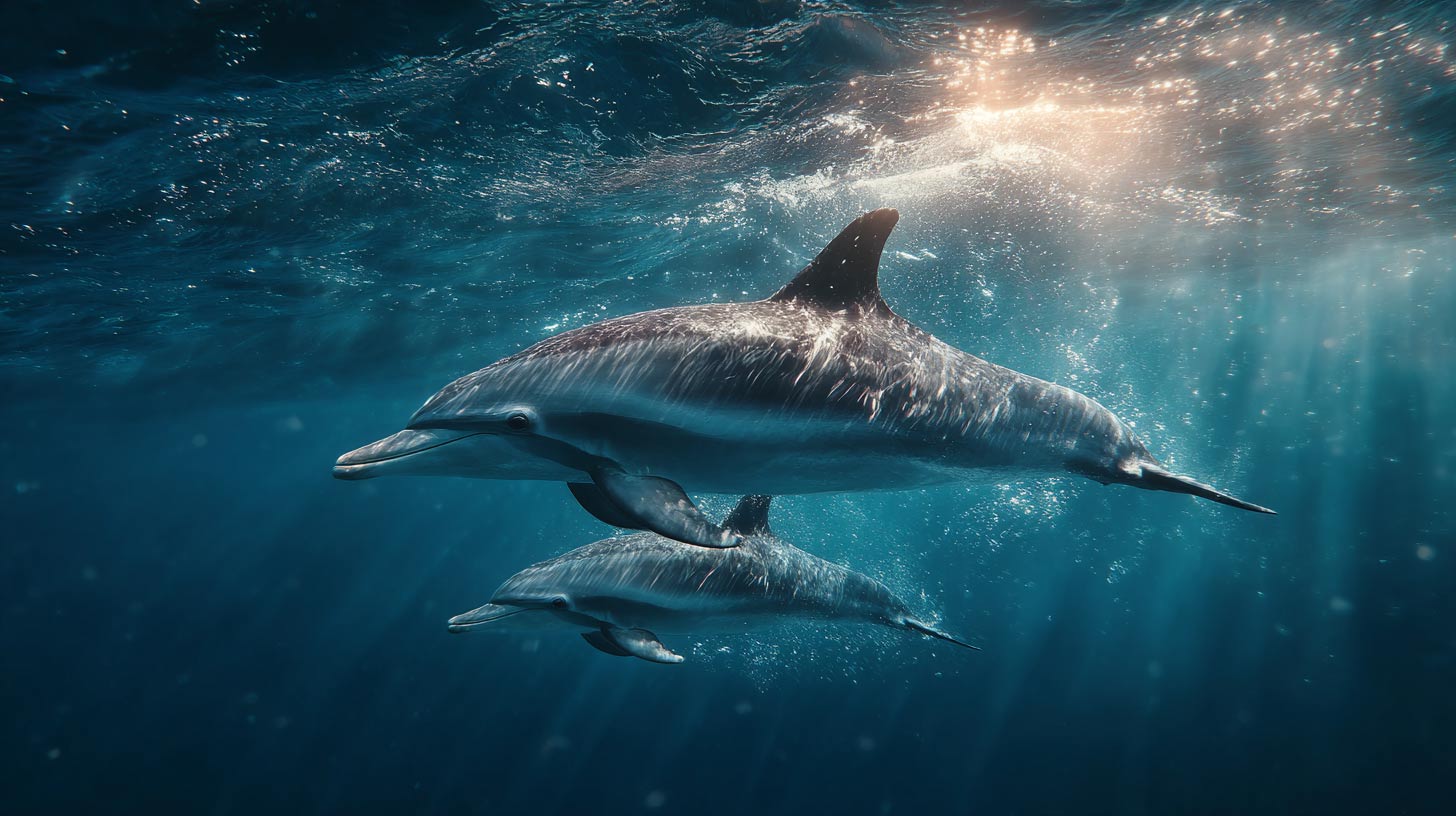
A dolphin mother is not just protecting her calf. She is also helping shape the calf’s first lessons about life in the ocean. Around Hawaii, spinner dolphins spend the day in nearshore waters where they rest, socialize, and nurture their young. At night, they move offshore to feed. For a calf in Oahu waters, that routine is more than a schedule. It is the setting where early survival skills begin to take shape.
Why Oahu Waters Matter So Much
Hawaiian spinner dolphins use calm coastal areas during the day, and NOAA says those places are important for resting and caring for young. These nearshore spaces are not just scenic parts of Hawaii. They are part of how mothers raise calves during a stage when they are still highly dependent. NOAA also notes that disturbance in these resting areas can affect dolphin health, fitness, and survival, which helps explain why Hawaii now has rules against swimming with or approaching spinner dolphins within 50 yards.
A Calf’s First Survival Lessons Start With Staying Close
One of the first jobs of a dolphin calf is simple but serious: stay with its mother. Research on dolphins shows that calves depend on their mothers for protection, nutrition, resting chances, energy savings, and security. Mothers also keep close watch on calves, especially early in life, and some will quickly bring a calf back when it moves too far away.
That closeness is not just about comfort. It helps a calf learn where safety is, how to move with the group, and how to stay connected in open water. In animals that live in shifting social groups, losing contact can quickly become dangerous.
Mothers Help Calves Learn Communication
Dolphins are known for using signature whistles, and one study found that bottlenose dolphin mothers changed those whistles when their own dependent calves were present. The researchers said these changes may help with attention, bonding, and vocal learning. That means a calf is not only hearing noise from its mother. It may be learning how to notice, respond, and stay linked through sound.
Feeding Skills Are Learned Over Time
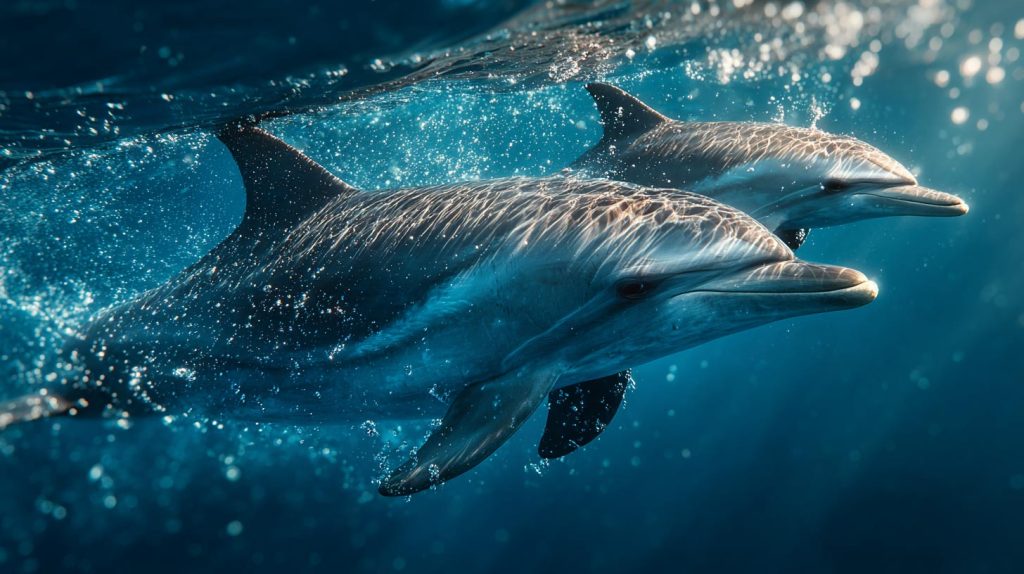
A calf is not born knowing how to forage well. Research on dolphins shows that calves learn how to forage from their mothers during their first few years of life. Another study found evidence that mother dolphins changed their foraging behavior when calves were present, which suggests teaching may play a role in how young dolphins learn to hunt.
That matters in Hawaii because spinner dolphins follow a daily pattern that depends on timing and place. They rest near shore by day and feed offshore at night. A calf growing beside its mother is learning more than how to swim. It is learning when to be calm, when to move, and how life in that habitat works.
What Dolphin Mothers Are Really Teaching
A mother dolphin is helping her calf build survival in several ways:
- how to stay close and not drift from safety
- how to respond to sounds and contact calls
- how to follow the group’s daily rhythm
- how to watch and copy feeding behavior
- how to function inside a social pod
What Is the Survival Rate of Dolphin Calves?
There is not one single survival rate for all dolphin calves. It changes by species, place, and conditions. For comparison, published wild bottlenose dolphin studies have reported first-year calf mortality of 19 percent in Sarasota Bay and 29 to 33 percent in Shark Bay. The same review said that, across those reported studies, roughly 20 to 30 percent of calves were likely to die in their first year, and close to half died before weaning. Those are not Hawaii spinner dolphin numbers, but they do show that early life is a high-risk stage.

Can a Baby Dolphin Survive Without Its Mother?
For a very young calf, the odds are poor. Dolphin calves depend on their mothers for food, protection, rest, and security, and research summaries say the mother-calf bond is critical for survival. NOAA says spinner dolphins in Hawaii have an approximately 11-month gestation, usually calve about once every three years, and often lactate for one to two years. In bottlenose dolphins, calves nurse for about 20 months and generally stay with their mothers for three to six years. Together, those facts make the point clear: a calf is built for close maternal care, not early separation.
Why This Story Goes Beyond General Motherhood
This is what makes dolphin motherhood in Oahu more than a simple story about care. A mother is not only feeding and guarding her calf. She is giving the calf access to the right habitat, the right timing, and the right social contact during the period when learning matters most. In Hawaiian spinner dolphins, that learning happens in a very specific rhythm: nearshore rest by day, offshore feeding by night, and constant dependence in between.
Where Survival Begins for a Dolphin Calf
For dolphin calves in Oahu, survival does not start with strength. It starts with staying near mom long enough to learn. The mother shows the calf where to rest, how to stay connected, and how to grow into the daily life of a wild dolphin. That is why the bond matters so much. In the first years of life, a dolphin mother is not just raising a calf. She is teaching it how to survive.